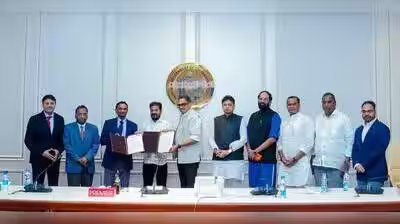











Hyderabad: The state cabinet on Thursday decided to challenge the Viksit Bharat Guarantee for Rozgar and Ajeevika Mission (Gramin) (VB-G RAM G) scheme in the Supreme Court, even as it agreed to implement the law from July 1 to avoid disruption of employment for rural workers.The decision was taken at a cabinet meeting chaired by chief minister A Revanth Reddy at the secretariat. While approving implementation of the scheme, the cabinet expressed strong reservations over key provisions and criticised the Centre for ignoring the state’s objections and recommendations.“The cabinet elaborately discussed the sub-committee report and decided to take legal course. The state govt in the Jan assembly session passed a resolution against the scheme. But the objections were completed ignored by the Centre,” revenue minister Ponguleti Srinivas Reddy said while briefing the media along with ministers Seethakka and A Laxman Kumar.The state had earlier constituted a ministerial committee headed by irrigation minister N Uttam Kumar Reddy to study the scheme and suggest changes. The panel submitted its report to the cabinet, which eventually resolved to pursue legal remedies while formally communicating its opposition to the Centre.According to Srinivas Reddy, the cabinet sought details on how other states were responding to the new law and was informed that all states had decided to implement it.“Given the unavoidable circumstances and with the intention of ensuring work opportunities for employment guarantee labourers, the cabinet approved issuing a notification to bring the new law into force in the state from July 1,” he said.The state govt’s principal objection is the 60:40 funding formula, under which states must bear 40% of the scheme expenditure. Telangana estimates its annual share at around Rs 2,500 crore, whereas the previous MGNREGA programme was entirely funded by the Centre.The cabinet also opposed the provision mandating a 60-day break for beneficiaries, arguing that it would adversely affect poor rural households and agricultural labourers dependent on employment guarantee works. The committee felt the new framework would penalise better-performing states while rewarding poorer performers.Apart from the employment scheme, the cabinet cleared a series of key welfare, healthcare and infrastructure decisions.The govt decided to extend its breakfast, milk and mid-day meal programme to schools and junior colleges across the state. Besides students, around 1.5 lakh teachers, lecturers and support staff will also be covered under the scheme.In the health sector, the cabinet approved large-scale recruitment for the new TIMS super-speciality hospitals at LB Nagar, Sanathnagar and Alwal, as well as the Warangal super-speciality hospital.“To improve healthcare services for patients, the cabinet cleared a total of 6,278 posts, including 1,494 regular posts, 549 basic contract posts, and 4,235 outsourcing posts. It also decided to develop these hospitals on the lines of NIMS,” Srinivas Reddy said.The cabinet also granted administrative approval for phase-I of the Musi riverfront development project, sanctioning works worth Rs 7,345.12 crore along a 21-km stretch from the points where flows from Himayat Sagar and Osman Sagar begin up to Bapu Ghat.It further approved creation of 147 new posts and deployment of staff from other departments for project execution and management.The cabinet approved land allotment to the Telangana Warehousing Corporation for construction of warehouses for essential commodities, including 50 acres in Nekkonda mandal of Warangal district and 10 acres in Kadthal mandal of Rangareddy district.It also cleared land allotments for Jawahar Navodaya Vidyalayas in Mahbubnagar and Suryapet districts, besides approving five acres in Chalgal village of Jagtial district for establishment of a Kendriya Vidyalaya.