







Hyderabad: Telangana on Monday told the Centre it will take a final call on implementing the proposed Viksit Bharat Grameen Rozgar Yojana (VBGRY) only after the state cabinet decides on its own rural employment legislation, while urging the Union govt to withdraw the proposed law, saying it would weaken the rights-based rural jobs programme and impose an additional financial burden of nearly ₹2,000 crore on the state.The state’s position was conveyed by the panchayat raj and rural development minister Seethakka at a meeting of state rural development ministers chaired by Union rural development minister Shivraj Singh Chouhan in New Delhi. Seethakka said the cabinet sub-committee constituted by the Telangana govt had already met twice to examine the proposed legislation and its recommendations would be placed before the state cabinet on July 2. Telangana would formally communicate its decision to the Centre after the cabinet meeting.
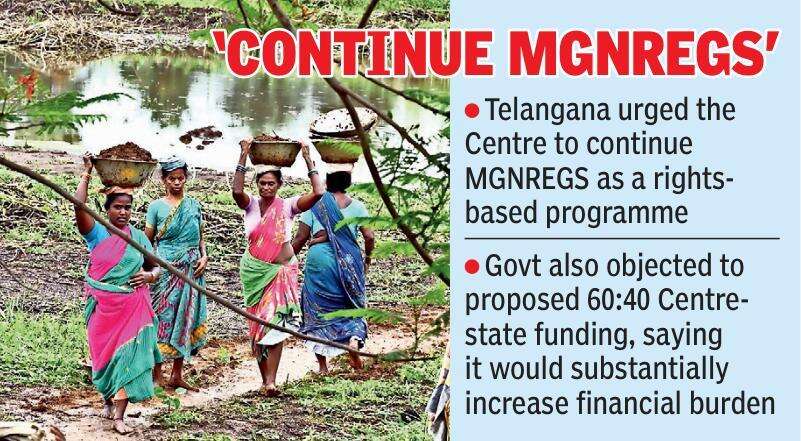
Continue MGNREGA
Seeking withdrawal of the proposed law, Telangana urged the Centre to continue MGNREGS as a rights-based programme and argued that the proposed legislation centralises powers relating to planning, work selection, fund allocation, implementation and monitoring, thereby reducing the role of states and gram panchayats.The state also objected to the proposed 60:40 Centre-state funding pattern, saying it would substantially increase Telangana’s financial burden. While the Centre currently bears the entire wage component and 75% of the material cost under MGNREGS, the proposed framework would increase the state’s annual contribution to around Rs ₹2,000 crore, Seethakka said.Telangana further opposed the proposed mandatory 60-day break in employment, arguing that it would adversely affect rural labourers, particularly in tribal, drought-prone and Fifth Schedule areas where alternative livelihood opportunities are limited. The state also demanded that Fifth Schedule areas in Telangana be brought under a 90:10 Centre-state funding pattern, similar to that followed for northeastern states.