









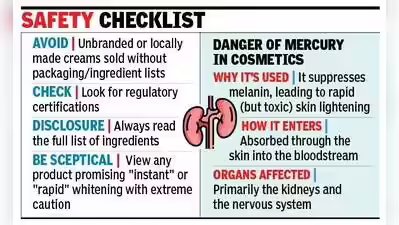
Pune: Doctors at a city hospital have linked a 30-year-old man’s kidney disease to mercury exposure from a locally manufactured fairness cream. The connection was confirmed after laboratory tests at KEM Hospital’s department of clinical biochemistry detected high levels of the toxic heavy metal in the cosmetic product.Blood tests also revealed elevated mercury levels in the patient, helping medical experts establish the unbranded cream as the primary trigger for his illness.The patient, who was preparing for his wedding, had been using the cream for several months in an attempt to lighten his complexion. He sought medical help after developing swelling in his legs and noticing persistent frothy urine. Notably, the man had no previous history of diabetes, hypertension, or chronic illness.Dr Suhas Mondhe, a consultant nephrologist at Manipal Hospital, Baner, stated that initial investigations showed significant protein loss in the patient’s urine, a clear sign of kidney damage. A subsequent biopsy confirmed membranous nephropathy—a condition where antibodies attack the kidney’s filtering units, causing protein to leak into the urine.“Given the known link between mercury exposure and membranous nephropathy, we investigated the possibility of toxicity,” Dr Mondhe said. “The diagnosis was based on a clear timeline of the cream’s use, the biopsy findings, and the laboratory confirmation of mercury in both the product and the patient’s blood.”Mercury compounds are often illegally added to unregulated skin-lightening products because they suppress melanin production. While this can make the skin appear fairer, chronic exposure can cause severe damage to the nervous system and the kidneys.According to Dr Mondhe, the patient initially dismissed his symptoms. “He noticed swelling around his ankles but attributed it to fatigue from wedding preparations. Because these symptoms are often painless, many patients delay seeking treatment until significant damage has already occurred,” he said.Once the patient discontinued the use of the cream and began specialised treatment, his condition started to improve. His recovery is currently ongoing.The nephrologist cautioned against using cosmetic products without ingredient disclosures or regulatory certification. “Products that promise rapid skin lightening should be viewed with caution,” Dr Mondhe warned. “Persistent swelling, facial puffiness, or frothy urine are red flags that should not be ignored, as they may indicate underlying kidney disease.”Medical experts added that this case underscores the urgent need for stricter monitoring of the cosmetic market to prevent toxic, unregulated ingredients from reaching consumers.