









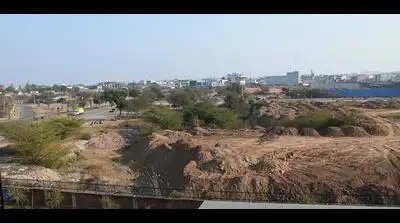
Chandigarh: High-rise residential development in Chandigarh’s peripheral villages has emerged as a cornerstone of the UT administration’s proposed amendments to the Chandigarh Master Plan-2031 (CMP-2031), with officials projecting it as the key mechanism for implementing long-pending plans for 17 designated development pockets on the city’s outskirts.The proposed changes seek to activate a major component of CMP-2031 that identified 17 development pockets spread across nearly 44 square kilometres of controlled periphery area beyond Chandigarh’s planned sectoral grid. These pockets were earmarked to accommodate the city’s future requirements for housing, institutions, commercial activities, transportation infrastructure and other urban facilities.Despite being incorporated into the Master Plan more than a decade ago, the development of these pockets has remained largely on paper. Administration officials say the latest amendments are intended to finally operationalise the plan and provide a structured roadmap for Chandigarh’s future expansion.According to officials, the proposed policy shift will allow high-rise residential development in selected peripheral areas to ensure optimum land utilisation while preserving the city’s heritage sectors and established urban fabric.“The heritage sectors and even the Phase-II sectors of Chandigarh are being left untouched by these proposed amendments. The focus is on the undeveloped Phase-III area and the peripheral villages where future growth was always envisaged under the Master Plan,” a senior UT official said.CMP-2031 does not envision the periphery as a simple extension of Chandigarh’s iconic sectoral layout. Instead, it proposes a controlled, pocket-based development model designed to accommodate urban growth while retaining the city’s original city-periphery concept. The Master Plan acknowledges that Chandigarh has limited scope for expansion within its existing urban boundaries and that future land requirements will have to be met in peripheral areas.The document further notes that the rural buffer originally envisaged around Chandigarh has gradually eroded due to rapid urbanisation in surrounding regions. Consequently, it advocates planned development in identified pockets rather than allowing unregulated growth around the city.Officials argue that increasing population pressure from both Chandigarh and the neighbouring Tricity region has made planned expansion unavoidable. While housing development within Chandigarh has remained relatively stagnant over the past decade, demand on civic infrastructure, including roads, parking, healthcare and educational facilities, has continued to rise.“There is no escaping the population pressures being generated not only from within the city but also from neighbouring urban centres. The answer lies in planned development within Chandigarh’s own jurisdiction, backed by corresponding investments in infrastructure,” the official said.BOX: Category-wise totals in 17 pocketsLand Use | Area (Acres)Residential | 194.7Commercial | 141.46Transportation | 51.57Industrial / IT Park | 283.56Public / Semi-Public | 454.98Recreational | 389.88Agriculture | 673.86Public Utilities | 39.08Forest | 450Reserved | 308.84BOX: Key pocketsSeven out of 17 land pockets are currently at the centre of Chandigarh Administration’s proposed peripheral village developmentPocket | Location / Village | Area (Acres) | Proposed Land Use1 | Sarangpur | 353.46 | Institutional (Phase-II Institutional Area)5 | Opposite Milkmen Colony, Dhanas | 258.06 | Institutional / Public Utilities6 | West of Sector 38, adjoining Maloya-Dhanas belt | 92.47 | Commercial7 | Maloya | 166.32 | Residential Housing13 | Daria belt | 160.06 | Commercial / Mixed Development15 | Kishangarh–IT Park Extension area | 327.48 | IT, Knowledge and Related Activities17 | Raipur Kalan–Raipur Khurd belt | 296.66 | Future Development ReserveBOX4: Opposition to the proposalCritics of the Chandigarh Administration’s proposal to develop high-rise habitation centres in the peripheral villages argue that the plan departs significantly from the original spirit of Chandigarh’s planning philosophy and raises concerns over governance, infrastructure, environment and land rights. They particularly highlight it as departure from Chandigarh’s low-rise character and putting additional pressure on the already-under-stress infrastructure