









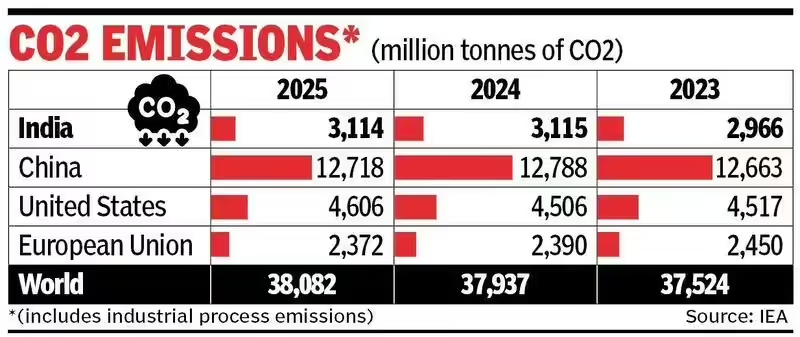
Chennai: India’s carbon emissions have, for once, paused. In 2025, the country’s carbon dioxide output edged down, breaking a decades-long trend of steady increases. This is also the first time on record that emissions have fallen during normal economic conditions. Previous declines were seen only during exceptional disruptions, such as the 2020 pandemic and the oil shocks of the 1970s.The drop was driven largely by cyclical factors linked to a strong monsoon last year, alongside a continued robust expansion of renewable capacity..In 2025, the monsoon arrived early and with unusual force—both strong and prolonged. Cooler temperatures and heavier rains reduced electricity demand, particularly by lowering the need for air conditioning and agricultural water pumping—two of the grid’s biggest loads. Power consumption lost momentum, growing by just 1.4% in 2025 after four years of expansion above 6%.Cooling demand was especially subdued, with cooling degree days were 10% lower than in 2024, according to estimates from the International Energy Agency.That softness in power demand fed straight into coal, still the backbone of India’s power mix. Coal-fired generation slipped by around 3%—only the third such decline in half a century. Weather alone is estimated to have reduced coal demand by roughly 8 million tonnes of coal equivalent, cutting more than 20 million tonnes of CO₂ emissions.At the same time, the supply side grew cleaner. Generous rains lifted hydropower output, while renewables continued their rapid ascent. India added nearly 50GW of solar capacity in 2025, pushing total renewable additions up by about 60%, the fastest pace among major economies. Wind installations, though smaller in scale, also doubled to more than 6GW. With demand subdued and cleaner generation rising, natural-gas use fell by 3.5%, including a near 10% drop in gas-fired power.Elsewhere, weather conditions had a notable impact on emissions. In America, a cold winter and higher gas prices encouraged a switch back to coal, nudging emissions up. Europe’s emissions continued to fall, though more slowly, as weaker wind and hydro output coincided with stronger heating demand. China, by contrast, managed a modest decline of around 0.5%, as rapid additions of renewables and nuclear power displaced coal in electricity generation.Globally, the pattern was unusual. For the first time in nearly three decades, emissions in advanced economies grew faster than in emerging ones: rising by 0.5% in the former, while slowing to 0.3% growth in the latter.