




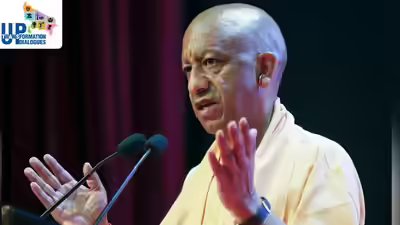
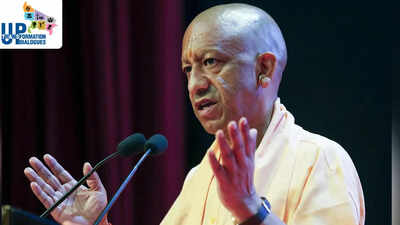
Uttar Pradesh has emerged not only as a tourist hub but is now the one stop destination for different cultural experiences. In the last 9 years, the state has become a favourite place to visit since it offers an array of things. Whether its people from different parts of the country or whether the entire world, Uttar Pradesh is a place of choice. Over the past nine years, Chief Minister Yogi Adityanath has reshaped Uttar Pradesh’s development strategy around what his government calls a “temple economy.” Under this model, tourism has evolved from a niche cultural sector into a core driver of GDP growth, infrastructure development, and large-scale employment generation.By revitalizing and aggressively promoting the state’s sacred sites, Uttar Pradesh has achieved a remarkable milestone, attracting over 156 crore visitors — including more than 36 lakh foreign tourists — cementing its position as a leading global spiritual and cultural destination. The cornerstone of this approach has been the development of grand religious infrastructureprojects capable of managing massive footfalls while dramatically enhancing the visitor experience. Iconic initiatives such as the Kashi Vishwanath Corridor in Varanasi and the Ram Mandir in Ayodhya have triggered four- to five-fold surges in tourist arrivals. These have been complemented by high-impact cultural events like the annual Ayodhya Deepotsav and the Maha Kumbh in Prayagraj, which have positioned the state’s spiritual heritage as a powerful economic engine, boosting localbusinesses, hospitality, and traditional artisans.To prevent over-concentration in a few locations, the government has revised its Tourism Policy to spread development across all 75 districts. It is now developing specialized tourism circuits, including the Bundelkhand Fort Circuit, the Neem Karoli Baba Circuit, and eco-tourism corridors spanning 16 forest reserves. To support sustainable growth, the state is going beyond conventional hotels by promoting rural homestays (targeting 50,000 rooms), training thousands of certified tourist guides,and introducing heli-tourism services to better connect its vast network of historical, spiritual, andnatural attractions. Since 2016, the footfall of tourists has nearly tripled across years. This is possible due to the sustained efforts of the government to make sure there is enough infrastructure and resources that goes into making a tourism hub.“Tourism development in the state should be linked with cultural renaissance, employment generation, local economic growth, and global recognition, rather than being confined to infrastructure creation alone. Tourism has a crucial role in accelerating the state’s cultural economy and can provide wider opportunities to local products, handicrafts, traditional arts, cuisine, and theservice sector.” This is what Yogi Adityanath has claimed on tourism and culture in the state.In 2025, Uttar Pradesh received over 1.56 billion (156 crore) tourists, including more than 3.6 million (36 lakh) foreign tourists.In 2024, the state saw the arrival of over 640 million (64 crore) tourists and pilgrims, including more than 2.3 million (23 lakh) foreign tourists. Based on 2024 data, Uttar Pradesh secured the first position in domestic tourist arrivals and the fourth position in foreign tourist arrivals in 2025. A 4- to 5-fold increase in the number of pilgrims following the completion of the Kashi Vishwanath Corridor.Formation of special boards
- Provision of a grant of ₹1 lakh per pilgrim for those undertaking the Kailash Mansarovar Yatra; construction of the Kailash Mansarovar Bhawan in Ghaziabad.
- Provision of a grant of ₹20,000 per pilgrim for members of the Sindhi community undertaking the ‘Sindhu Darshan’ pilgrimage.
- Process underway to constitute a special board for elderly saints, priests, and temple officiants.
- Establishment of a ‘Veda Vigyan Kendra’ (Vedic Science Centre) at Naimisharanya in Sitapur district.
- Renovation and repair of temples, maths (monasteries), dharmashalas (pilgrim rest houses), kunds (sacred water bodies), and pilgrimage sites that are over 100 years old and situated on public land; renovation of bhajan-sandhya (devotional music) and satsang (spiritual gathering) venues.
Transformation of pilgrimage sites
- Formation of various pilgrimage development councils: Shri Ayodhya Ji, Shri Devipatan Dham, Braj, Vindhya Dham, Shri Chitrakoot Dham, Naimisharanya Dham, and Shri Shuk Tirath.
- Resumption of the Shri Kailash Mansarovar Yatra in 2025-26 following the COVID-19 pandemic.
- Approval of proposals received from districts for the widening, strengthening, and development of 83 religious routes; proposals forwarded to the Public Works Department (PWD) for budget allocation.
In Prayagraj, the Shivalaya Park has been developed as a unique landmark that beautifully blends sustainability with cultural heritage. Spread across 11 acres, the park was constructed using approximately 400 tonnes of scrap material, turning waste into an eco-friendly public space dedicated to spiritual and environmental consciousness.Development work is progressing on the sacred circumambulation paths (parikrama marg) for the revered temples of Maa Vindhyavasini, Maa Ashtabhuja, and Maa Kalikhoh in Mirzapur district. Similar efforts are also underway for the overall development and beautification of important pilgrimage sites in Mathura and Sambhal, aiming to improve visitor experience and infrastructure at these spiritually significant locations. The Vedic Science Centre at Banaras Hindu University (BHU) in Varanasi has achieved a major milestone with the completion of its first and second phases. Academic activities have alreadycommenced at the centre, which is expected to become a leading institution for research and education in Vedic sciences and ancient Indian knowledge systems.In Lucknow, the government has successfully completed the construction of several specialised galleries and a Natural Science Museum. These new facilities showcase terracotta art, natural history, the rich Nawabi art and culture of Awadh, and a wide collection of paintings, offering visitors deeper insights into the state’s artistic and scientific heritage. Landmark Projects and Heritage RevivalUttar Pradesh has undertaken several transformative initiatives that have redefined its spiritual and cultural landscape. These include the iconic Shri Kashi Vishwanath Dham Corridor in Varanasi, the grand construction of the Shri Ram Janmabhoomi Temple in Ayodhya, the spectacular Ayodhya Deepotsav, Braj Rangotsav, and Kashi’s Dev Deepavali.Other notable efforts involve the restoration of Naimish Tirth and Shukra Tirth, the re-installation of the idol of Maa Annapurna after nearly 100 years, and the comprehensive development of the Soron-Sukar Kshetra. Several traditional fairs and melas have been granted state-level recognition to preserve and promote their cultural importance. These include the Lakhri Mela Shri Dauji Maharaj in Lalitpur, the Makar Sankranti Mela and Basant Panchami Mela in Ayodhya, the Kartik Purnima Ganga Snan Mela in Anupshahr (Bulandshahr), and the Dev Deepavali Mela in Varanasi Museums, Memorials, and Connectivity Enhancements.New museums and memorials are being established across the state to preserve history and culture. A museum has been constructed in Kaushambi, while Pt. Babu KD Singh’s ancestral home in Barabanki has been converted into a museum. A Martyrs’ Memorial and museum has been developed at the Gorkha Regiment Centre in Gorakhpur, and a new museum building has been completed in Sultanpur district. To improve access to religious and tourist destinations, heliport operations have been inaugurated in Agra and Mathura districts. Helicopter services have also been introduced in Lucknow, Prayagraj, and Kapilvastu, making travel more convenient for pilgrims and tourists. The birthplace of Paramahansa Yogananda in Gorakhpur has been beautifully restored, honouring the legacy of the renowned spiritual leader. Under the Old Age and Indigent Artist Pension Scheme, pension support is being extended to more than 400 elderly and indigent artists above the age of 60,ensuring their dignity and financial security.The historic Bhatkhande Music Institute in Lucknow has been elevated to the status of Bhatkhande Cultural University, strengthening the state’s commitment to music education and performing arts. Emerging Tourism and Research Projects.In Prayagraj, tourists can now enjoy Experience Azad Park and the Dekho Prayagraj Trail, which highlight the city’s heritage and attractions. Mahoba is being developed as a major heritage tourism destination. In Ayodhya, work is underway to establish a world-class temple museum, and the Ayodhya Research Institute is being upgraded into the International Ramayana and Vedic Research Institute. The Buddha Theme Park project is progressing in Kushinagar district to celebrate and promote Buddhist heritage. Integrated tourism development projects are also being implemented in Bateshwar and Shravasti in Agra district to enhance visitor facilities and promote these historically important locations.These initiatives collectively reflect the state’s focused approach towards preserving spiritual heritage, promoting sustainable tourism, and creating world-class infrastructure for pilgrims and visitors. Tourism development projects are underway at the 1857 Revolution Sites, Martyrs’ Memorial in Meerut, Dudheshwarnath Temples in Sardhana, Hastinapur, and Ghaziabad, and the Maa Avantika Devi Temple in Bulandshahr. Additionally, integrated tourism development and sound and lightshow are underway at Shukratirtha in Muzaffarnagar.Tourism development work at the Shri Kailash Temple in Agra, construction of the Malik Mohammad Jayasi Memorial in Amethi, integrated tourism development and creation of tourist facilities at the Mahadev Temple (Barabanki), and tourism development of the North Corridor in Bareilly. Construction of a multi-level parking and entrance gate at Brajghat Garhmukteshwar, construction of the Rampath, Bhaktipath, Dharmapath, Janmabhoomi Path, mini-fen, and canopy in Ayodhya.Construction of the 5 Kosi, 14 Kosi, and 84 Kosi Parikrama Museum and Interpretation Center at Saket Sadan in Ayodhya, cultural and urban rejuvenation and infrastructure-related tourism development work for the convenience of pilgrims on the Kamadgiri Parikrama route in Chitrakoot district. Construction of a Biker Park tourist facility center/dormitory in the Devangana Valley near the airport in Chitrakoot district, and construction of tourist facility centers/dormitories at key stopsalong the Ram Van Gaman Marg in Chitrakoot district.Deepotsav world recordA world record was set in Ayodhya during the Deepotsav celebrations (October 17–19, 2025) by lighting over 2.6 million (26 lakh) earthen lamps. Dev Deepawali was celebrated in Kashi (Varanasi) from November 3 to 5, 2025, drawing hundreds ofthousands of devotees and tourists from across the country and abroad. The Holi festival was organized in Barsana, Mathura, by the Uttar Pradesh Tourism Department.Development of eco-tourism
- Construction of the State Institute of Hotel Management, Aligarh; training in 17 types of courses will be provided to over 1,700 youths.
- Establishment of the State Institute of Hotel Management, Gorakhpur.
- Development work is underway on 16 projects aimed at creating high-quality tourist facilities and enhancing the visitor experience to support eco-tourism in Uttar Pradesh.
- The Uttar Pradesh Eco-Tourism Development Board participated in the UP International
- Trade Show-2025 held in Greater Noida, showcasing the state’s immense eco-tourism potential.
- Travel influencers, wildlife photographers, representatives from the Planning Department, and students participated in an event held in Gorakhpur.
- Formation of Youth Tourism Clubs across all 75 districts of Uttar Pradesh.
- Launch of air services between Lucknow and Dudhwa National Park.
- The village of Puramahadev in Baghpat was awarded in the ‘Heritage’ category at the ‘Best Tourism Village Competition 2024’ organized by the Ministry of Tourism, Government of India.
The Uttar Pradesh Tourism Policy-2022 was promulgated to ensure superior hospitality for tourists and foster the multi-dimensional development of tourism. Under this policy, registration certificates have been issued to 1,757 tourism units via the dedicated departmental portal (up-tourismportal. in). Participation in events such as Arabian Travel Market (Dubai), JATA 2015 (Japan), PATA (Bangkok, Thailand), IFTM Top Resa (Paris, France), ITB (Singapore), and WTM (London) to promote tourism.
- There is implementation of a tourism police system in Agra, Varanasi, Prayagraj, Mathura, Jhansi, and Lucknow.
- There has been a selection of 850 state-level guides; guides are currently operating in the Agra, Varanasi, Lucknow, and Kushinagar regions.
- Allocation of ₹45 crore with the objective of adding one lakh additional rooms by the year
2026-27. - Target of 50,000 new homestay rooms by 2026-27; permission granted for branded operators to lease homestays.
- Waiver of the ₹10,000 license fee for female tourist guides to boost local employment and women’s participation.
- Under the ‘Bed and Breakfast’ scheme, accommodation and meals with Indian families are being made available to domestic and foreign tourists, thereby introducing them to Indian traditions and customs.
Cultural renaissance in Uttar PradeshUttar Pradesh is actively strengthening its cultural infrastructure across the state. A new music College has been established in Hariharpur, Azamgarh, to promote classical and folk music education. The Tharu Tribal Culture Museum in Imilia Kodar, Balrampur, has been completed, preserving and showcasing the rich tribal heritage, traditions, and lifestyle of the Tharu community. A museum has been set up at the ancestral home of the late former Prime Minister Lal Bahadur Shastri in Ramnagar, Varanasi, to honour his legacy and contributions to the nation. In Batebar, the ancestral village of Bharat Ratna Atal Bihari Vajpayee, construction of a grand Cultural Complex is underway to celebrate the life and ideals of the former Prime Minister.In Lucknow, work is progressing on the Bharat Ratna Dr. Babasaheb Bhimrao Ambedkar Memorial and Cultural Centre in Aishbagh. This centre will serve as a significant landmark dedicated to the architect of the Indian Constitution. Additionally, the Nishadraj Guha Cultural Centre has been established in Prayagraj to highlight the cultural contributions of the Nishad community.Artist empowerment and cultural exchange. The state has made significant efforts to support artists and cultural practitioners. A total of 9,532 artist troupes and approximately 24,750 individual artists have been registered in the official Artist Directory. This initiative aims to provide recognition, opportunities, and support to the vast community of performers and cultural exponents across Uttar Pradesh.To promote national unity and cultural exchange, the state has signed MoUs with the governments of Madhya Pradesh, Gujarat, Bihar, Chhattisgarh, Sikkim, and Manipur under the ‘Ek Bharat-Shreshtha Bharat’ scheme. Furthermore, the ‘Cultural Club’ scheme has been implemented in educational institutions since 2022. These clubs actively promote culture, heritage, folk arts, and local cuisine among students. Heritage Preservation and Rural Tourism.As many as 212 monuments of historical and cultural importance are being preserved and protected. These efforts aim to safeguard the state’s rich cultural legacy and educate future generations about their heritage. Under the Uttar Pradesh Tourism Policy-2022, 1,684 tourism units have been registered through the departmental portal. These registrations have attracted investments worth ₹36,681.32 crore and generated approximately five lakh employment opportunities. The state has also selected 234 villages across all districts for rural tourism development. This initiative is promoting authentic village experiences while creating enhanced livelihood opportunities, particularly for local women.Music and performing arts promotionSignificant steps have been taken to strengthen music and performing arts education. Land has been allocated for a new campus of Bhatkhande Sanskriti Vishwavidyalaya. Additionally, the university’s historic building is being developed into a grand Centre for Music and Performing Arts, which will function as a comprehensive museum dedicated to music and performing arts.Inauguration of ‘Rashtra Prerna Sthal’, Lucknow:
- Inauguration: Prime Minister Narendra Modi inaugurated ‘Rashtra Prerna Sthal’ in Lucknow in December 2025, establishing it as a major new centre dedicated to nation-building.
- Dedication & Vision: The site honours the ideals of three prominent leaders — Dr. Syama Prasad Mookerjee (visionary of ‘Ek Bharat-Shreshtha Bharat’), Pandit Deendayal Upadhyaya (pioneer of ‘Antyodaya’), and former Prime Minister Bharat Ratna Atal Bihari Vajpayee.
- Iconic Statues: The complex features colossal 65-foot statues of Dr. Syama Prasad Mookerjee, Pandit Deendayal Upadhyaya, and Atal Bihari Vajpayee.
- Lotus-Shaped Museum: A distinctive lotus-shaped museum has been developed to showcase the life, ideology, and contributions of these nation-builders.
- Visitor Facilities: The site includes a large amphitheater, regular yoga classes, a cafeteria, and extensive open space with ample parking, making it suitable for large-scale public events and gatherings.