









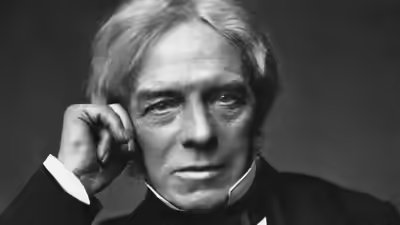
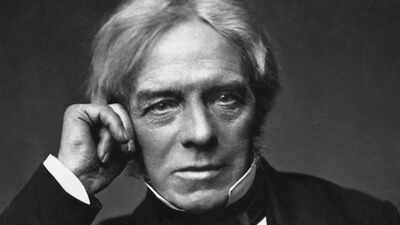
A retired judge once remarked that the people who worried him most in a courtroom were not the confused witnesses or the uncertain lawyers. It was the individuals who walked in convinced that every fact, every motive and every conclusion was already settled. They had no questions left to ask because, in their minds, the answers were already complete.That observation comes to mind when reading one of Michael Faraday’s lesser-known quotations. Unlike many famous sayings about science, discovery or innovation, this one is about people. More specifically, it is about certainty.At first, the statement sounds almost backwards. Society generally celebrates confidence. Employers look for it. Politicians project it. Leaders are often expected to display it. Yet Faraday was pointing towards something different. He was not criticising confidence. He was warning about the moment confidence hardens into absolute certainty.The difference may appear small, but history suggests otherwise.
Quote of the day by Michael Faraday
“There’s nothing quite as frightening as someone who knows they are right.”
What did Michael Faraday mean by this quote
Faraday’s quote draws attention to a habit that most people have encountered at some point in life: the belief that one’s own view is beyond question.The key phrase is “knows they are right.”Not thinks they are right.Not believes they are right.Knows.That certainty changes the way people interact with information. Once someone reaches the conclusion that they possess the complete truth, opposing evidence becomes easier to dismiss. Alternative viewpoints become less interesting. Questions begin to feel unnecessary.The danger is not always obvious. In fact, certainty can appear impressive. People who speak with complete conviction often seem persuasive because they sound as though they have removed all doubt.Faraday recognised that doubt, when used properly, serves an important purpose. It keeps the mind open. It creates room for learning.
Why certainty has caused problems throughout history
Many of history’s mistakes were not made by people who lacked confidence. They were made by people who had too much of it.Medical experts once dismissed ideas that later became accepted science. Military leaders entered conflicts believing victory was guaranteed. Business executives ignored changing markets because they were convinced customers would never alter their habits.Looking back, the errors appear obvious. At the time, they often did not.One reason is that certainty can create a false sense of security. When people become convinced that they already understand a situation completely, they stop looking for information that might challenge their assumptions.History repeatedly shows that reality is usually more complicated than it first appears.
Why Faraday understood this better than most
Michael Faraday spent much of his life exploring questions that had no clear answers.Born in modest circumstances in England, he received little formal education compared with many scientists of his era. Yet curiosity drove him forward. He read widely, attended lectures and gradually built a reputation as one of the most important scientific minds of the nineteenth century.His discoveries helped lay the foundations for technologies that shape modern life. Yet perhaps the most important habit he developed was not scientific brilliance but intellectual humility.Scientists rarely begin with certainty. They begin with questions.Experiments are conducted precisely because the answer is not yet known. The process depends on testing assumptions rather than defending them.Faraday understood that progress often begins when people admit they do not know everything.
How certainty affects everyday relationships
The quote is not limited to science, politics or history. Its lessons appear in ordinary conversations.Most people have experienced an argument where neither side was really listening. Each person was waiting for the other to finish speaking so they could repeat their own position.These situations rarely produce understanding. The reason is simple.When people become entirely certain of their own viewpoint, curiosity disappears. Questions stop. The conversation becomes less about learning and more about winning.Families experience this. Friendships experience this. Workplaces experience this.The issue is not disagreement itself. Disagreement can be useful. The problem begins when one side assumes there is nothing left to learn.
How to apply this quote in daily life
One practical way to think about Faraday’s observation is to pay attention to how we react when someone disagrees with us.Do we become curious? Or do we become defensive? The answer often reveals whether confidence has started drifting towards certainty.Being open to other perspectives does not mean abandoning convictions. People can hold strong beliefs while remaining willing to examine them.In fact, many thoughtful individuals do exactly that. They ask questions. They consider opposing arguments. They remain prepared to adjust their views if new evidence emerges.This approach does not weaken their position. It often strengthens it.
Why the modern world makes the problem worse
Faraday lived in the nineteenth century, but his quote feels surprisingly suited to the twenty-first.Modern communication allows people to find communities that share their opinions almost instantly. While this has many benefits, it can also create environments where existing beliefs are constantly reinforced.A person can spend years hearing only versions of what they already think. When that happens, certainty grows. Exposure to different perspectives shrinks.The result is not always greater understanding. Sometimes it is simply greater confidence.Faraday’s warning becomes especially relevant under these conditions because it reminds people that confidence alone is not evidence of correctness.
The strength of saying “I might be wrong”
There is a phrase that some people find uncomfortable:“I might be wrong.”It sounds uncertain.It sounds cautious.Yet those four words have often opened the door to discovery.Scientific breakthroughs have emerged because researchers questioned accepted assumptions. Successful businesses have adapted because leaders recognised flaws in existing strategies. Personal growth frequently begins when individuals acknowledge gaps in their own understanding.Certainty closes doors. Curiosity opens them. That distinction lies at the heart of Faraday’s quote.
What the quote teaches about wisdom
Many people associate wisdom with having answers. There is truth in that idea.Yet wisdom also involves recognising the limits of one’s knowledge.Some of the wisest individuals in history were remarkable not because they claimed certainty, but because they continued asking questions long after others believed the matter settled.They understood that knowledge evolves. Circumstances change. New evidence appears. Human understanding remains incomplete.That awareness encouraged humility rather than arrogance.
Lessons from Michael Faraday: Why certainty can be dangerous
Michael Faraday’s quote has survived because it identifies a pattern that appears across generations, professions and cultures. People who believe they possess absolute certainty often become difficult to persuade, difficult to challenge and sometimes difficult to learn from.irony is that certainty frequently feels like strength while quietly creating weakness. It reduces curiosity, discourages reflection and limits opportunities for growth.Faraday spent his life investigating the unknown. He understood that progress rarely comes from believing every answer has already been found. More often, it comes from recognising that there may still be something important left to discover.That is why his words continue to resonate today. The most intimidating person is not always the loudest or the most powerful. Sometimes it is the person who has stopped questioning themselves entirely. And history suggests that once questioning ends, mistakes often begin.