









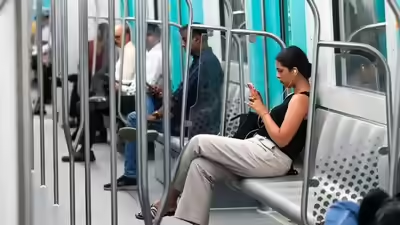
MUMBAI: Mobile connectivity has started returning on Mumbai Metro 3’s underground Aqua Line, marking the first visible sign of a breakthrough in the long-running impasse between the Mumbai Metro Rail Corporation (MMRC) and telecom operators over providing cellular services inside tunnels and stations.Several commuters on Wednesday reported receiving Vodafone signals while travelling on the corridor, indicating that the process of activating mobile networks has begun. Until now, passengers had largely remained disconnected once trains entered the underground section, leading to frequent complaints about the lack of connectivity.Confirming the development, a senior MMRC official said that work to operationalise mobile services has commenced and the rollout will be carried out in phases.“The work of starting mobile connectivity has begun. Gradually, all mobile operators will be able to activate their signals across the entire route of the Aqua Line (Metro 3),” the official said.The development follows months of deadlock between MMRC and telecom companies over the deployment of in-building solutions (IBS) infrastructure for the 33.5-km underground corridor connecting Aarey and Cuffe Parade. The dispute had earlier resulted in MMRC’s tender to appoint a neutral telecom infrastructure provider failing to attract any bidders, prompting concerns that commuters would continue to face connectivity issues.Subsequently, MMRC issued a Letter of Acceptance to telecom operators, paving the way for the deployment of the required infrastructure and ending the stalemate. The agreement provides a framework for operators to install and operate mobile network equipment across stations and tunnels.For commuters, the activation of signals is expected to significantly improve the travel experience by enabling uninterrupted voice calls, messaging, and internet access throughout the journey. The absence of connectivity had been one of the most common complaints since the underground line became operational in phases.While Vodafone users have already reported signal availability in parts of the corridor, MMRC officials said the rollout is a gradual process and other telecom operators will also activate their networks in stages until seamless mobile connectivity is available across the entire Metro 3 route.