









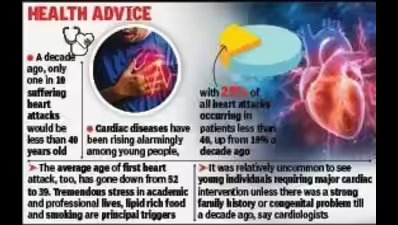
Kolkata: Tobacco use was one of the principal triggers of cardiac diseases that now affect more people under 40 than ever before, said cardiologists on the eve of World No Tobacco Day on Sunday. One in every four heart attacks in Kolkata is suffered by people below 40, they said.This year’s theme for the day is countering nicotine and tobacco addiction, which could help curb cardiac diseases among young people, cardiologists said.Experts stressed the need to spread awareness about the harmful effects of tobacco among youngsters. At an event by Manipal Comprehensive Cancer Care Centre and The Times of India on Saturday, the growing health risks of tobacco use among adolescents were highlighted.Manipal interventional cardiologist Dilip Kumar said 8.5% of school students in India consume tobacco. “The brain’s impulse-control centres continue developing until the age of 25, making adolescents particularly vulnerable to addiction. Nicotine consumption has become more attractive and accessible to youth with the rise of vapes and e-cigarettes,” said Kumar. Harsh Dhar, consultant, head & neck, skull base oncosurgery at Manipal Hospital, warned against misconception that areca nut and smokeless tobacco were safer alternatives, stating that both are classified as Class A carcinogens.At HCG Cancer Hospital, Kolkata, doctors focused on oral screening and awareness of the risks of tobacco use, including both chewing tobacco and tobacco smoke, in relation to head-and-neck cancers.While tobacco use remains one of the leading causes, there is growing evidence that environmental and genetic factors are also contributing significantly to the rising burden of lung cancer, said pulmonologist Vaibhav Kajaria at an event on the occasion held at Fortis Hospital.A decade ago, only one in 10 suffering heart attacks would be less than 40 years old, said Aniruddha Mandal, cardiologist, BM Birla Heart Hospital. “Cardiac diseases have been rising alarmingly among young people, with 25% of all heart attacks occurring in patients less than 40, up from 10% a decade ago,” said Mandal.It was relatively uncommon to see young individuals requiring major cardiac intervention unless there was a strong family history or congenital problem till a decade ago, said BP Poddar Hospital cardiologist Abhijit Aich Bhaumik. “Now, we frequently treat patients in their 30s and even late 20s with serious cardiac complications. Long working hours, constant professional pressure, financial anxiety, lack of work-life balance, digital overexposure, sleep deprivation and continuous psychological stress are silently affecting cardiovascular health in younger individuals,” said Aich Bhaumik.Charnock Hospital interventional cardiologist Tapobrata De said smoking was responsible for a majority of cardiac ailments in younger patients. “We are increasingly seeing people without any family history or hypertension getting heart attacks in their 30s. Invariably, most of them are smokers. Smoking increases triglyceride levels in blood and triggers cardiac ailments,” said De. He added that chronic stress leads to persistent elevation of stress hormones, higher blood pressure and disturbed sleep patterns, and unhealthy eating were also significantly accelerating heart disease.Cardiac disease is no longer an old-age disease, said RN Tagore Hospital cardiac surgeon Atanu Saha. “We are increasingly seeing heart attacks, coronary artery disease, hypertension and even sudden cardiac deaths in people under 40. In young people when there is a heart attack due to a blockage in the heart, it becomes more acute as the heart muscles don’t get a chance or time to open up the natural ‘collateral circulation’, which can protect the heart from significant damage. ,” explained Saha.GRAPHA decade ago, only one in 10 suffering heart attacks would be less than 40 years oldCardiac diseases have been rising alarmingly among young people, with 25% of all heart attacks occurring in patients less than 40, up from 10% a decade agoThe average age of first heart attack, too, has gone down from 52 to 39. Tremendous stress in academic and professional lives, lipid rich food and smoking are principal triggersIt was relatively uncommon to see young individuals requiring major cardiac intervention unless there was a strong family history or congenital problem till a decade ago, say cardiologists