









NEW DELHI: A Tamil Nadu farmer who once lost Rs 200 on every coconut tree he grew, has transformed his 11 hectare holding into a Rs 2.5-3 lakh per acre enterprise through multi-crop, tree-based farming – earning him recognition as a UN FAO Soil Farmer Hero. Valluvan (58), who cultivates in Pollachi district, said he was spending Rs 500 per tree annually while earning just Rs 300, leaving him in a cycle of losses before he overhauled his approach in 2009. “I was losing money on every coconut tree I owned. I knew I had to find a solution,” he told reporters in New Delhi. The turnaround came after he encountered Isha Foundation’s The Save Soil – Cauvery Calling programme, promoted by spiritual leader Sadhguru Jaggi Vasudev, which advised a shift to multi-crop, multi-tier tree-based agriculture.
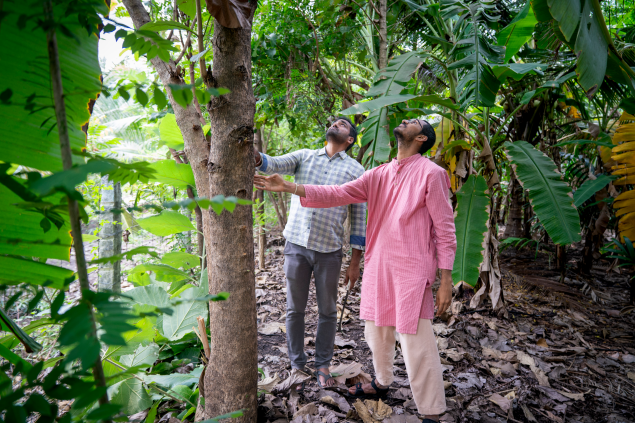
From three crop varieties, Valluvan now cultivates over 14 types on the same land – coconut, nutmeg, pepper, seven banana varieties, turmeric, elephant yam, curry leaves and 30 tree varieties. Income rose steadily from Rs 30,000 to Rs 2.5-3 lakh per acre annually, while soil organic carbon content climbed from 0.5 per cent in year one to 1.56 per cent by year seven. The farm also withstood two severe droughts, including a 2017 crisis when groundwater levels dropped beyond 1,000 feet and no rain fell for two consecutive years – a period when many neighbouring farmers felled their coconut trees. Through mulching and rainwater harvesting pits, the farm retained sufficient moisture without additional irrigation. It now uses one-tenth of the water previously required, and Valluvan expects to eliminate irrigation needs entirely within a few years.
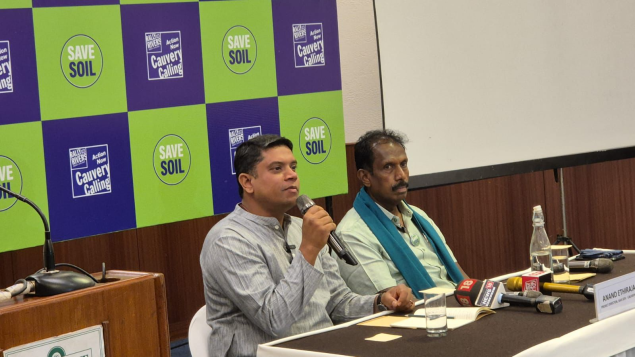
“Even sensitive crops like nutmeg and pepper, which farmers say need lots of water, survived without extra irrigation,” he said. The farm’s multi-crop model also functions as an economic hedge, said Anand Ethirajalu, Project Director at Save Soil – Cauvery Calling. “If coconut prices fall, his nutmeg saves him. If nutmeg also falls, his banana saves him. He has a series of crops,” Ethirajalu said, comparing the strategy to a cricket team with equally competent substitutes. Since its 2019 scaling, Cauvery Calling has planted 13.4 crore trees on private farmland across Tamil Nadu and Karnataka – roughly 10 per cent of the 242 crore trees targeted to restore year-round flows in the Cauvery river basin. Ethirajalu, however, flagged scaling, funding and policy barriers as key obstacles to wider adoption, calling for drip-irrigation support for timber crops, removal of restrictive state-level timber-sale regulations, and insurance and subsidy schemes for tree-based agriculture. “Tree-based agriculture is the only solution for global warming and the climate crisis threatening the entire world,” Valluvan said.