







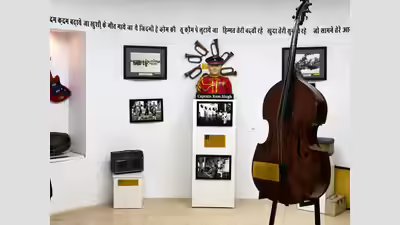
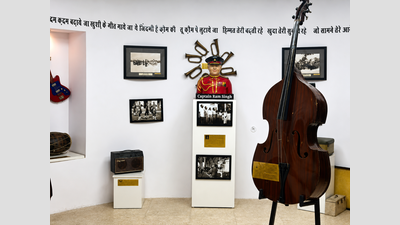
Lucknow: Nestled on campus of 35th Battalion of Uttar Pradesh Provincial Armed Constabulary (PAC) in Lucknow is a museum that preserves some of the bravest chapters of India’s internal security and border defence history.On International Museum Day, the PAC museum emerges not just as a gallery of old weapons and uniforms, but a living archive of courage, sacrifice and forgotten battlefield stories.Few know that UP PAC once guarded the Line of Control in Jammu and Kashmir at altitudes touching 14,000 feet. Beginning Jan 5, 1957, PAC contingents were deployed along the border under Army command, with fresh contingents replacing earlier units every two years. PAC personnel continued guarding sensitive border posts in Jammu and Kashmir till 1975.The museum documents how PAC jawans fought alongside the Army during 1965 and 1971 India-Pakistan wars and earned recognition for discipline and bravery. One section recalls the deadly attack on a PAC patrol led by Constable Nantha Singh at the Keran post, where he and 14 PAC personnel were martyred in a sudden Pakistani assault. Several PAC personnel were taken prisoners of war before being released after the Tashkent Agreement in 1966.Another gallery revisits a lesser-known chapter from independent India’s early years — the deployment of PAC companies to Telangana between 1947 and 1953 to combat armed communist insurgents in the then Hyderabad state. The force not only engaged heavily armed extremists but also recovered large caches of weapons during encounters.The museum also showcases PAC’s deployment in Assam in 1983 to maintain peace during periods of unrest, reflecting the force’s role beyond UP.Among the prized exhibits are vintage rifles, revolvers, wartime binoculars, communication equipment and rare artefacts believed to have been used during the World Wars. Carefully preserved uniforms, medals and battlefield memorabilia offer visitors a glimpse into the evolution of policing and paramilitary operations over decades.One of the most emotionally appealing sections is dedicated to Captain Ram Singh Thakuri, the legendary composer of the patriotic marching song “Kadam Kadam Badhaye Ja,” associated with the Indian National Army. His contribution to martial music and patriotic spirit has been specially highlighted in the museum.The collection at the PAC museum in Lucknow showcases a striking range of traditional weapons and battle gear once used across the Indian subcontinent. Among the exhibits are curved talwar (swords), widely used by Mughal and Rajput warriors between the 17th and 19th centuries, and Nepalese khukuris, the iconic forward-curved blades associated with Gorkha soldiers. The display also features crescent-shaped battle axes inspired by Indo-Persian designs, along with a 19th-century flintlock musket symbolising the rise of gunpowder warfare. Silver-hued Indo-Persian battle helmets, known as ‘Kulah Khud’, further recreate the military legacy of Central and North India.Additional DG, PAC, R K Swarnkar, said the museum was created to ensure younger generations and serving personnel remain connected to the legacy of sacrifice and discipline associated with the PAC.“While many museums showcase royal history or ancient artefacts, this one narrates stories of ordinary policemen who stood on freezing borders, fought insurgencies and upheld law and order in some of the country’s toughest situations,” he said.The museum completed last year is now open to the public, schools and colleges, with prior permission from ADG PAC.