







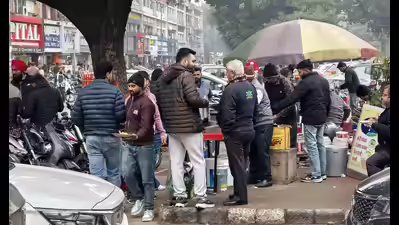
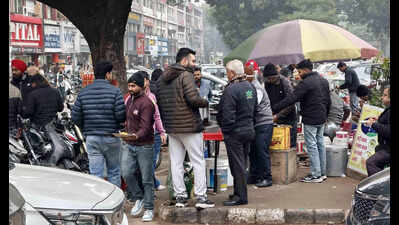
Chandigarh: The Supreme Court-appointed amicus curiae has flagged the expanded definition of “essential service providers” (ESP) in Chandigarh’s 2018 vending bye-laws as “ex-facie unsustainable”, prompting the Town Vending Committee (TVC) to consider restoring a narrower classification at its meeting on Monday.In observations placed before the apex court in the case of Malkit Singh vs State of U.T & Ors, the amicus said the inclusion of a wide range of activities under ESP had led to “unregulated proliferation” of vending across the city, including at key locations.Acting on the observations, the TVC is set to take up an agenda to amend the definition by removing several activities that were added later, with the aim of bringing the category closer to its original, limited scope.As per municipal corporation records, the ESP category initially covered only a few services such as cobblers, milk/bread/egg sellers, tea vendors, cycle/rickshaw repairers and dhobis (ironing). A “massager” category was added briefly before being removed. Subsequent amendments, however, brought in food items such as tandoor, chhole bhature, kulche chole and parantha vendors, besides fruit and vegetable sellers and florists outside religious places.The amicus noted, “By no stretch of imagination can activities such as tandoor, chhole bhature, kulche chole, paratha and florists be termed essential services… The further qualifier ‘within the vicinity’ renders the category vague and open to abuse.” It added that such expansion diluted the concept of essential services and enabled large-scale, unregulated vending under its cover.The observations further pointed out that many such vendors operate from permanent or semi-permanent fixtures in violation of the 2018 bye-laws, leading to hygiene concerns, air pollution and clustering of similar activities. “Such an expansive definition defeats the object of planned vending zones and effective regulation,” the amicus said, calling for a narrower, clearly defined classification.It recommended that the court direct a suitable narrowing of the ESP definition and treat vendors operating from permanent structures as unauthorised encroachers, irrespective of registration status.Civic debateThe expansion of ESP categories had been a contentious issue in MC general house meetings, with councillors across parties pushing for inclusion of more trades, citing livelihood concerns of street vendors.What may changeRemoval of later-added food and retail activities from ESPReturn to limited, service-based classificationStricter action against semi-permanent structuresAttempt to balance livelihood and regulation