









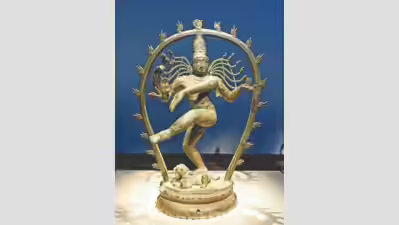
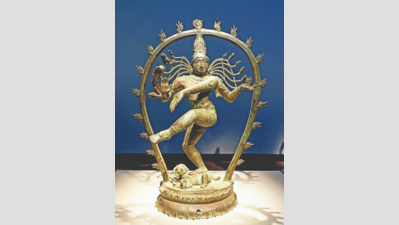
S Vijay KumarWhile India celebrates the return of the Somaskanda idol stolen from a temple in Alathur, Tiruvarur district, and the Sundarar and Paravai bronzes stolen from Veeracholapuram temple from the Smithsonian Museum at an event in New Delhi, it is shocking that the same agreement appears to leave the Thiruthuraipoondi Nataraja on long-term loan with the museum.India’s agreement with the Smithsonian’s National Museum of Asian Art over the recovered Nataraja bronze has been presented as a repatriation success. But did India go beyond recovering the idol and assume a right it may not legally possess — the right to lend a consecrated temple deity back to an American museum?A core principle of Indian temple law is that a consecrated idol is not merely an antiquity, but a deity in law, and property dedicated to it belongs to the temple estate. Trustees, departments or the govt may administer or protect it, but that does not automatically make the state its owner.The Smithsonian agreement states that the National Museum of Asian Art concluded the bronzes were not legally exported and agreed to transfer whatever “right, title and interest” it held to the Indian Embassy. But in the same agreement, India agreed to lend one bronze back to the museum under a “long-term loan agreement”. Appendix B mentions a loan period from March 26, 2026 to March 25, 2029, but does not clearly guarantee automatic physical return to India at the end of that period. India can act as the diplomatic recipient of repatriated heritage objects. But receiving custody is not the same as acquiring ownership.If the Nataraja is temple property — and especially if it is the subject of an FIR concerning theft or illegal export — then India cannot treat the bronze as state property available for international loan. The agreement appears to assume that the Embassy, acting on behalf of the Republic of India, can also act as a “lender”. Yet a lender must either own the object or be specifically authorised by the true owner. In the case of a consecrated temple idol, that question cannot be brushed aside. The lawful owner is not the govt in any ordinary sense, but the deity or temple estate. Unless the title has been lawfully established in favour of the Union, or the lawful custodians have expressly authorised such a loan, the legal foundation of the arrangement is weak. The agreement contains clauses on transport, insurance, loss and liability, showing India accepted logistical and legal responsibility for the idol. But administrative control, by itself, does not establish lawful ownership. India’s campaign to recover stolen idols has always rested on a simple moral claim: temple objects illegally removed must be restored to their rightful setting. A loan-back arrangement risks reducing restitution to a paper exercise.For museums, such deals may resolve provenance disputes while allowing them to retain prized objects in another legal form. But for devotees and temple communities, this is not a true return. A Nataraja is not merely an exhibit, but a deity meant for worship and temple life. The issue is not whether India can receive the Nataraja. The issue is whether it can re-lend Him.(The writer is co-founder of the India Pride Project, a citizen-led initiative to combat heritage crimes)