









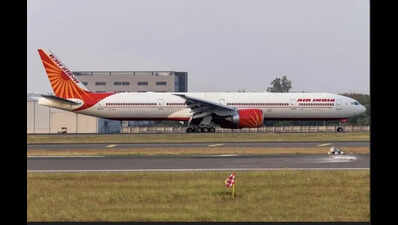
New Delhi: Usually by May, flights to Bangkok, Dubai and Singapore are packed, WhatsApp family groups are flooded with holiday itineraries and travel agents are busy handling last-minute summer bookings. But this year, travel industry stakeholders say the mood is far more cautious.On Sunday, PM Narendra Modi urged citizens to reconsider non-essential foreign travel and instead promote domestic tourism, citing global uncertainties and pressure on foreign exchange outflows. The appeal comes at a time when outbound leisure travel was already under strain due to rising fuel surcharges, elevated airfares and expensive forex rates.Anil Kalsi, vice-president, Travel Agents Federation of India, said even before PM’s remarks, leisure travel demand had weakened significantly. “Summer vacation is usually peak season, but even now seats to destinations like Bangkok are available. Earlier, flights would be running full by this time,” he said.Fares to Western Europe and the US are extremely high, and even relatively affordable destinations such as Thailand are no longer economical. “A Bangkok package that once cost around Rs 20,000 is now nearing Rs 44,000. For many middle-class families, international holidays have become difficult to afford,” Kalsi said.However, he noted that leisure travel accounts only for 25-30% of India’s outbound travel market, while education, business and family-related travel would continue largely unaffected. However, he warned that discretionary holiday travel was likely to decline further. “Travellers who were still undecided about booking holidays may now postpone plans altogether. Messaging from the country’s top leadership inevitably shapes public sentiment,” he said.According to industry stakeholders, Indian airlines are also grappling with operational disruptions caused by geopolitical tensions in West Asia. Several carriers are being forced to take longer routes due to airspace restrictions, increasing fuel consumption and operational costs. Airlines are also witnessing weaker passenger demand on some international sectors. Kalsi said routes connecting India with West Asia and Central Asia, particularly key revenue-generating sectors such as Dubai and Abu Dhabi, were already beginning to feel the impact.Echoing similar concerns, M Iqbal Mulla, president of Global Tourism Council and former head of Travel Agents Association of India, said travellers have become increasingly cost-conscious. “Fuel prices are rising, airport charges are increasing and the rupee’s depreciation is making foreign travel significantly more expensive. Earlier, if someone spent $500, the rupee outflow was far lower than it is today,” he said.“We planned five to six group tours to Japan, but after the recent announcement, some travellers have started reconsidering their plans. Tour operators work largely on advance bookings and fixed packages, so sudden demand fluctuations directly affect the industry,” said Mulla.He added that international travel has increasingly become aspirational for Indian middle-class families seeking global exposure and experiences for their children. “That sentiment has now weakened to some extent,” he said.Rajiv Mehra, general secretary, Federation of Associations in Indian Tourism and Hospitality, said, “In recent years, there has been a growing trend of Indians travelling abroad for holidays, while affluent families are increasingly opting for destination weddings overseas. At a time of geopolitical uncertainty and pressure on foreign exchange reserves, encouraging domestic spending becomes important for the economy.”He stressed that equal attention must also be paid to attracting more foreign tourists to India. “India possesses immense tourism potential through its cultural diversity, spirituality, heritage and natural beauty, yet foreign tourist arrivals remain relatively low. Stronger global promotion, easier visa policies and improved international connectivity could significantly boost inbound tourism and forex earnings,” he said.