










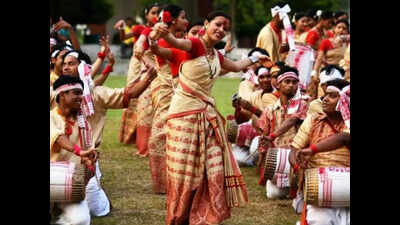
Guwahati: Markets across the city are awash with festive essentials as shoppers weave through stalls ahead of Rongali Bihu, picking up traditional delicacies, attire, and Assamese scarves. From the bustling lanes of Khanapara to Dighalipukhuri, the festive buzz is unmissable — though traders say the sales are not quite keeping pace with the crowds.Vendors from districts such as Nalbari, Kamrup, and Golaghat point to a key dampener – the timing of elections just ahead of Bihu. With many residents travelling home to vote, footfall has not translated into sales, leaving small traders worried during what is typically their most crucial window for sales.“Many have travelled back to their native places to cast their votes, which led to a dip in the number of buyers. This is our peak-season and it is crucial for small scale traders like us,” said Sharat Das, a seller from Nalbari.“We are seeing people in the markets, but they are either browsing or making minimal purchases. Compared to previous years, the sales are not matching the footfall,” said Bijoy Rabha, another seller from Kamrup district.Others traders echoed similar concerns, adding that the the elections held just before the festive period has divided public attention and spending capacity. “If the election dates were postponed, it would have been better for us,” another seller added.The markets are brimming with traditional Bihu essentials, including ‘gamosas’ (traditional Assamese scarves), ‘dhols’ (traditional drums), festive ornaments, and traditional attire like dhoti and kurta.Items like ‘poka mithoi’ (Assamese spiced rice flour balls) at Rs 70 per packet, black rice at Rs 160 per kg, ‘pitha’ starting from Rs 60–80 per packet, ‘bora dhanor seera’ (flattened bora rice) at Rs 160 per kg, ‘mahor dali’ (split black gram) at Rs 180 per kg, ‘sunga pitha’ from Rs 100 onwards, coconut jaggery dumplings priced between Rs 80 and Rs 100 per packet, and black sesame at about Rs 300 per kg are flooding the markets.Despite the concerns, traders remain hopeful that sales may pick up on the eve of the festival, as shoppers are expeted to step out in larger numbers for last-minute perchases. Meanwhile, the city continues to prepare for Bihu with cultural programmes, community feasts, and traditional performances lined up to mark the Assamese New Year.