
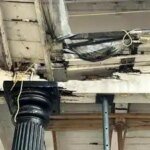





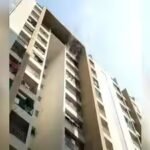

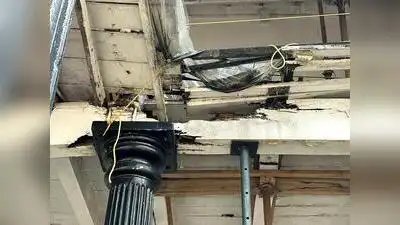
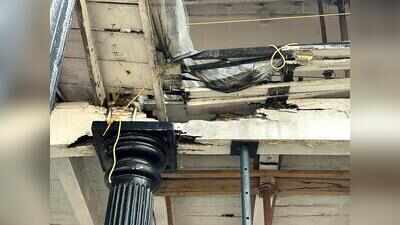
Panaji: Civic bodies across Goa have flagged hundreds of dilapidated buildings that need demolition and reconstruction. However, builders say redevelopment will remain stalled without a formal policy and incentives to make projects financially viable.Legislative disclosures and civic inspections have identified 381 govt, private and commercial buildings as dilapidated or unsafe across the state. Rajesh Sheth, president of Credai, said the govt must provide builders with a clear redevelopment policy, describing it as the industry’s basic demand.Many old residential colonies, he said, were built when regulations did not mandate lifts or stilt parking.Mormugao Municipal Council has identified 41 dilapidated buildings and issued demolition notices to 38 under Section 190 of the Goa Municipalities Act. An inspection drive flagged 49 unsafe buildings in Mapusa, while 21 structures in Margao were identified for structural review. Ponda has 15 to 16 such buildings, while the Corporation of the City of Panaji has identified 12 requiring demolition.Builders say several more housing societies have structurally weakened and need redevelopment. The 30-year-old Nilgiri Apartments near the Borda govt ITI, for instance, suffered multiple partial collapses of its balconies.“Parking requirements have increased as people are buying more cars with the economy moving upwards,” Sheth said. He added that many older buildings lack lifts, making access difficult for residents who bought flats when they were younger but now struggle to climb to the second or third floors. He suggested prioritising residential areas before taking up commercial redevelopment.A key consideration for builders and flat owners is the available floor area ratio (FAR). If a building has already exhausted the permissible FAR on its plot, redevelopment offers no additional saleable area to recover demolition and reconstruction costs.“The only way for developers to make it viable is to get additional FAR, which they can sell to offset the costs borne by existing plot or flat owners,” said Avez Mohidin, Credai secretary. However, he cautioned that increasing FAR or relaxing height restrictions would not work in every location.A five-storey building in a crowded town such as Panaji or Mapusa may need to become an eight-, nine- or 10-storey structure to make redevelopment viable. The same model, however, may not work on smaller village plots. Mohidin called for redevelopment zones to be designated based on local conditions.“Formalising a strategy or policy for redevelopment is very, very important,” he said.Credai said demand for redevelopment has been building over the past couple of years. Mohidin said he receives at least one inquiry a month, totalling about 10 to 12 over the past year. He estimated that inquiries to developers have increased by 20% to 30% over the previous year.