








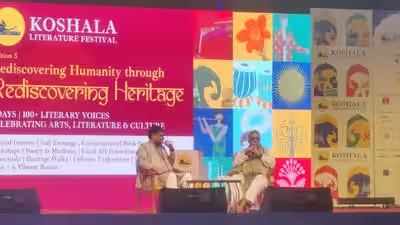
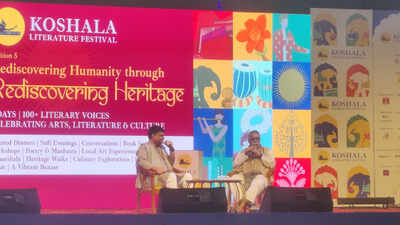
LUCKNOW: Contrasting the restrictions imposed on women in present-day Afghanistan with the historical roles of Muslim women rulers and military leaders in India, author and literary scholar Purushottam Agrawal on Sunday said interpretations of religious scriptures reflect the mindset of those who read them.Responding to a TOI question about his observations in his book Kabir, Kabir at the fifth edition of the Koshala Literature Festival, Agrawal questioned whether the treatment of Afghan women, whom he described as being reduced to objects, represented the only possible interpretation of the Quran.Citing Razia Sultan, Chand Bibi and Lucknow’s Begum Hazrat Mahal, he recalled how Muslim societies in India had historically accepted women as rulers and military commanders.“Were they not good Muslims?” he asked, questioning the use of religious scriptures to justify restrictions on women.Drawing a parallel with the Bhagavad Gita, Agrawal said Mahatma Gandhi and Nathuram Godse arrived at different conclusions despite reading the same scripture.He said Bal Gangadhar Tilak and Bankim Chandra Chattopadhyay interpreted the Gita as a text inspiring struggle, including armed resistance if necessary, but neither read it as a justification for individual murder.“The way you read a scripture depends on your own mindset,” Agrawal said.