











‘81% Carry Disease-Causing Germs’
Mobiles have more germs than loos
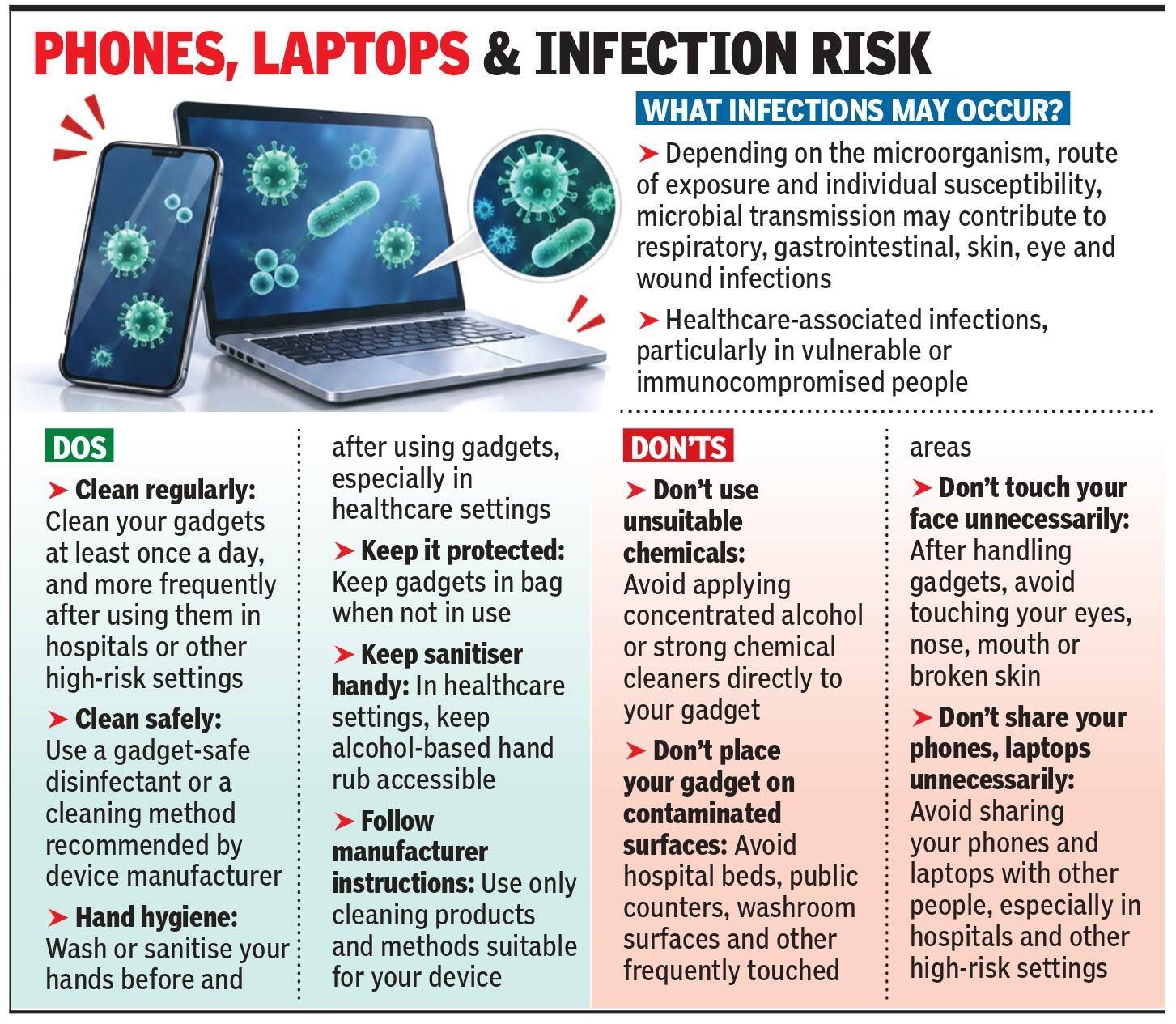
Lucknow: Your mobile phone could be carrying up to 10 times more bacteria than a public toilet seat. During the World Antimicrobial Awareness Week (Nov 18-24), experts in Lucknow drew attention to smartphones as an often-overlooked source of contamination that could help spread infections.The risk can be easy to miss. Indiranagar resident Rameshwar Singh (72), who spent most of his time indoors but routinely handled his mobile phone without cleaning its screen, would often pick it up after touching doorknobs, newspapers and other household surfaces, or while eating.When Singh developed a severe chest infection that required medical treatment, doctors cited his case to illustrate how poor hand hygiene and frequently handled devices may provide opportunities for germs to reach the nose, mouth, eyes or broken skin. While the phone cannot be confirmed as the source of his infection without microbiological evidence, experts said such habits can increase the chances of germs moving between surfaces, hands and the body.Citing a study highlighted by the Indian Council of Medical Research (ICMR) involving 386 participants, experts said disease-causing bacteria were found on 81.8% of mobile phones and 80% of hand samples. They warned that personal gadgets — laptops, phones, remotes — could also carry bacteria resistant to several commonly used antibiotics.Former head of the pathology department at KGMU, Dr U S Singh, and microbiologist at RMLIMS, Prof Manodeep Sen, said mobile phones could act as carriers, allowing germs to move between hands and contaminated surfaces.Experts said mobile and laptop keyboards can harbour up to 10 times more bacteria than a public toilet seat. Bacteria commonly found on our hands, including certain types of staphylococci, transfer to device screens. “This is a growing concern as more community infections are becoming resistant to multiple antibiotics,” the experts said.The risk is greater for people with weakened immune systems, including cancer patients and transplant recipients. Children and people above 65 may also be more vulnerable.Patients and healthcare workers must maintain strict hand hygiene. Alcohol-based hand rubs should be kept on patient tables to ensure sanitisation before and after mobile usage, the doctors advised, adding that hands often form the link that allows germs to move between contaminated surfaces, mobile devices and people. Regular hand hygiene is, therefore, particularly important before and after using phones in hospitals and other healthcare settings.The experts, however, cautioned against applying highly concentrated alcohol directly to mobile phones, saying it could damage screen coatings and components, and advised using cleaning products specifically designed to be safe for electronic devices.They also recommended avoiding placing phones on potentially contaminated surfaces and keeping them in bags or pockets when not in use. Carrying hand sanitiser and cleaning hands regularly, particularly before and after using a phone in hospitals, could further reduce the transfer of germs.