



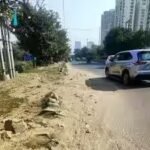

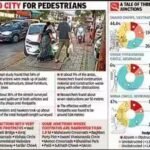

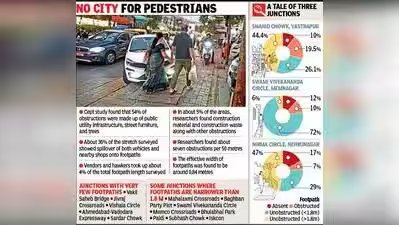
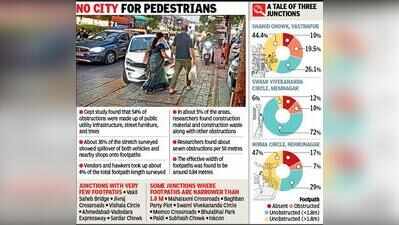
Slug: Cept StudyAhmedabad: Twenty Cept University students each surveyed a 1 sq km precinct of the city and found that only 12 km of the 20 km stretch had footpaths, and merely 5 km of the footpaths were walkable. On the footpaths, the students found several obstructions, including parked vehicles, shop spillovers, street furniture, and construction waste.The students conducted the survey as part of Cept’s Understanding City studio.Tutor Maulik Chauhan and teaching associate Pratyusha Chowdhury mentored the students as they tackled the topic of walkability of city roads.Understanding City is one of the university’s foundational studios and helps students see their surroundings through a new lens, said experts. The studio’s work is part of the ongoing Winter Exhibition at Cept University.Road safety experts said pedestrians are among the most vulnerable road-user groups. “Year after year, pedestrians form the largest group of victims of fatal road accidents, according to National Crime Records Bureau reports,” an expert said. “The number could be reduced with proper infrastructure, which makes it unnecessary for citizens to sprint across busy roads.”According to students, areas with footpaths more than 1.8 metres wide included Chandkheda Chowk, Vijay Crossroads, Delhi Darwaza, CG Road Crossroads, and Sardar Chowk.On the other hand, footpaths were largely absent from areas such as Vishala Circle, Jivraj Crossroads, Expressway Junction, and Vakil Saheb Bridge Junction.The study also found that parked vehicles were major obstructions at the porous edge of the road — the connection between the carriageway and nearby spaces.In both commercial and residential precincts, occupants of ground-floor properties often use the space. In commercial areas, about 75% of the obstruction comes from vehicles, according to the study.The study found that at junctions with limited footpath availability (28%), 92% of pedestrians walk on carriageways.