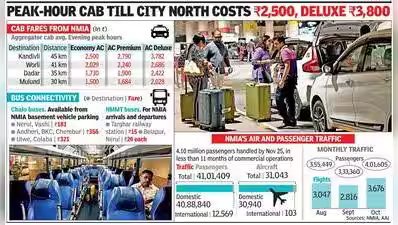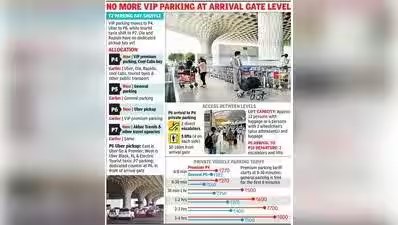









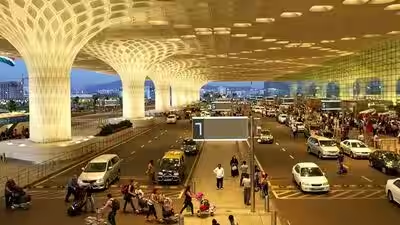
MUMBAI: From walking straight off an aerobridge to squeezing into a coach bus for the ride between the terminal and aircraft, flying out of Mumbai could become less seamless as the airport shifts flights out of Terminal 1 (T1) ahead of its demolition and reconstruction. With no increase in the number of aerobridges even as Terminal 2 (T2) handles additional flights and passengers, competition among airlines for contact stands is expected to intensify.
This situation has led to delays and alternative boarding methods for some passengers recently.
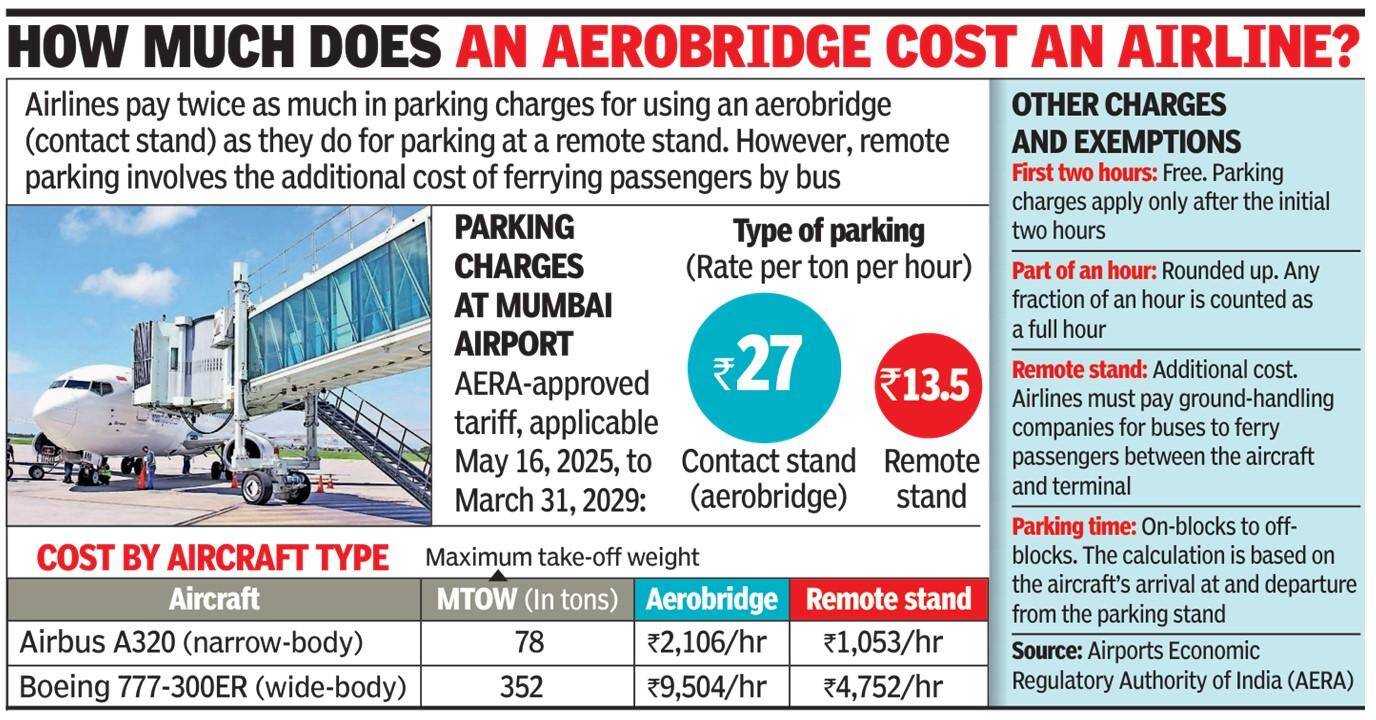
T1 is set to shut next winter, with redevelopment scheduled for April 2028. Most of its domestic flights will move to T2, while some international services currently operating from T2 could shift to Navi Mumbai International Airport. Until the new T1 is commissioned, scheduled for Dec 2030, T2 will have to handle substantially more aircraft with its existing aerobridges.Mumbai T2 has 51 operational aerobridges that can accommodate a total of 127 narrow-body aircraft such as A320s and B737s. It handles about 45 million passengers a year, against T1’s capacity of 15 million passengers a year and just seven aerobridges. “The number of flights vying for an aerobridge has started going up at T2 and will continue to do so,” said a source.On Nov 17, passenger Amit Kamat posted on X that he was stuck on a Delhi-Mumbai flight for 42 minutes after landing due to the non-availability of an aerobridge, only to be told to disembark using a step ladder. Another passenger on a Dehradun-Mumbai flight earlier this week faced a similar problem, remaining seated for about 45 minutes after landing before being asked to board a coach bus.How are aerobridges allocated? The process begins the previous evening. Between 9 pm and 11 pm, the Airport Operations Control Centre (AOCC), comprising stakeholders including the airport operator and airlines, prepares a resource allocation plan for the following day based on flight timings. Airlines are informed of allocations for aerobridges, check-in counters and baggage belts. The plan can be adjusted during the day as operational conditions change, but the AOCC aims to maximise aircraft movements through contact stands and minimise vehicle movements on the airside, said a source.Aircraft type is an important consideration. Wide-body aircraft are generally given priority over narrow-body ones because of their size. Airlines can request preferred stands, but availability and aircraft compatibility determine whether these can be accommodated. Longer ground time and aircraft rotations can also result in a flight being assigned a remote stand, even when aerobridges are available elsewhere. Most airlines prefer aerobridges, despite their higher cost compared with remote stands, the source added.