







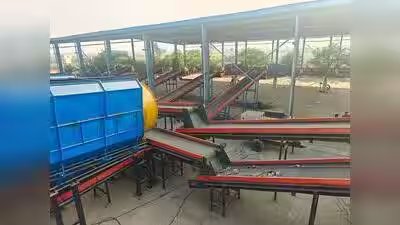
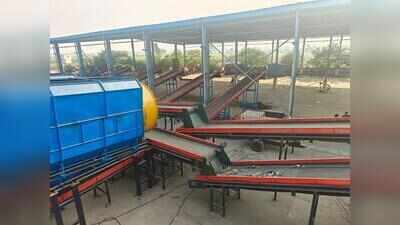
Ghaziabad: A cluster-based solid waste management plant in Nidauri, which will process waste from the city and neighbouring urban local bodies (ULBs) at a shared facility, is set to start operations soon. The plant, currently undergoing trial runs, was inspected by municipal commissioner Himanshu Nagpal on Wednesday.Spread over 45,000 sqm, the facility has the capacity to treat 1,000-2,000 tonnes of waste daily, produce compost and refuse-derived fuel, and is expected to strengthen the corporation’s waste processing capacity.The cluster-based model pools municipal solid waste from multiple nearby towns and ULBs at a central processing facility, instead of each civic body setting up its own treatment plant. The Nidauri facility will process waste from Ghaziabad and neighbouring areas, including Khoda-Makanpur Nagar Palika. Officials said it is the first plant of its kind in the city.The city currently generates around 1,400 metric tonnes of waste daily and has been struggling to manage it. The new facility is expected to provide additional capacity for scientific waste processing under the Solid Waste Management (SWM) Rules, 2026, which took effect in April.“According to the SWM Rules, 2026, landfills are restricted to non-recyclable and inert residual waste, with higher charges for unsegregated waste and time-bound biomining of legacy waste. While the city’s proposed Galand waste-to-energy plant is yet to take off, the new plant in Nidauri will help address the waste disposal problem,” Nagpal said.The facility has been developed under a public-private partnership model and is equipped with machinery for processing and segregating waste. A pit system has been built for unloading, allowing waste vehicles to enter, empty their loads and leave in a streamlined sequence, the official said.A drying system and 10 trommels have also been installed. Trommels are rotating cylindrical drums with perforated plates that act as sieves to separate different components of waste.The plant also has a leachate treatment system, along with spraying and decomposition facilities, to treat liquid waste generated during processing. Leachate, the liquid that seeps through waste, can contaminate groundwater if not treated properly. Officials said the treatment system at the plant would help address this risk and prevent groundwater contamination in and around the facility.