









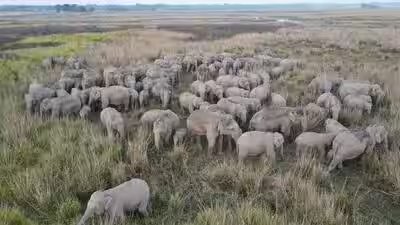
Guwahati: In Assam’s Golaghat district, farmers are protecting their paddy harvest by growing a share they never intend to reap — 100 bighas exclusively for wild elephants.At Thuramukh, just outside Nambor Wildlife Sanctuary, these feeding plots keep emerging herds occupied while farmers in 90 villages harvest around 30,000 bighas, conservationist Binod Dulu Borah said.The strategy buys crucial time during Nov-Dec, when ripening paddy draws elephants into fields, fuelling crop losses and human-elephant conflict.Borah, a founder of conservation organisation Hati Bondhu, conceived the plan to cultivate unused land outside the sanctuary. The initiative has helped villagers return to fields they had abandoned after years of elephant raids, he said.“The villagers had left cultivation for about 8-10 years, until 2020, as the elephants used to destroy the crops during the harvesting time. We were then working in Nagaon to sort out the human-elephant conflict by planting fruits and elephant grass in a huge area. At that time, we got to know about the issue in Golaghat and then we did some studies.”The team mapped elephant movements from Golaghat to Nagaon, identifying where and when herds gathered before entering cultivated fields.“The harvesting season is like a festival season for the elephants. They are animals. They do not know who did the cultivation and why. They only come out to have their food. Besides having their food in the cultivation fields, they also get a chance of mating, which helps them increase their population. Otherwise, the elephants mostly roam around in small groups during the non-harvesting season,” he added.The Golaghat initiative began six years ago. Its method is to make the feast last — elephants feed on one section before moving to the next, giving farmers a longer harvesting window.“The elephants get the paddy crops just after coming out of the Nambor Wildlife Sanctuary. We restrict them in 10-15 bighas of crops first using solar fencing and other traditional methods, thereafter another similar and the system follows. This helps in keeping the elephants away from entering the villages. By the time the elephants complete the entire area cultivated for them, the farmers of the villages complete the harvesting,” he added.Founded in 2017, the organisation, whose co-founder is Pradip Bhuyan (94), now manages over 250 bighas of paddy across Nagaon and Golaghat, with plans to expand. It has also planted jackfruit, elephant-apple, Napier grass and broom grass across 1,500 bighas.The approach grew from a failed experiment. Banana plantations did little to reduce conflict, prompting further study and a shift to paddy, grasses and fruit trees — food for elephants that could help farmers keep their own.
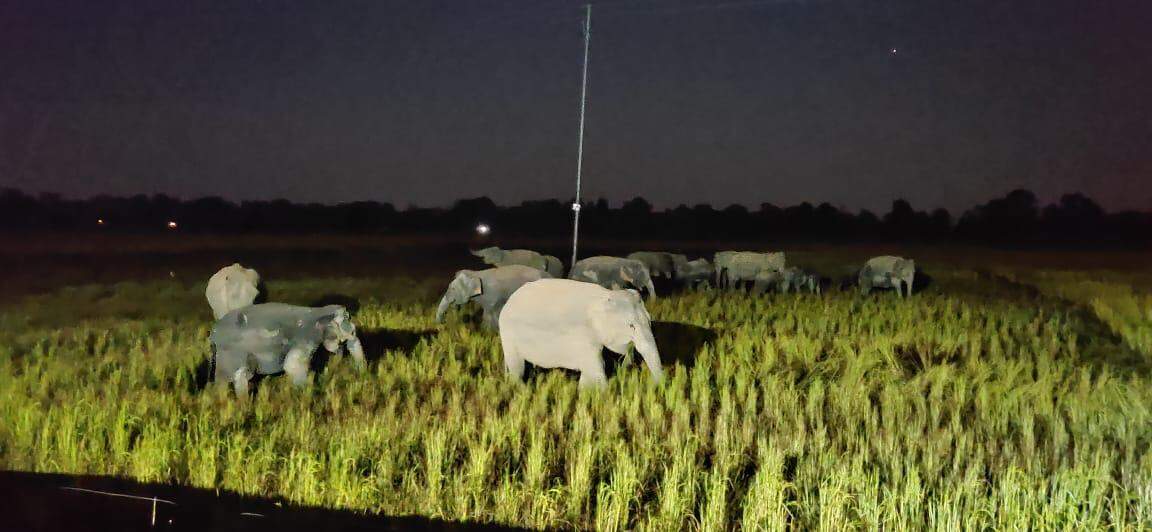
Wild elephants having paddy crops cultivated for them in 100 bighas of land adjacent to Nambor Wildlife Sanctuary in Assam’s Golaghat