








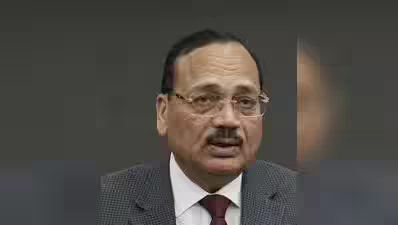

Hyderabad: Chief Justice of India, Justice Surya Kant, on Saturday called for a balanced and responsible approach to using artificial intelligence in legal education, cautioning that technological advancement should not undermine academic integrity, independent reasoning and the ability of future lawyers to apply legal principles.Addressing the inaugural session of the two-day first international conference organised by Commonwealth Legal Education Association (CLEA) on ‘Globalising Legal Education: Reimagining Law Schools’ in Hyderabad, he said clinical legal education should form an integral part of the law curriculum. He proposed compulsory legal aid work for every law student before graduation, with extra academic credits for additional service.The event began with a welcome address by Justice E V Venugopal of the Telangana high court and chairperson of the CLEA organising committee, Prof (Dr) S Sivakumar.The CJI said banning AI tools would be neither practical nor wise as the technology had already become part of professional and academic life. He said the priority should be to establish clear rules for their use and ensure that students understand the difference between using technology as an aid and allowing it to replace their own thinking.He expressed concern over the growing reliance in educational institutions on software meant to detect AI-generated content. Referring to a study that found widely used AI detectors wrongly identifying more than three in every five essays written by non-native English speakers as machine-generated, he said an honest student could be branded a cheat because of the machine’s findings.“No student should be held guilty of misconduct on the word of a machine alone,” he said. He suggested that written assessments be supplemented with oral explanations, defence of legal authorities and exercises to identify errors in AI-generated answers. He also urged CLEA to develop model guidelines on disclosure of AI assistance in legal research for adoption by law schools and journals across the Commonwealth.Referring to prominent lawyer and educationist Professor N R Madhava Menon’s vision, the CJI said legal education should take students beyond classrooms and connect them with people in need. He recalled Menon’s efforts to promote legal clinics for the poor.Supreme Court judge and CLEA patron Justice P S Narasimha warned that excessive dependence on AI could weaken law students’ ability to think independently. He said the process of learning law was as important as the final outcome. “While AI could help address complex issues and improve the delivery of legal services, its greatest risk lay in replacing human thinking rather than merely assisting it,” he said.Acting Chief Justice of Telangana high court, Justice P Sam Koshy said the conference theme was timely and consequential, as it invited participants to look beyond the conventional understanding of legal education as the teaching of statutes, precedents and procedural rules.Telangana advocate general A Sudarshan Reddy said the state govt was introducing 10 new subjects, including cyber laws and cyber security, emerging technologies and law, into the undergraduate law curriculum.“The inclusion of these subjects is academically justified and aligned with global best practices in legal education,” he said. He added that legal education, the practice of law and the tools available to lawyers were changing, but “what remains unchanged is, most importantly, the expectations of society from the legal profession, and foundations of profound learning and honour.”Solicitor general of India Tushar Mehta and Attorney general for India Dr R. Venkataramani also addressed the gathering, which was attended by Chief Justices, judges from various high courts, vice-chancellors, deans, senior academics, practitioners, researchers and legal educators.