








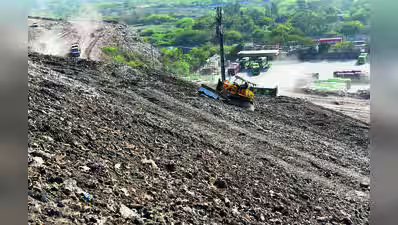
Bathinda: Punjab’s 166 urban local bodies (ULBs) have 42.76 lakh metric tonnes (LMT) of unremediated legacy waste as of Oct 2026, according to an affidavit filed by chief secretary K A P Sinha before the National Green Tribunal (NGT).The state had accumulated 95.88 LMT of legacy waste, of which 53.12 LMT had been remediated by Oct.In Jan 2026, the state had 84.09 LMT of legacy waste. Of this, 43.47 LMT had been remediated, leaving 40.62 LMT unremediated. The figures were cited by the chief secretary in a status report filed before the NGT in a matter concerning compliance with the Municipal Solid Waste Management Rules, 2016, and other environmental issues. The affidavit was uploaded by the tribunal on Saturday.The 166 ULBs generate 4,309 tonnes per day (TPD) of solid waste, of which 3,900 TPD, or 90.51%, is currently processed. This leaves a gap of 409 TPD (9.49%), which continues to accumulate.The affidavit said efforts were being made to bridge the 409-TPD gap and process accumulated waste at regular intervals to prevent further growth of dumpsites and creation of legacy waste. It added that, in compliance with the recently notified Solid Waste Management Rules, 2026, which came into effect on April 1, additional infrastructure would be planned and executed to strengthen solid waste management.The affidavit also revealed a substantial gap in sewage treatment. The 166 ULBs generate 2,286.91 million litres per day (MLD) of sewage, of which 2,038.80 MLD is currently treated by 172 sewage treatment plants (STPs), leaving 248.11 MLD untreated.Of the 172 STPs, 147 comply with prescribed quality parameters, four are non-compliant, 19 are under stabilisation, while one each is under maintenance and upgradation.Of the 172 STPs under operation and maintenance, 126 are operated and maintained by the Punjab Water Supply and Sewerage Board, 36 by municipal councils or corporations, three by the department of water supply and sanitation (DWSS), two by GMADA and one by GLADA. Four are peri-urban STPs.Between February and October 2026, nine new STPs with a designed capacity of 45.5 MLD became operational, reducing the sewage treatment gap by 29.3 MLD. Another 37 STPs with an installed capacity of 206.40 MLD are under construction to address 120.38 MLD of the sewage-treatment gap. These are expected to be completed by Dec 31, 2027.Besides these, 23 STPs with an installed capacity of 204 MLD are at the tender or planning stage and are intended to address the remaining 127.73 MLD gap. They are expected to be completed by Dec 31, 2028.