








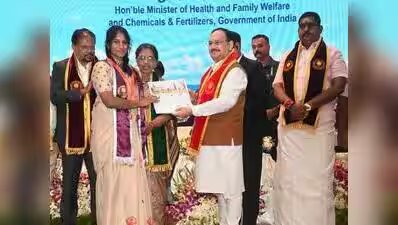
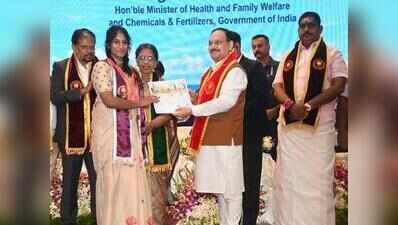
Puducherry: Union health and family welfare minister Jagat Prakash Nadda said the Union govt is on track to add 75,000 undergraduate and postgraduate medical seats by 2029 and balance UG and PG seat capacity.Speaking after conferring degrees on the students during the 15th convocation of Jawaharlal Institute of Postgraduate Medical Education and Research (Jipmer) in Puducherry on Saturday, Nadda said India has grown from one All India Institute of Medical Sciences (Aiims) at the end of the last century to six opened under late Prime Minister A B Vajpayee’s tenure and 23 now. The number of medical colleges has risen from 387 to 863, undergraduate students from 51,000 to 1.43 lakh and postgraduate seats from 31,000 to 91,572, he said.Citing the cabinet sanction last year of ₹15,000 crore for 10,000 undergraduate and postgraduate seats at an estimated cost of ₹1.5 crore per seat over four years, he underscored the financial scale behind medical training. He said primary or secondary education can be viewed as a birthright, but professional medical education is a privilege made possible by society and public investment. He called on new doctors to view professional medical education as a societal privilege rather than a birthright and to repay society through compassionate service.Nadda said the country’s health policy since 2017 has shifted from a predominantly curative model to holistic healthcare spanning preventive, curative, palliative, rehabilitative, and geriatric services.Highlighting 1.85 lakh health and wellness centres as first-contact points offering 12 packages, he noted that pregnancy and child immunisation — covering antenatal check-ups, high-risk monitoring, and 28 vaccination sessions against 12 preventable diseases with 11 vaccines up to age 16 across a cohort of roughly five crore mothers and children—are tracked digitally with automated alerts when a dose is missed. More than 42 crore people have been screened since 2018 for hypertension, diabetes, and oral, breast, and cervical cancers, he added.Alongside primary healthcare, substantial investments have been directed toward secondary healthcare and connecting it with tertiary care. Under the PM-ABHIM, ₹64,000 crore has been allotted over the past four to five years to bolster secondary healthcare systems.Ayushman Bharat, which he described as the world’s largest health coverage programme, covering 63 crore people and providing ₹5 lakh annual assurance for senior citizens aged 70 and above regardless of economic background, has seen more than 13 crore hospitalisations and ₹2 lakh crore in claim disbursements, reducing out-of-pocket expenditure from 64% to 42%.