








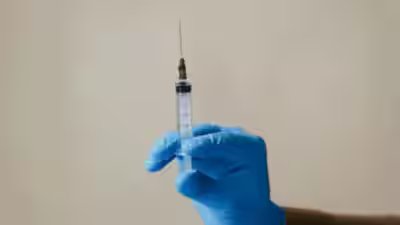
Union agriculture minister Shivraj Singh Chouhan on Friday unveiled India’s first indigenously developed vaccine against the H5N1 strain of bird flu to protect chickens from the disease. Developed by the ICAR-National Institute of High Security Animal Diseases in Bhopal, the vaccine will cost between Rs 1 and Rs 2 per dose, Chouhan said.The vaccine targets the H5N1 virus of Clade 2.3.2.1a, a strain of highly pathogenic avian influenza (HPAI), commonly known as bird flu. The disease affects chickens and other birds, and outbreaks can cause mortality among almost all infected birds.Addressing a programme at the institute in Anand Nagar, Bhopal, Chouhan described the vaccine as an important step in strengthening India’s ability to prevent bird flu and protect poultry farmers from economic losses.“This vaccine is an example of India’s self-reliance. Bird flu causes large-scale deaths of chickens and huge economic losses to poultry farmers. The indigenous vaccine will strengthen bird flu control in India and provide protection to chickens,”news agency PTI quoted him as saying.Chouhan said India had recorded more than 500 outbreaks of H5N1 and H5N8 since 2006. Until now, no specific vaccine was available in the country against the H5N1 virus.He said the first bird flu outbreak in India was reported in 2006 in Navapur, Maharashtra, where around 10 lakh chickens died. Around nine lakh chickens died in 2021, while two lakh deaths were reported this year, he added.The minister said the affordable vaccine would allow even small poultry farmers to protect their birds against infection.Chouhan also announced the establishment of a state-of-the-art laboratory in Bhopal at a cost of Rs 300 crore.He said the vaccine was initially planned to be launched in Delhi, but he decided to dedicate it to the nation in Bhopal in recognition of the scientists who developed it. The team worked for months without taking Saturdays and Sundays off, he said, adding that strict biosafety protocols required them to take special precautions inside the laboratory.The Bhopal-based institute has previously developed vaccines for Gambero, Brucella abortus S-19 Delta, classical swine fever and African swine fever.Highlighting the economic impact of animal diseases, Chouhan described animal husbandry as a key pillar of the rural economy and a regular source of income for farmers.He said the sector contributes around 14% to India’s GDP, while poultry accounts for 1%.
Share your thoughts in the comments
Be respectful · TOI community guidelines
“The country suffers an average annual loss of Rs 22,000 crore from foot and mouth disease, Rs 20,000 crore from lumpy skin disease, Rs 9,212 crore from brucellosis, and Rs 4,683 crore from PPR. These diseases together result in annual losses of approximately Rs 56,000 crore,” Chouhan said.He also cited the National Animal Disease Control Programme, launched by Prime Minister Narendra Modi from Mathura, under which 147.16 crore free vaccine doses have been administered to prevent foot and mouth disease. Indian scientists have also developed an indigenous vaccine against lumpy skin disease, he said.