








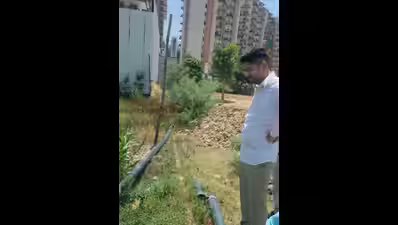
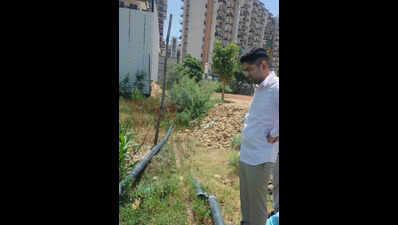
Gurgaon: Haryana State Pollution Control Board (HSPCB) found two group housing projects along Dwarka Expressway bypassing untreated effluents as part of its review of sewage treatment plants in highrises. The board said show-cause notices have been served.The inspections were carried out days after the board launched a compliance drive to check if sewage treatment plans (STPs) in rapidly expanding housing societies along Dwarka Expressway were operating according to prescribed environmental norms, amid concerns over the city’s rising wastewater pollution load.HSPCB officials inspected seven group housing and residential projects on Wednesday to assess the operational status and compliance of STPs installed by builders. Inlet and outlet samples were collected from the plants and sent to HSPCB laboratory for analysis. The reports are awaited.The board said two projects were found bypassing untreated effluents. “These included Cogent Realtors’ group housing project Woodshire in Sector 107 and Nani Resorts and Floriculture in Sector 102,” an official said.The other projects inspected were Heritage Max in Sector 102, Godrej Real View Developers in Sector 106, Emaar MGF’s Gurgaon Greens in Sector 102, Joyville by Shapoorji Housing in Sector 102, and Emerald Bay in Sector 104.The inspection drive was launched following directions issued during a meeting chaired by the HSPCB chairman on the implementation of Yamuna Action Plan.Last week, HSPCB officials said the inspections were meant to verify whether treated wastewater from these fast-growing residential areas met prescribed pollution standards before discharge or reuse.“With large-scale residential development happening along Dwarka Expressway, it is important to verify if STPs in these societies are functioning as per norms. Nobody will be spared if untreated effluent is found being bypassed into leg-1, leg-2 or leg-3 drains. Strict action will be taken against violators,” Akanksha Tanwar, HSPCB regional officer, told TOI.Earlier, HSPCB data accessed by TOI showed that the city contributes nearly 70% of the total pollution load entering Yamuna from Haryana, mainly through the Najafgarh, Basai, and Badshahpur drains.The data has also shown biochemical oxygen demand levels in some major drains reaching 170 mg/L, far above the permissible limit of 3 mg/L, indicating severe organic pollution and the discharge of untreated wastewater from the city.Environmental experts have repeatedly warned that although most group housing societies are required to install STPs, poor maintenance, inadequate capacity, and operational failures often reduce treatment efficiency, allowing partially treated sewage to enter the city’s drainage network.