







A new review of Australia’s lizards and snakes has found that 127 species are likely to face extinction, almost twice the number identified in the previous national assessment. The findings highlight how the country’s reptile populations are coming under increasing pressure from habitat destruction, climate change, bushfires and invasive predators. Published in Pacific Conservation Biology, the review also raises concerns about species that remain poorly studied, finding that those with insufficient data are considerably more likely to be threatened than previously recognised.
Australia’s lizards and snakes face a growing extinction threat
The review, led by researchers from Monash University, brings together assessments from reptile experts across the country to examine changes since the 2017 Action Plan for Australian Lizards and Snakes.According to the study, approximately 127 terrestrial lizard and snake species, representing 13.1% of Australia’s known squamate fauna, are likely to be threatened with extinction. This is almost double the number identified in the earlier assessment and reflects a broader understanding of the risks facing the country’s reptiles.It combines information from international, national and state-level conservation assessments with new research findings and predictive modelling.A Monash University report explained that the updated estimate reflects both worsening environmental pressures and improvements in knowledge about species whose conservation status had previously received limited attention.
Poorly studied species face a much higher risk
One of the most significant findings concerns the large number of Australian reptiles whose populations and conservation needs remain poorly understood. The researchers found that species classified as Data Deficient were 5.4 times more likely to be threatened than those for which sufficient information was available.The review also found that species which had not yet been formally evaluated were three times more likely to face extinction. This suggests that a lack of research does not necessarily mean a species is safe. In many cases, limited information may be hiding serious population declines.The study identified 42 terrestrial lizard and snake species in the Data Deficient category. Of these, 16, or 38.1 per cent, had evidence suggesting that they were threatened. The researchers also noted that around 25 of the 115 species that had not been formally evaluated could be threatened, based on predictive modelling.The Monash University report highlighted that many newly discovered species are particularly vulnerable to being overlooked. Since the 2017 assessment, Australia’s known terrestrial lizard and snake diversity has increased by almost 12%. However, newly described species often have small geographic ranges and limited information available about their populations.This makes it difficult for conservation authorities to identify their needs before their numbers decline further.
Multiple environmental pressures are accelerating population declines
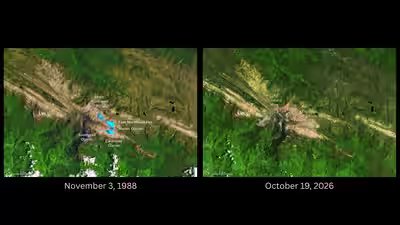
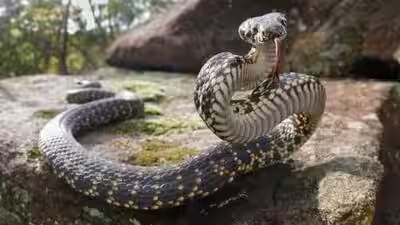
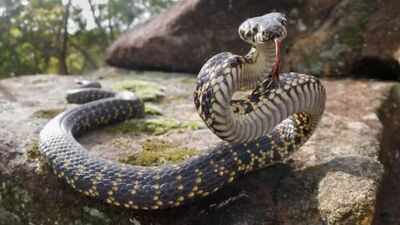
The review identifies several threats that have become more intense or better understood since the previous national assessment. These include habitat destruction, climate change, increasingly severe bushfires, invasive predators, invasive grasses, disease and other emerging environmental pressures.The 2019–2020 Australian megafires were among the major events examined by the researchers. According to the review, the fires burned more than 100,000 square kilometres of vegetation following an extended period of drought. Around 40% of Australia’s terrestrial lizard and snake species occurred within the affected area.The fires contributed to population declines that made 82 reptile species eligible for threatened status, while up to 27 species already listed as threatened became eligible for a higher risk category. Their effects also extended beyond immediate deaths, as fires changed vegetation cover, reduced leaf litter and altered the availability of food and shelter.The study noted that the impact varied between species. Some reptiles continued to survive in affected landscapes, while others experienced significant population reductions. The broad-headed snake, southern water skink and glossy grass skink were among the species for which declines were documented.Predation by introduced animals is another major concern. The review found that feral cats and foxes consume at least a quarter of Australia’s reptile species. Research cited in the paper estimated that these two predators kill approximately 697 million Australian reptiles every year, including 609 million killed by cats and 88 million by foxes.The researchers also highlighted the risks posed by diseases and changing environmental conditions. Certain bacterial and fungal infections have caused serious problems among reptiles.
Conservation efforts have not kept pace with the growing risks
A lack of coordinated recovery programmes, limited funding and inadequate population monitoring continue to restrict efforts to protect vulnerable species.The researchers pointed out that only 10 of the 38 nationally listed threatened lizard and snake species had received state or federal recovery plans. These plans are intended to guide conservation work, but the limited coverage means that many species still lack coordinated long-term protection.The study also raised concerns about the representation of reptiles in Australia’s national conservation priorities. Although the country’s Threatened Species Action Plan covers reptiles, only 6 terrestrial lizards and snakes were included among its 110 priority species.The review argues that stronger research and better coordination are needed to prevent further declines. The authors also stress the importance of regular national reviews so that conservation authorities can respond to changing threats and newly available scientific information.Australia is home to around 10% of the world’s lizard and snake diversity, with approximately 98% of its squamate species found nowhere else. This makes the country particularly important for global reptile conservation.