








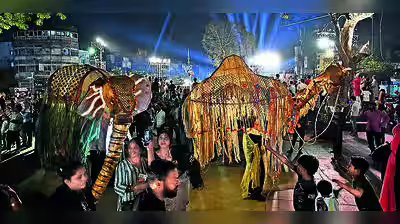
Ahmedabad: Imagine a broad, tree-lined square outside Bhadra Fort, with orange and citron trees around Teen Darwaza, fountains and the bustle of a royal court. Visiting dignitaries awaited audiences with the ruler, troops assembled for military reviews and horse polo was played on the open ground. This was Maidan-e-Shah, Ahmedabad’s royal square.On Thursday, Maidan-e-Shah came alive again, as the Bhadra Festival’s second edition returned after a 12-year hiatus, bringing with it a medley of artistic and cultural performances. On ordinary days, the square is a bustling marketplace and a space shaped by the everyday needs of a growing city.
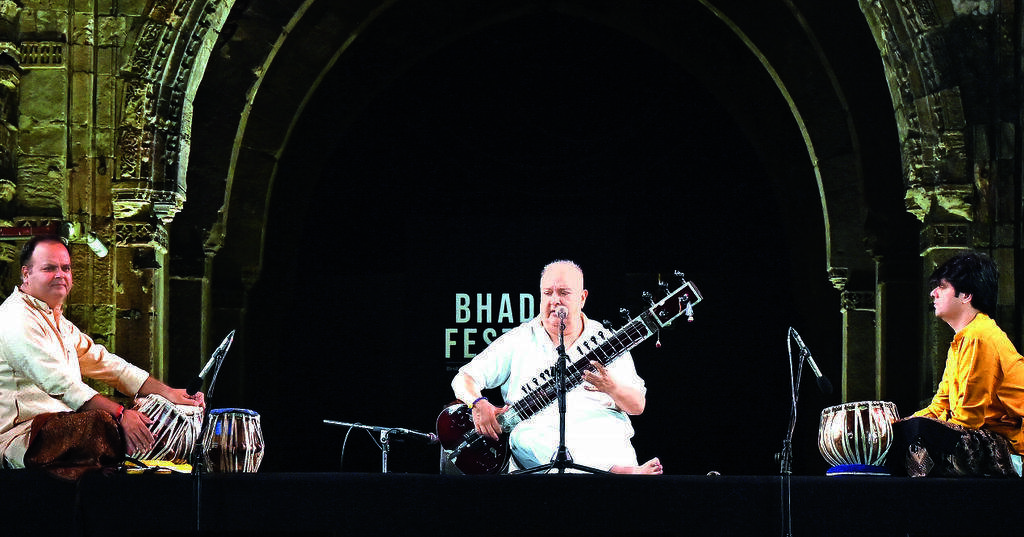
Sitar maestro Sujat Khan performing at Bhadra Festival on Thursday, Nov 19
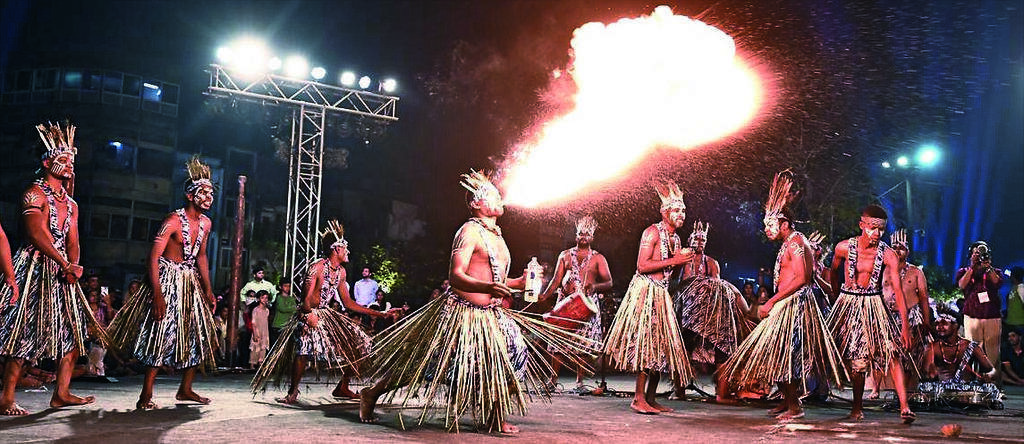
A dance troupe puts on a fiery show at the Bhadra Plaza, venue of the Bhadra Festival, on Thursday, Nov 19
Maidan-e-Shah wasn’t always a commercial marketplace. Historical accounts describe Maidan-e-Shah as a landscaped expanse lined with palm, tamarind, citron and orange trees. European explorers have described the evening royal courts beside fountains, military musters and gatherings of visiting delegations.Historian Rizwaan Kadri says the ground also hosted horse polo. “The square later became an important marketplace. The Friday flea market, known as Shukravari or Khaas Bazaar, operated between Teen Darwaza and Bhadra before evolving into Ahmedabad’s Sunday flea market, or Ravivari. The former royal ground now sits within a busy commercial stretch connecting Manek Chowk, Teen Darwaza and Bhadra,” he said.The festival seeks to reconnect visitors with the precinct’s layered history through its cultural programme. It brings together performances and traditions that reflect the many ways the historic space has been used and experienced.“We wanted to bring together the many layers of this historic precinct, its architecture, theatre, music, traditions and everyday life, and invite people to rediscover spaces they have known for years, but perhaps never experienced quite this way,” said Birwa Qureshi, founder and artistic director of Crraft of Art.AMC’s Bhadra Plaza development project, undertaken in 2017, sought to improve access while retaining the precinct’s historic character.“An event lasting a day or two can certainly bring out the beauty of this place. But Maidan-e-Shah should remain an accessible public space where people can spend time, learn about its history and understand its significance. People should have opportunities to experience and appreciate this heritage beyond occasional cultural events,” said Kadri.Box: Bhadra Fort: From a royal court to a jailThe history of Maidan-e-Shah is closely linked to Bhadra Fort. Built soon after Sultan Ahmed Shah founded Ahmedabad in 1411, the fort was among the city’s earliest structures. Also known as Arak Fort, it served as the royal court before passing into Mughal and later British administration, according to Mirat-i-Ahmadi and other historical accounts.Mughal governor Azam Khan built a serai beside the fort’s main entrance in the 17th century, according to AMC’s heritage account. The Marathas later established the Bhadrakali temple within the serai. During British rule, the serai was converted into a jail.Teen Darwaza, on the fort’s eastern side, served as the principal entrance to Maidan-e-Shah, the open royal square outside the fort walls. An 1814 marble inscription on the gateway speaks of daughters receiving their rightful share in their father’s property, invoking both Hindu and Muslim religious authority.