







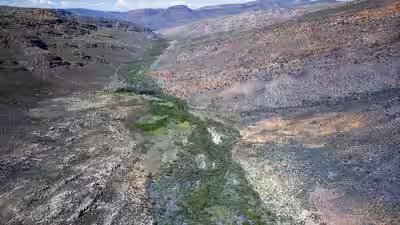
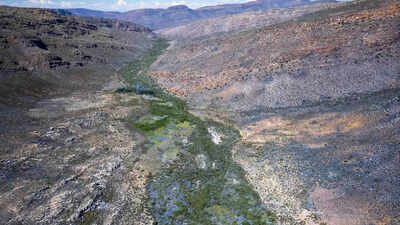
The river is home to several fish species, but sometimes the arrival of one can put the survival of another native species at risk. In South Africa, an invasive fish has been responsible for putting one of the country’s critically endangered freshwater species in an increasingly difficult position. Now, a conservation project that began in 2023 is demonstrating how removing this threat is important in helping prevent the loss of the native fish in its habitat.The Breekkrans River, in the Cederberg region of South Africa, has played a central role in an ongoing restoration effort to remove spotted bass and protect the Doring fiery redfin, which is endemic to the region. By 2026, the project had expanded the accessible habitat of the critically endangered Doring fiery redfin from just 2 kilometres to 10 kilometres, giving the small native fish a considerably larger stretch of freshwater in which to survive.The problem first began a couple of decades ago, when spotted bass were introduced into South Africa’s river systems in the late 1930s, primarily because they were considered a desirable species for fishing. But what made this species attractive is also what made it harmful to smaller native fish.According to an article published by NCIJ Network on October 28, 2026, Martine Jordaan, a faunal ecologist at CapeNature, noted that spotted bass are effective predators and readily prey on smaller fish, and most of South Africa’s native freshwater fish are approximately 12 centimetres or smaller. Once spotted bass are introduced, they can spread through extensive stretches of the river system, with only natural barriers such as waterfalls preventing them from moving further.The Doring fiery redfin (Pseudobarbus doring) is one such species. Critically Endangered, it has faced considerable pressure from the spread of invasive fish, with its remaining populations becoming increasingly restricted. Jeremy Shelton, a freshwater conservation ecologist at the Freshwater Research Centre (FRC), told Mongabay, as reported by NCIJ Network, that the Breekkrans River holds the largest remaining population of the species, with probably only a few hundred adults.Before the restoration work began, the redfin was confined to a bass-free stretch of just 2 kilometres in the Breekkrans River. This restricted distribution had left the species with very little room to expand.The Freshwater Research Centre’s 2022–23 annual report, published in March 2024, documented the beginning of the initiative, which aimed to mechanically remove alien spotted bass from 8 kilometres of the otherwise relatively pristine river.The project is being carried out by the FRC in collaboration with CapeNature and the Fynbos Fish Trust. Rather than relying on a single intervention, the teams have been working to remove the invasive fish during the Southern Hemisphere’s summer months, when eradication activities are undertaken.As reported by NCIJ Network, the removal process involves a combination of nets, spear guns and electrofishing equipment. These methods are used to locate and remove spotted bass from the targeted stretch of the river. The team has also constructed a fish barrier downstream to prevent the invasive species from moving back into the cleared section.This is an important part of the restoration effort because removing an already established invasive population is not enough if the fish can simply find their way back into the habitat. Thus, preventing their re-entry is crucial to protecting the river section that has already undergone restoration.The initial objective, as outlined in the FRC’s annual report, was to increase the range of the critically endangered redfin by clearing the invasive fish from the upper river. The work also aimed to create employment opportunities for members of the local community while developing freshwater conservation capacity in the region.