








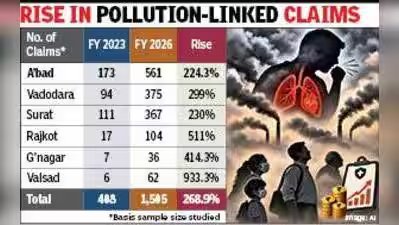
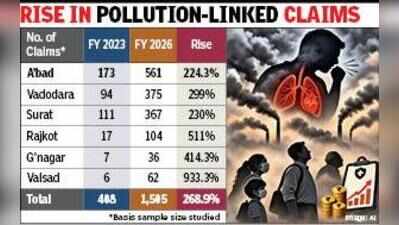
Ahmedabad: Air pollution is no longer just a policy issue or a problem limited to people with respiratory ailments. It is, in fact, turning into an economic burden.According to a report by PolicyBazaar, six Gujarat cities have seen a 3.7-fold increase in pollution-linked health insurance claims. Ahmedabad recorded the highest volume at 561, followed by Vadodara (375) and Surat (367). The total number of claims linked to pollution-related ailments in Gujarat went up from 408 in FY23 to 1,505 in FY26. Valsad saw the sharpest increase, with claims jumping more than 10-fold from six to 62.The study was conducted across a sample size of 4,000 in Gujarat and 94,000 across India. Respiratory infections account for 38% of claims, followed by cardiovascular conditions at 32%. Pneumonia accounts for 17% fo claims and bronchitis 11%. Together, respiratory and cardiovascular conditions account for seven in 10 claims.Siddharth Singhal, head of health insurance at Policybazaar, said, “The claims follow a distinct seasonal pattern, with 55–60% of these claims recorded between October and March, coinciding with months of deteriorating air quality. Treatment costs have not risen at the same pace. The sharp increase in claim volumes is driving the overall rise in pollution-associated claims. The burden is concentrated among working-age people. Those aged 31–55 account for 67% of claims, while people above 55 contribute another 23%.”The 21–30 age group accounts for 8%, and those below 20 make up 3%, according to the data.According to AQI.in’s website, the air quality index of Ahmedabad was 215 around 8.30am on Thursday.The increase in claims is also evident in clinical practice, with pulmonologists in the city reporting more patients with respiratory complaints and worsening of existing conditions amid deteriorating air quality.“We are witnessing an increase in patients reporting cough, cold and breathlessness, particularly amid ongoing construction activity and rising vehicular pollution. These pollutants contain fine particulate matter, including PM2.5 and PM10, which affect the respiratory tract. We are also seeing an increase in COPD cases among non-smokers, a trend that warrants attention. Earlier, exposure to biomass fuels was a major contributor to COPD among non-smokers,” said Dr Tushar Patel, an Ahmedabad-based pulmonologist.“After Diwali, firecracker emissions add to the pollution burden. Children are particularly vulnerable, with bronchitis becoming increasingly common. We are seeing more children requiring inhalers. Air pollution and particularly PM2.5 levels are also affecting people without a previous history of cardiovascular disease, increasing their risk of developing cardiac complications,” Dr Patel added.Notably, 48% of consumers in highly polluted Indian cities are opting for higher health insurance coverage, the study states.