







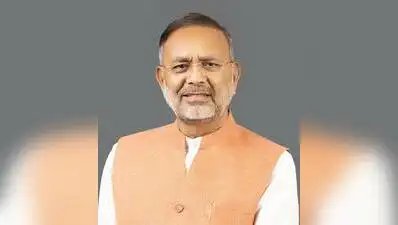
As Rajasthan rapidly expands its renewable energy capacity, govt is focusing on battery storage, pumped storage projects and grid-level interventions to ensure electricity is available during peak demand.Solar power now dominates the state’s energy mix, creating a gap between daytime generation and peak-hour demand. Energy minister Heeralal Nagaroutlined the state’s roadmap for building storage capacity, reducing costly power purchases and improving supply reliability in an interview with TOI’s Srikanta Tripathy. Edited excerpts….Rajasthan is witnessing rapid growth in solar energy, but managing peak-hour demand remains a challenge. How is the govt addressing this gap?Installed renewable energy capacity has reached 52.13 GW, including 46 GW of solar power. As solar generation is concentrated during the day while demand peaks in the morning and evening, battery energy storage projects and pumped storage schemes are being accelerated to use surplus daytime power during peak hours. The objective is to ensure reliable, affordable electricity and reduce dependence on expensive market purchases.What are the major battery energy storage projects being developed?The Pugal project in Bikaner will integrate 2,450 MW of solar capacity with a 6,400 MWh battery energy storage system. Four developers have been selected through competitive bidding, with the lowest tariff at Rs 3.42 per unit.Separately, state power generation corporation is developing 6,000 MWh of battery storage capacity. Another integrated project planned at Pugal will combine 3,310 MW of solar generation with 10,000 MWh of battery storage. The initiatives will store surplus renewable energy for use during high demand.How important are pumped storage projects for ensuring power availability during peak hours?Govt has approved two pumped storage projects with six-hour storage capacity at Rampura in Tonk district and Singoli in Banswara district. RRECL has issued a tender under the Tariff-Based Competitive Bidding model for a 900 MW pumped storage plant at Rampura.Rajasthan Rajya Vidyut Utpadan Nigam has also invited Expressions of Interest to identify and develop potential sites for small hydropower projects across the state. The projects will diversify Rajasthan’s renewable energy generation capacity and strengthen long-term power availability.What are you doing at the discom level to integrate battery storage and improve management?We are taking storage infrastructure closer to consumers. Tenders have been floated for pilot battery storage projects at 172 grid substations of the three discoms, with an aggregate capacity of 172 MW and 688 MWh. Each installation will have 1 MW/4 MWh capacity. We are also planning smaller battery systems of 100 kW/200 kWh at distribution transformer level. In addition, a 250 kW sodium-ion-based battery storage project is proposed at Mansarovar in Jaipur. These initiatives will help improve local power management and support distribution networks.Will these projects reduce financial burden on discoms, particularly during peak-demand periods?Rajasthan currently has surplus daytime electricity following rapid solar power expansion. Surplus electricity worth around Rs 2,000 crore was sold this year, while power must be purchased at comparatively higher rates during morning and evening peak hours.Battery and pumped-storage projects will help shift surplus daytime energy to peak periods. In addition, 1,489 MW of night-time agricultural load has been moved to daytime supply, saving around Rs 1,246 crore annually on power purchases.