








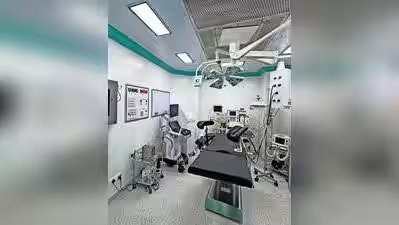
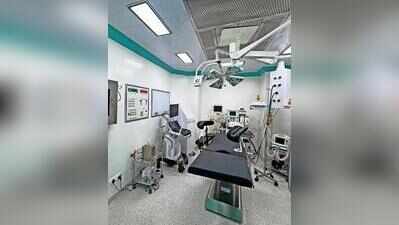
Mumbai: Twenty-nine-year-old Fatima has moved temporarily from Ayodhya to Sion for a reason: to undergo infertility treatment at affordable rates in civic-run Sion Hospital.She is among six women who have begun in vitro fertilisation (IVF) at the hospital, where a treatment cycle costs about a third of the private-sector rate. Next week, doctors plan to transfer one of her eight embryos created in the laboratory into her uterus. IVF, commonly called test-tube baby treatment, involves fertilising an egg with sperm outside the body before transferring the resulting embryo into the uterus.A tuberculosis infection that damaged Fatima’s fallopian tubes left her with little chance of conceiving naturally. Private IVF, costing Rs 1.2 lakhto Rs 2.5 lakh per cycle, was also beyond her means. “When my uncle in Dadar told me Sion Hospital was about to start IVF, I moved here,” said Fatima, whose husband is a tailor.Kalyan resident Gargi (42) had earlier undergone intrauterine insemination (IUI) at the main Sion Hospital, becoming its first patient for the procedure a couple of years ago. IUI involves placing sperm directly into the uterus around the time of ovulation. “It wasn’t successful. When the IVF lab opened at Chhota Sion Hospital, the doctors asked me to come here,” she said.The hospital’s Dharavi outpost, known as Chhota Sion, now houses a nearly 3,000-sq-ft IVF laboratory equipped with modern technology, much of it funded by Lions Club Juhu. Though ready in Jan, the lab began operations after the team led by Prof Dr Rahul Mayekar spent 10 months establishing protocols, fine-tuning equipment and putting together a panel of embryologists to monitor samples daily.Locating the facility in Dharavi, one of the country’s largest slum settlements, was deliberate. “There were two reasons,” said Dr Mayekar. “The first was affordability and the second was accessibility — having the facility right within the community.”Dr Archana Bhonsale, nodal officer for IVF, said the Dharavi outpost also offered the required space. The main Sion Hospital, which records the city’s highest annual delivery counts, lacked space and is undergoing renovation. “We also have space to expand later,” said Sion Hospital dean Dr Pramod Ingale.The centre has also drawn on the support of Sion Hospital alumni Dr Ameet Patki and Dr Kedar Ganla, who have been training the team in IVF techniques and day-to-day operations. “The idea is to give back to our alma mater. IVF is emerging as a necessity today. Many couples are opting for parenthood later in life and may need help through assisted reproductive techniques,” said Dr Patki.An estimated 15% of the population experiences some form of infertility, making it a significant public health concern, he said. “It’s important to train medical students early so they are equipped to address this growing need.” Success rates in well-equipped IVF laboratories are close to 40% these days, he added.The Sion centre already has 55 women on its waiting list. “We started with six women, with another six to begin treatment next month,” said the doctors. They aim to scale up to 20 IVF cycles a month.A Central directive calls for every medical college to have an IVF laboratory or department. Cama Hospital was the first public hospital in Maharashtra to set up such a facility; civic-run KEM Hospital in Parel has one too.(Names of patients changed on request)