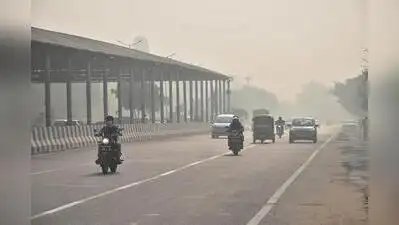









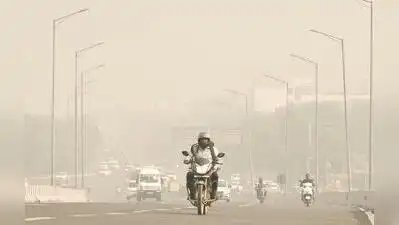
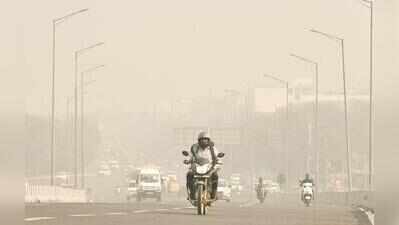
Gurgaon: Pollution levels in the city remained dangerously high, with the air quality index (AQI) touching 417 at Gwalpahari and 400 at TERI Gram on Friday. Doctors warned that sustained exposure to fine particulate matter can cause lasting damage to respiratory health and increase the risk of cardiovascular diseases.The city’s overall AQI stood at 324 (very poor) at 4 pm, while Sector 51 reported 308. Vikas Sadan was the only station that recorded poor AQI at 259. Particulate matter concentrations remained particularly high. Gwalpahari recorded a 24-hour average PM2.5 concentration of 417 micrograms per cubic metre (µg/m³), with the maximum reaching 499 µg/m³. At TERI Gram, the average stood at 400 µg/m³, with a peak of 449 µg/m³. Sector 51 recorded an average PM2.5 concentration of 308 µg/m³, with the maximum touching 500 µg/m³. Vikas Sadan reported an average of 259 µg/m³ and a maximum of 312 µg/m³.The average PM10 concentrations were 350 µg/m³ at Gwalpahari, 307 µg/m³ at TERI Gram, 251 µg/m³ at Sector 51 and 220 µg/m³ at Vikas Sadan. Dr Kuldeep Kumar Grover, associate director, pulmonology and critical care, CK Birla Hospital, said PM2.5 poses a serious respiratory health threat because the fine particles can penetrate deep into the lungs and even enter the bloodstream. “Prolonged exposure can trigger inflammation of the airways, aggravate asthma, worsen COPD and increase the risk of respiratory infections,” he said.“Even people without pre-existing lung conditions may experience persistent coughing, throat irritation, breathlessness and reduced lung function. Long-term exposure has also been associated with an increased risk of cardiovascular diseases and lung cancer,” he added.Children, older adults, pregnant women and people with existing respiratory or cardiac conditions are particularly vulnerable.He also advised people to monitor AQI levels, minimise outdoor exposure during periods of high pollution and use well-fitted N95 masks when stepping outside. Maintaining good indoor ventilation with appropriate air filtration and seeking medical attention for persistent respiratory symptoms are also important, he said.The city’s AQI calendar showed that pollution remained elevated through Nov. After recording 183 on Nov 1, the AQI crossed 300 on Nov 3 and remained above that mark on most subsequent days. It peaked at 368 on Nov 6 before fluctuating between 288 and 345 over the following days. The Nov 12 reading was 320.The latest readings indicate that despite day-to-day fluctuations, particulate pollution continues to remain high across the city, with some monitoring locations recording substantially worse air quality than others.Meanwhile, experts attributed the sudden deterioration to unfavourable meteorological conditions that prevented pollutants from dispersing. A lower inversion layer, changes in wind direction towards north-westerly winds and stagnant atmospheric conditions contributed to the accumulation of pollutants, particularly during the morning hours. Conditions improved marginally later in the day, allowing some dispersion of pollutants that had accumulated over the previous 24 hours, said Anumita Roychowdhury, executive director of the Centre for Science and Environment (CSE).“There is a strong need for year-round efforts to control pollution sources, since atmospheric conditions will remain the same every year,” she added.Meanwhile, data from Indian Institute of Tropical Meteorology (IITM) highlighted the changing contribution of pollution sources over the two days.On Thursday, biomass burning was the largest contributor, accounting for 25.4% of Delhi’s pollution, followed by secondary organic aerosols at 25% and vehicular emissions at 17%. Firecracker emissions continued to linger in the atmosphere even days after Diwali, contributing around 7% of the pollution load.On Friday, however, vehicular emissions emerged as the biggest contributor, accounting for 31.5% of the city’s pollution. Secondary organic aerosols contributed another 25%, while biomass burning, including emissions from stubble burning and coal combustion, accounted for around 20%. Municipal waste burning contributed over 5% while firecracker emissions accounted for 2.2%.The latest spike once again underscores how a combination of local emission sources and unfavourable weather conditions can push the capital’s air quality to dangerous levels, highlighting the need for sustained pollution-control measures throughout the year.The spike in pollution comes even as the city currently sees restriction under CAQMs GRAP-3, while Delhi’s later winter pollution framework, already in force since Nov 1, which has already barred private construction and energy of non-Delhi registers BS-IV or lower vehicles into the city, among other curbs.