








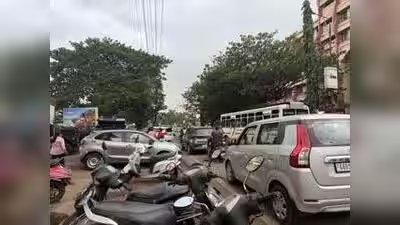
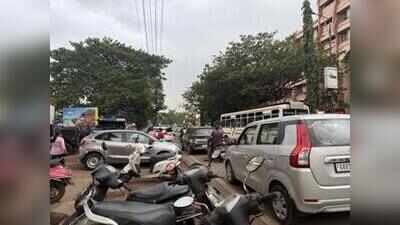
Mapusa: Kamlesh Yadav’s day at the Mapusa bus stand often begins with an unexpected wait — not for passengers, but for car owners to return and move their illegally parked vehicles. The 21-year-old bus driver operating on the Mapusa-Tivim route says private vehicles routinely occupy designated bus bays, forcing drivers to wait or park along transit aisles, where they risk fines of up to Rs 10,000.“Once, a car had been parked in my usual spot and gone to shop in the market for one or two hours. We often have to wait for such people to come back so that we can park our buses in place,” Yadav told TOI.He also recalls a two-wheeler accident caused by illegal parking in his bus bay. Vehicles exiting through the entry gate from the wrong side further add to the risk of accidents.For drivers, commuters and businesses around the depot, this is just one part of a larger problem. From congested bus bays and inadequate waiting facilities to poor hygiene and safety concerns, the Mapusa bus stand continues to grapple with civic issues that affect thousands of people every day.Caught in parking chaosDespite repeated complaints to the regional transport office (RTO), Mapusa, and the Kadamba Transport Corporation (KTC), drivers allege that assurances have done little to improve the situation. With no designated parking spaces for individual buses, confusion, arguments and delays have become routine.Private vehicles occupying bus bays leave drivers with little choice but to wait or park elsewhere, disrupting the movement of buses and adding to congestion within the depot.An uncomfortable waitFor passengers, the lack of basic amenities makes daily commute equally difficult. Samrudhi Bhosle (25), a regular commuter, says the bus stand has inadequate seating, shelter and security.The only designated waiting area is located in the middle of the depot, where she often feels uncomfortable because of the presence of some men who make young women feel unsafe. The absence of adequate police personnel adds to her concerns.Students Shanvi Salgaonkar (21) and Saiel Salgaonkar (16), who travel daily from Porvorim, avoid the waiting area because of poor hygiene. They also complain about stray cattle entering the premises due to inadequate security, despite the presence of cleaning staff.Congestion spills onto roadsThe disorder within the depot also spills onto nearby roads, affecting businesses and traffic movement. During peak hours, congestion stretches towards Gandhi Circle, with vehicles frequently blocking shop entrances.Shailendra Singh (36), owner of Laxmi Sweet Mart, says illegal parking and waterlogged potholes create daily difficulties. The situation worsens during the monsoon, when stagnant water attracts flies and mosquitoes.Redevelopment on paperFormer councillor Sudhir Kandolkar said redevelopment and relocation plans approved during former chief minister Manohar Parrikar’s tenure remain unimplemented. However, he cautioned that privatisation and excessive commercialisation could further aggravate parking problems.Former Mapusa Municipal Council chairperson Michael Carrasco also pointed to a lack of govt funds as the reason redevelopment has stalled. Meanwhile, even basic repairs are neglected because authorities expect the area may have to be excavated again if construction begins.For the thousands who depend on the depot, these are not minor inconveniences but failures of essential public infrastructure. Commuters, drivers and businesses have spent years adjusting to unsafe conditions, poor sanitation and traffic chaos.“Redevelopment promises cannot replace immediate action. The authorities must address parking, cleanliness, safety and traffic management before the daily struggles of Mapusa’s commuters become an accepted reality,” a commuter said.Call for better coordinationAssuring that steps are being taken to address the concerns, a KTC official said the traffic congestion and lack of regulation at the old bus stand had already been brought to the attention of the traffic police, but little action had been taken so far.“While garbage collection and cleaning have improved, the movement of buses remains a challenge, particularly with private operators competing for space and disrupting systematic operations. We are also monitoring the premises through CCTV cameras to ensure women’s safety,” the official said.The official added that the bus stand is a busy junction where several buses converge, making better coordination with the RTO and traffic authorities essential for smoother operations.