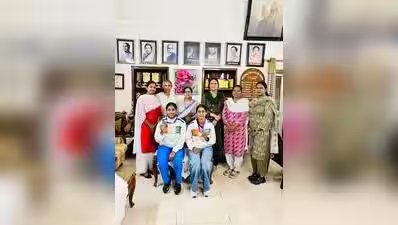










Ludhiana: Can insects themselves help farmers fight crop pests and reduce dependence on chemical pesticides? A PAU student has taken that question, and research on Punjab’s naturally occurring pest fighters, to an international platform in Sri Lanka.Guranshpaul Singh, an MSc student in the department of entomology at Punjab Agricultural University (PAU), represented the university at the International Symposium of Rajarata University of Sri Lanka (ISymRU) 2026 in Mihintale.At the symposium, he presented his research paper, ‘Diversity of Biocontrol Agents of Insect Pests of Important Crops in Punjab, India’, focusing on beneficial organisms that act as natural enemies of agricultural pests.His research explored the diversity, distribution and significance of these naturally occurring organisms in controlling insect pests affecting major crops in Punjab. The work highlighted their potential as an eco-friendly crop-protection tool that could help reduce dependence on chemical pesticides while maintaining ecological balance.Conserving and effectively using such beneficial organisms, the research suggested, could become an important component of sustainable agriculture, particularly as farmers look for ways to protect crops while reducing the environmental footprint of pest control.Singh was also invited to deliver a special lecture on ‘Beneficial Insects: Silkworm and Lac Insect’ to postgraduate students of plant protection at the Faculty of Agriculture, Rajarata University of Sri Lanka, Puliankulama, Anuradhapura.During the lecture, he discussed the economic significance and applications of silkworm and lac insects and their wider potential as beneficial insects.PAU vice-chancellor Dr Harvinder Singh Dhaliwal and other university officials congratulated Singh on the international academic engagement. They said participation in such forums gave students wider scientific exposure and helped foster international research collaboration.