

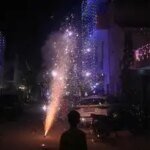






New Delhi: Delhi’s skies remained illuminated by firecrackers well past midnight on Diwali, with residents reporting crackers being burst till 3am even as visibility dipped amid a thick haze of smoke.Despite Supreme Court permitting only certified green crackers between 6am and 7am and 8pm and 10pm on Nov 7 and 8, residents’ welfare associations (RWAs) flagged little compliance, poor monitoring and a disconnect between restrictions on paper and enforcement on the ground.The court had directed police and district administrations to constitute patrolling teams, monitor sale locations, conduct random QR-code verification and confiscate illegal or conventional crackers. However, RWA representatives said there was little visible intervention from enforcement agencies.Delhi faced a blanket ban on firecrackers from Jan 2025, which was temporarily relaxed by the apex court for certified green crackers during Diwali last year. This year too, it allowed a limited two-day window, with the ban returning from Nov 9.“We issued advisories to residents and circulated messages on social media, asking people to follow the prescribed timings. But people do what they want. There was nobody checking whether the restrictions were being followed. Even when people continued bursting crackers, there was no effective mechanism to stop them,” said Neha Puri, president of Green Park Extension RWA.BS Vohra, president of East Delhi RWA Joint Front and Sanjay Bhargava, president, Sarv Vyapar Mandal of Chandni Chowk, alleged hawkers were illegally and openly selling crackers carrying “fake green labels” in several areas across the city. Vohra also reported multiple incidents of fires in his locality, including one involving his own vehicle.Vohra questioned the reliability of pollution data, saying govt apps capped AQI readings at 500, while independent apps showed levels of around 3,000 in some areas. “If the actual situation is not reflected, how are people supposed to understand the severity of pollution? A cap of 500 does not give a complete picture,” he said.Concerns over the authenticity of green crackers were also flagged by Chamber of Trade and Industry (CTI), which estimated Delhi’s firecracker sales at around Rs 300 crore this Diwali, nearly 30% higher than last year. Traders said most shops ran out of stock a day before Diwali, forcing several buyers to travel to Gurgaon, Noida, Faridabad, Ghaziabad and Sonipat.CTI chairman Brijesh Goyal said there was no officially audited breakup of certified green and conventional crackers sold. While licensed shops sold normal crackers in the name of green crackers, packets carrying labels such as ‘green’, ‘eco-friendly’ and ‘pollution-free’ were also found. With no reliable QR-verification mechanism for buyers and no PESO testing facility in Delhi, consumers had little means of establishing their authenticity.“Customers were specifically asking for green crackers. But we are traders, not chemists. We buy from NEERI-registered brands and check the QR code on the packet. The common customer cannot differentiate between green and conventional crackers,” Goyal said.According to a CTI survey, around half of the families in Delhi-NCR who burst crackers used both green and regular varieties. Goyal said late licensing, a short sales window, inadequate stocks and the absence of QR verification undermined the system, adding that timely licensing and adequate availability could have ensured certified green crackers were the only products sold.Rajender Sharda, president of Greater Kailash-1 M-Block Market Association and GK-1 R Block RWA, called the situation a “mockery of SC directions”, saying RWAs lacked legal powers to stop violations and could only appeal to residents to comply.Vani Aggarwal, president of Chhattarpur RWA, said senior citizens and children suffered the most. “The air became unbreathable. What’s the point of imposing restrictions if nobody is ensuring they are followed?” she wondered.