








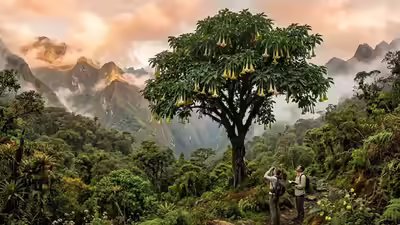
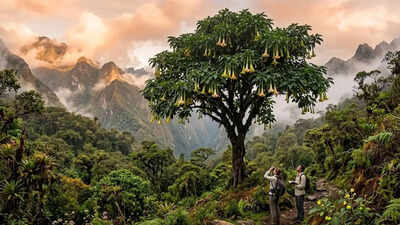
A significant breakthrough has been made in the field of South American botany. For over two decades, a mysterious tree found in the Andean cloud forests remained ‘unplaced’ (incertae sedis) in botanical records. It looked like an oversized version of familiar garden plants. In early 2024, after extensive research updated through 2026, this towering 66-foot (20-meter) tree was officially recognised as a new genus called Daturodendron. Interestingly, it belongs to the Solanaceae family, making it a close relative of tomatoes, potatoes, and eggplants. Researchers at the University of Cartagena and the Royal Botanic Gardens employed cutting-edge phylotranscriptomic analysis on nearly 300 genes. Their findings revealed that this tree acts as a sister to all other members of its tribe, filling an important gap in the evolutionary history of nightshades.
Meet Daturodendron: The giant tree relative of tomatoes and potatoes
As noted in a study on Research Gate, the genus named Daturodendron includes species that can grow as tall as 20 meters, or around 66 feet. This is quite large when you compare it to their smaller vegetable relatives. Unlike tomatoes and potatoes, which are usually herbaceous plants, Daturodendron grows more like a tree. It belongs to the Datureae tribe, where you’ll also find the well-known ‘Angel’s Trumpets’ or Brugmansia. Researchers identified this new genus because of its distinctive pendant (hanging) or nodding flowers, tough corollas, and particular seed shapes that make it different from related plants.
How this rare tree explains the evolution of fruit
The classification wasn’t just about looks. Scientists used ‘phylotranscriptomic and metabolomic evidence’ as well. By sequencing the DNA of these trees, they found out that Daturodendron is the basal or sister lineage to the rest of the Datureae tribe. It holds genetic traits from the common ancestor of many current nightshades. According to a study in the journal Taxon, these trees shed light on how fleshy fruits (berries) evolved into dry dehiscent capsular fruits we see in many Solanaceae species today.
These rare trees only grow in Colombia and Peru
The Daturodendron genus isn’t just about its impressive size. It’s important in science because it produces tropane alkaloids like scopolamine and hyoscyamine. You might recognise these powerful compounds from medicinal plants and hallucinogenic or toxic nightshades. Researchers have shared findings on Research Gate and the Global Biodiversity Information Facility (GBIF), highlighting that these trees only grow in the high-altitude Andes of Colombia and Peru. Over millions of years, they’ve developed unique chemical defences, making them a kind of natural pharmacy.