







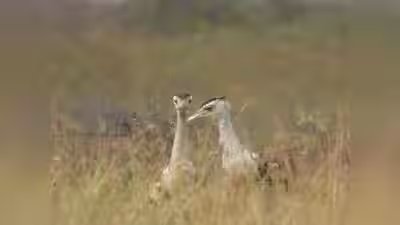
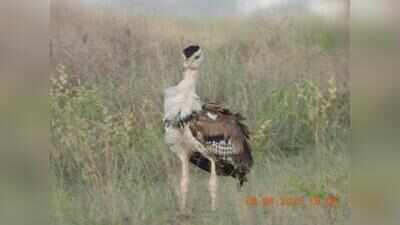
Ahmedabad: This Bestu Varas, Gujarat is set to receive a precious gift from neighbouring Rajasthan. Four Great Indian Bustard chicks — two males and two females — will be relocated to Kutch next month to save the critically endangered species from extinction.Their arrival comes nearly six months after a male bustard chick hatched in Kutch under the forest department’s ambitious ‘jump-start’ initiative. The chick, born on May 21, offers renewed hope for a species whose presence in Gujarat has dwindled to just three adult females in the Naliya grasslands of Kutch. Gujarat had not recorded a male GIB since Dec 2018, making the chick’s survival an important conservation milestone.With the four new arrivals, Gujarat’s GIB population will rise to eight birds. More importantly, the arrival of the two males could help address one of the biggest challenges facing the species in the state: the absence of breeding males.“The arrival of four chicks from Rajasthan will strengthen our efforts to rebuild the GIB population and improve the prospects of natural breeding in the coming years,” a senior forest official said.The May breakthrough was the result of an unusual conservation experiment. A fertile GIB egg was transported from Rajasthan and carefully placed in the nest of a wild female bustard in Kutch. The female accepted the egg, incubated it and eventually raised the chick in its natural habitat, with minimal human interference.The success followed a setback just months earlier — a chick that hatched on March 24 went missing after surviving for 24 days. Officials suspect a predator took it. Lessons from the setback helped the forest officials improve monitoring during the subsequent attempt.The four chicks arriving from Rajasthan will be accommodated at the newly inaugurated soft-release centre in Naliya. Developed in accordance with the guidelines prescribed by the Wildlife Institute of India (WII), the facility is designed to prepare captive-reared bustards for the challenges of surviving in the wild.The young birds will spend four to five months at the centre before staff consider them for release. During this period, staff will keep human contact to a minimum. Even feeding arrangements have been carefully planned to ensure the chicks do not begin associating humans with food, allowing them to retain the instincts essential for survival in their natural habitat.The forest department is also working simultaneously to make the grasslands safer for the birds. Restoration is underway across about 11 sq km of grassland affected by the invasive Prosopis juliflora, which has altered the open landscape bustards prefer. Additionally, 30km of predator-proof fencing has been installed to protect an area of around 15 sq km. The greater ambition is to see GIBs breeding naturally once again in Gujarat’s grasslands. Officials are waiting for May 2029, when the male chick born this year is expected to attain breeding maturity, hoping it will be a turning point for GIB conservation in the state.