






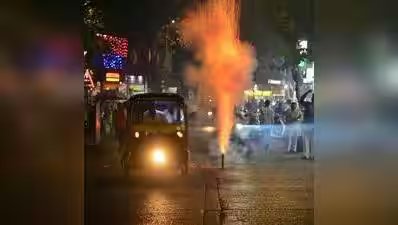
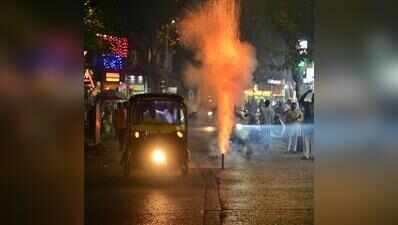
Mumbai: First, the good news: the city registered an overall 29.8% improvement in air quality on Sunday afternoon as compared to Diwali and Lakshmi Puja last year. At 4pm, it logged an air quality index of 132—keeping it in the moderately polluted band—down from 188 during the same period last year.But that was it to cheer. Late night celebrations triggered severe localised pollution spikes across several suburbs, sending particulate matter concentrations skyrocketing past 600 on their respective scales within a matter of hours. Monitoring station data captured exponential surges in specific pockets as the night progressed. In Andheri, PM2.5 levels stood at a moderate 42 at 8pm, but soared to 483 just two hours later. Chembur reported a PM10 level of 480 at 10pm, while Deonar and Malad logged extreme PM10 concentrations of 444 and 408, respectively. Byculla experienced a similar sharp escalation, where PM10 remained at 80 until 9pm before surging nearly five-fold to 395 an hour later. Bandra East, BKC, Shivaji Nagar in Govandi, Borivli and Andheri crossed 400 in localised spikes of PM2.5 and PM10 dust pollution. Fine PM2.5 particles can penetrate deep into lung passageways, while PM10 can cause respiratory and cardiovascular problems. Private portals, too, reported a drastic jump in dust pollution readings from across the city. IQAir registered PM2.5 levels at 237 at Bandra Hill Road, 215 at Juhu, and 165 at the US consulate at BKC. AQI.in logged 597 in Andheri East, 606 in Malad, 654 in Jogeshwari, 595 in Mulund, and 415 in Dadar. Environmental analysts noted that while aggregate citywide averages failed to reflect drastic overall changes during the day, these localised nighttime booms highlighted intense, hyperlocal pollution pockets during festival celebrations.