








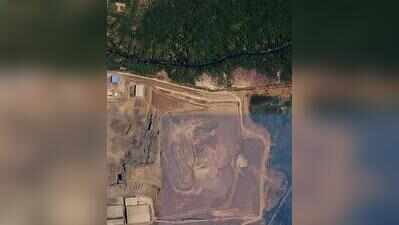
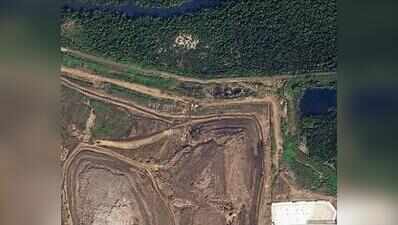
Mumbai: Environmentalists have complained to the Union ministry of environment, forests and climate change (MoEFCC) that toxic leachate from the 140-hectare Kanjurmarg dumping ground is entering Thane Creek and destroying mangroves.“We have also attached satellite images in our complaint to MoEFCC showing the leachate channels flowing into Thane Creek, which is a Ramsar site, while destroying the mangroves and marine ecosystem,” D Stalin of Vanashakti told TOI.He said the Kanjurmarg dumping ground, which handles 86-90% of Mumbai’s solid waste, had previously been listed among the world’s top 25 methane-emitting sites. A 2026 study ranked it 12th globally, estimating methane discharge at 4.9 tonnes an hour.“We had been warning since 2009 that Kanjurmarg dumping ground will become an ecological disaster, and had also moved court for a legal solution. Sadly, the mangroves are dying due to the situation,” Stalin stated in the formal complaint.“Bombay High Court had passed a detailed judgment explaining that the site was set up in gross violation of the Forest Conservation Act. Three other petitions challenging the environment clearance to the project are pending adjudication for over a decade. In 2009, we approached the National Environment Appellate Authority. We lost that battle due to BMC’s assurances that the site would operate scientifically, including inside closed sheds,” recalled Stalin.He added that BMC had challenged the ruling in Supreme Court, which stayed the HC directives, and activists have been awaiting the next hearing for six months.“Fishermen and residents within a 5km radius of the dumping ground are affected by the toxic emissions. The leachate is being discharged into the mangrove forest and the creek, because it is too humongous to be treated in leachate pits. Hence, Maharashtra govt, Maharashtra Pollution Control Board (MPCB) and MoEFCC must urgently take action to protect the environment,” said Stalin.BMC commissioner Ashwini Bhide has maintained that Kanjurmarg is a scientific waste-treatment plant, not an open dump yard, and processes about 5,800-6,500 metric tonnes of waste daily using bioreactor and biomining technologies.BMC, however, continues to file periodic compliance reports in HC. In Oct, BMC told HC, in an affidavit, that it would shift the material recovery facility about 100 metres away from residential areas. MPCB also suggested a 20-point plan to reduce foul odours and toxic emissions.However, greens reiterated that not much is being done to save the mangroves and the marine ecosystem here.Key Environmental & Health Impacts Of Kanjurmarg Dumping GroundThe Kanjurmarg dumping ground in Mumbai’s eastern suburbs is a major environmental and public health flashpoint due to severe methane emissions, leachate contamination of surrounding wetlands, and pervasive hydrogen sulphide odours.• Spanning over 140 hectares, including 65 hectares of salt pan and mangrove ecosystems, the facility handles roughly 5,800 to 6,300 metric tonnes of Mumbai’s daily municipal solid waste — accounting for up to 86–90% of the city’s total garbage generation.• A 2026 study ranked the Kanjurmarg site as the 12th highest global methane-emitting landfill, discharging about 4.9 tonnes of methane per hour.• Residents in nearby eastern suburbs like Kannamwar Nagar, Vikhroli, and Bhandup have long complained of a suffocating “gas chamber” effect caused by hydrogen sulphide and decomposing garbage, leading to nausea, headaches, and respiratory distress.• Historical and ongoing dumping on saltpan and mangrove land has allowed toxic leachate to seep into Thane Creek, endangering local marine life and coastal vegetation.• Bombay High Court has sharply criticised BMC for “symptomatic treatment” of recurring foul odours, appointing amici curiae in Nov 2026 to help formulate permanent solutions.• Following an inspection, Maharashtra Pollution Control Board (MPCB) ordered BMC to enact nearly 20 mitigation steps, including installing biofiltration systems at the Material Recovery Facility, covering compost and biomining sections with geotextile fabric, spraying bio-enzymes, and operating fogging cannons.• Environmental groups like Vanashakti have pushed legal challenges in HC regarding environmental clearances and protection of surrounding salt pans and forest patches.