







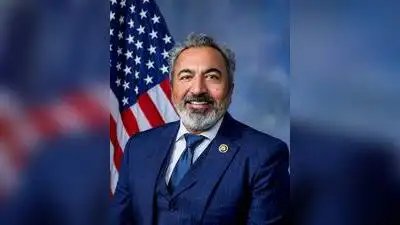
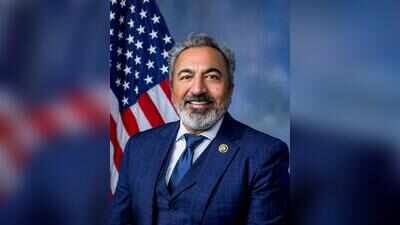
Ahmedabad: The US midterm elections produced a fresh round of milestones for Indian-American candidates, with seven wins recorded till Thursday afternoon. Among the winners were two second-generation Gujarati Americans—California Democrat Ami Bera and Arizona Democrat Amish Shah—linked not just by heritage, but also by profession: both are doctors.Bera, whose birth name is Amerish, secured his victory on Wednesday from California’s 6th Congressional District, while Shah was declared the winner early Thursday morning local time from Arizona’s 1st Congressional District. Political observers from the Indian community in the US said the outcomes carried record value on two fronts: Bera extended his standing as the longest-serving Congressman of Indian origin, while Shah became the first Indian origin person elected to Congress from Arizona.Bera traces his roots to Rajkot in Gujarat. His father migrated to the US and later brought his mother, and Bera was born in Los Angeles and raised in Orange County, according to his profile. He pursued a career in medicine and served as the chief medical officer for Sacramento County before entering politics.In the midterm contest, Bera defeated Republican candidate Robb Tucker with 57% of the vote. His campaign highlighted issues including healthcare, jobs and economy, the environment, and social security.Shah’s official biography says his parents migrated from India in the 1960s to study engineering in the US. Born and raised in Chicago, Shah is an emergency medicine specialist and is also listed as the founder of the Arizona Vegetarian Food Festival. In languages, he describes himself as speaking “conversational Spanish and fluent Gujarati.”Shah’s race drew close attention as he faced former NFL player Thomas Feely. He won with 52% of the vote, delivering what observers called a first for an Indian-American candidate in Arizona. His campaign issues included an affordable lifestyle, social security and universal healthcare, and education.Ankur Vaidya, chairman of the Board at Federation of Indian Associations (FIA), USA, said the results matter beyond the two races. “In the past, we also had representatives at state and city levels who have Gujarati roots. Earlier, we supported political parties and even did fundraisers, but having candidates is something new that we have seen in the past few years,” he said. “Larger representation will surely help get the community’s voice to the highest political levels for issues affecting the community.”