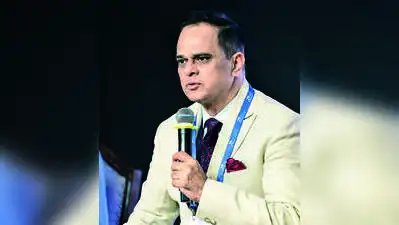











Jaipur: Faded ink, torn pages and unfamiliar handwriting have made many of India’s ancient manuscripts difficult to read. Researchers at the Indian Institute of Technology (IIT) Jodhpur have now developed an artificial intelligence-based platform that could help restore damaged text, recognise old scripts and make centuries-old knowledge accessible to scholars.Led by Dinesh Mohan Joshi, assistant professor at the School of Liberal Arts, the research combines AI, computational linguistics and Indian knowledge systems to address the challenges of preserving handwritten manuscripts. The initiative is aligned with the Centre’s Gyan Bharatam Mission to preserve and make India’s manuscript heritage more accessible.Unlike conventional optical character recognition (OCR), which works mainly with printed and relatively clear documents, the proposed platform is designed to handle faded writing, stains, missing characters, overlapping words and damaged pages.The system will first examine a manuscript to identify its likely script, language and condition. It will then enhance the page image, separate lines and words, and use handwritten text recognition technology to identify characters. Where the writing is unclear, it will assign confidence scores or refer difficult portions to scholars for verification.The platform has been designed to recognise six scripts — Devanagari, Sharada, Grantha, Nandinagari, Modi and Tulu-Tigalari. It will also support transliteration and translation into modern Indian languages and English, helping researchers understand texts written in older forms of language.“Our focus is not merely on digitising manuscripts, but on developing an intelligent system that can help restore, recognise and interpret their contents while preserving scholarly authenticity and ensuring that expert knowledge remains central to the process,” Joshi said.The platform could reduce the time researchers spend deciphering difficult manuscripts, preserve fragile texts in digital form and widen access to India’s knowledge in mathematics, astronomy, medicine, philosophy and literature.Joshi is also studying unpublished manuscripts, including a commentary on mathematician Brahmagupta’s Brahmasphutasiddhanta and the Suryasiddhanta, with a commentary by 16th-century scholar Vishvanatha.