








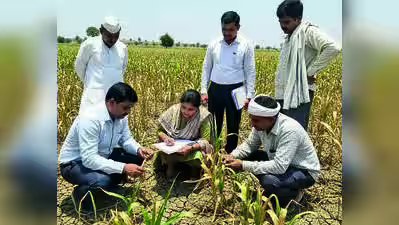
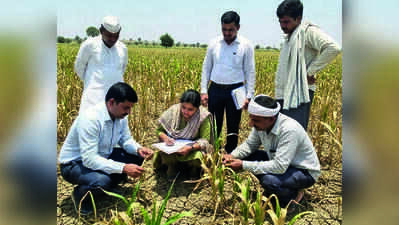
Pune: Maharashtra will submit its memorandum, seeking financial assistance from the Centre for extensive crop losses caused by deficient rainfall within the next one or two days, with the state agriculture department completing an unprecedented assessment involving nearly three crore site visits, compared with just 35,000 during the previous exercise.The memorandum assumes importance as farmers across several regions have suffered extensive kharif crop losses, with drought conditions affecting agricultural operations, drinking water availability and livestock management.“The state’s memorandum to the Centre will therefore be crucial in determining the extent of financial assistance sought for the drought-affected regions. The govt will have to substantiate its demand through detailed crop-wise and region-wise assessments, along with estimates of the financial implications of the drought,” a senior official from the state agriculture department said.State agriculture commissioner Suraj Mandhare said on Friday that the extensive field-level exercise had covered all the affected areas and that the department was now verifying the information and compiling it in a uniform format before submitting the memorandum to the central govt. “This time, we have conducted 100% panchanama, involving almost three crore site visits compared to 35,000 site visits last time. It also takes time to verify and put the information in a uniform manner. Therefore, it won’t consider as a delay. It will go within a day or two,” Mandhare said.The scale of the exercise reflects the extensive geographical spread of crop damage across Maharashtra following the deficient monsoon. The state has declared drought in 305 tehsils out of 358 tehsils, with more tehsils likely to be declared drought next week, said the officials.The department has undertaken field-level assessments on a scale far larger than the previous exercise to establish the extent of agricultural losses and document the affected farmers. “This kind of extensive crop losses the state had not reported in decades. Also, the methodology of conducting panchanama has changed completely. For instance, it is mandatory to have a photo of the damaged crop with geo tagging for accuracy purpose. Likewise, other parameters need to be met before completing one panchanama. Therefore, it has become a time-consuming process,” a senior agriculture department official said.State agriculture minister Dattatray Bharne also said the department had completed nearly 97% of the crop panchanama and was preparing to extend assistance to affected farmers in a consolidated manner.The Centre had already deputed an 11-member inter-ministerial team to assess the drought situation in Maharashtra. The team conducted extensive field visits between Oct 8 and Oct 11 across Marathwada, Vidarbha and western Maharashtra, including Ahilyanagar and Solapur districts. Its visits covered affected villages, where officials assessed crop damage, water availability, fodder requirements and the overall impact of the deficient monsoon. “The central team’s assessment was particularly important as several districts reported extensive crop losses, with some farmers facing near-total destruction of their standing crops. The delegation’s observations are expected to form part of the broader assessment of the state’s requirement for additional assistance,” added the official.However, agriculture activists said the govt should have responded more quickly to the worsening situation instead of making farmers wait for the completion of the assessment and verification process. They argued that the crisis had moved beyond kharif crop losses, with the next agricultural season also facing serious uncertainty. “Rabi sowing has remained extremely low in several drought-affected pockets because of inadequate soil moisture, depleted water sources and the financial inability of farmers to invest in another crop. In many areas, farmers who lost their kharif harvest are reluctant to spend more money on seeds, fertilisers and labour without any assurance of water availability. The situation is extremely bleak. Even after the financial assistance, the situation will not change dramatically because there is no work for farmers in the villages and hence income. Not all farmers can migrate,” said Beed-based activist Uddhav Ghodke.“Farmers are passing through an extremely difficult period. They have lost their kharif crops and now there is hardly any moisture in the soil to support Rabi cultivation. The govt should not have waited this long. Immediate assistance is necessary because the entire agricultural season is in danger,” said another agriculture activist.Activists also said the consequences could extend well beyond the farming community. A poor rabi season would affect agricultural labourers, rural traders, livestock owners and businesses dependent on the rural economy. With little income from agriculture, indebted farmers could find it increasingly difficult to meet household expenses and repay loans, potentially aggravating distress and migration, said the activists.They stressed that Maharashtra would require substantial central assistance to address the crisis. Apart from compensation for crop losses, the state needs financial support for drinking water arrangements, fodder supplies, employment generation and measures to help farmers prepare for the next cropping season.“There is no work for women labourers, activities related to agriculture are completely stopped, there are no income sources, there are unavoidable basic expenses and there is nothing in the farm. How can farmers will survive in the village? Even for farm work, at several places, women travel to more than 50 km daily to work in the farm. It is an unprecedented situation,” said agri activist Anil Ghanwat.