







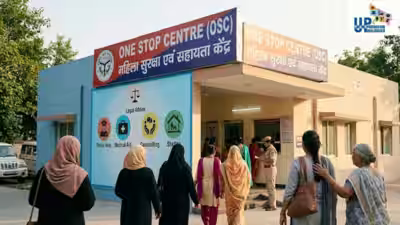
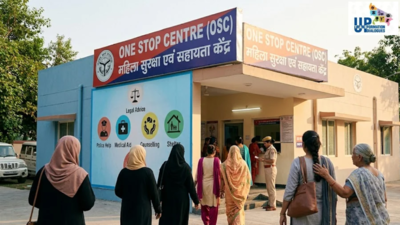
Women facing violence or abuse often encounter multiple challenges when seeking help. They may need police protection, medical treatment, legal advice, counselling and a safe place to stay, but accessing these services separately can be difficult, particularly during a crisis. The One Stop Centre initiative seeks to address this challenge by bringing essential support services together at a single location.Under the leadership of Chief minister Yogi Adityanath, Uttar Pradesh has strengthened this support mechanism, with 124 One Stop Centres operating across all 75 districts. According to information provided by the state’s Women Welfare Department, these centres have assisted approximately 3,18,500 cases involving women and girls. The initiative reflects an approach to women’s safety that goes beyond responding to incidents of violence and focuses on helping survivors recover, access justice and rebuild their lives with dignity.
One roof, multiple services
The central concept behind a One Stop Centre is simple: a woman in distress should not have to move from one institution to another to obtain essential assistance. Instead, she should be able to access coordinated services through a single support system.These centres cater to women and girls affected by domestic violence, physical or sexual abuse, harassment, emotional distress and other forms of violence. Depending on the circumstances and the services required, they facilitate medical assistance, police support, legal aid, psychological counselling and temporary shelter.Coordination among the concerned departments is an important part of this arrangement. A survivor may require immediate protection, followed by a medical examination, legal intervention and sustained counselling. Bringing these services together helps reduce the burden on the affected woman and can make the process of seeking assistance less intimidating.The centres are particularly important for women who may be economically dependent on family members, lack access to legal resources or hesitate to report abuse because of social pressure. By providing a designated point of contact, the initiative seeks to make institutional support more accessible during difficult circumstances.
Extending the support network to all 75 districts
The presence of One Stop Centres across all 75 districts is a significant feature of Uttar Pradesh’s women’s assistance framework. The objective is to ensure that access to support does not remain concentrated in major cities alone.With 124 centres operating across the state, the network includes more centres than the number of districts, allowing the state to extend the institutional mechanism beyond a one-centre-per-district model. The district-wide coverage gives women and girls a recognised channel through which they can seek assistance and be connected with relevant services.The Women Welfare Department supervises the state’s implementation of the initiative. Director C. Indumati has stated that approximately 3,18,500 cases have received assistance through these centres under the centrally funded One Stop Centre scheme.This figure indicates the scale of demand for support and the role these centres have played in responding to women’s difficulties. However, the number of cases assisted should be understood as a measure of service reach rather than, by itself, proof that every case has resulted in a complete resolution or successful rehabilitation.The initiative’s importance lies in making support more readily available when women need it most, while enabling coordination between the institutions responsible for protection, treatment and justice.
From crisis to confidence: Stories of change
The impact of One Stop Centres becomes clearer through individual cases in which timely intervention has helped women move towards safety, education and independence. Experiences reported from Lucknow and other districts illustrate how counselling, protection and coordinated assistance can make a practical difference.In Lucknow, a 31-year-old woman approached a One Stop Centre by email after facing opposition from her family to pursuing higher education and preparing for competitive examinations. The centre’s team intervened by engaging with her family and arranging counselling in a safe and confidential environment. Following these discussions, the family agreed to allow her to continue her studies. She subsequently completed her education and went on to serve in a responsible professional position. The case demonstrates that support for women can also involve addressing social and family restrictions that prevent them from exercising their choices.Another reported case involved a girl who approached a Lucknow centre at the age of 16 and disclosed long-standing abuse within her family. The centre provided counselling and protection and assisted with legal intervention. Following an order from the Child Welfare Committee, she was placed in institutional care, where she continued her education. After passing Class 12, she received hotel management training in Bengaluru and subsequently secured employment at a hotel in Lucknow. Her experience illustrates how protection, education and vocational training can work together to help a young survivor build a more independent future.A third case from Lucknow concerned a 31-year-old woman who reported physical, mental and economic abuse by her husband. The centre’s team, accompanied by police, helped bring her to safety. She received temporary shelter for 12 days in the reported case, along with counselling and assistance in recovering her marital belongings and reaching her parental home safely. She is now pursuing education and employment. The case highlights the importance of connecting immediate protection with practical steps towards rebuilding an independent life. The reported 12-day stay was a case-specific arrangement and should not be confused with the standard One Stop Centre shelter provision, which is generally for up to five days.In Ayodhya, a 65-year-old woman reportedly found in a distressed condition near the Ram Temple complex was assisted after information reached the 181 Women Helpline. The One Stop Centre team took her into protective care and coordinated with the police, village representatives and family members. Counselling and communication with her relatives helped facilitate her return to a family environment described by officials as safe and satisfactory. The incident illustrates the role of coordination between helplines, local authorities and support centres in helping vulnerable women, including elderly women facing neglect or abuse.These are individual reported cases rather than independently audited evaluations of the entire programme. Nevertheless, they illustrate the different kinds of intervention that the centres can facilitate, from counselling and family mediation to legal assistance, protective care and support for education and employment.
A coordinated approach to women’s safety
One Stop Centres operate within the broader framework of Mission Shakti, which seeks to strengthen women’s safety, security and empowerment. The scheme is centrally funded, with implementation undertaken by state governments and Union Territory administrations.Their effectiveness depends not only on the number of centres but also on the quality of assistance provided. Timely responses, trained counsellors, coordination with police and medical institutions, legal support and appropriate referrals are essential to ensuring that women receive meaningful help. Equally important is the protection of confidentiality and the survivor’s dignity and choices throughout the process.The centres are intended to facilitate access to services, not to replace the police, courts, hospitals or other specialised institutions. Where a case requires criminal investigation or judicial intervention, the relevant authorities must undertake the necessary action. Similarly, family counselling should never take precedence over a woman’s immediate safety where violence or serious risk is involved.
Measuring success beyond the numbers
The reported assistance to approximately 3.18 lakh cases is an important indicator of the reach of Uttar Pradesh’s One Stop Centre network. The availability of 124 operational centres across all 75 districts also represents an institutional mechanism through which women can seek support closer to their communities.The ultimate measure of success is not simply how many cases are registered or assisted. It is whether women are able to obtain timely protection, access justice, recover from trauma and move towards a safer and more dignified life. Public reporting on outcomes such as the resolution of complaints, access to legal remedies, continuity of education, rehabilitation and long-term safety would provide a more comprehensive assessment of the programme’s impact.Under the Yogi government, the expansion of One Stop Centres across Uttar Pradesh has strengthened the institutional reach of women’s support services. By bringing multiple forms of assistance under one roof, the initiative seeks to reduce the difficulties women face while seeking help and connect immediate relief with longer-term recovery.For a woman confronting violence, abuse or distress, knowing where to turn can be the first step towards reclaiming control over her life. The larger purpose of the One Stop Centre initiative is to ensure that this first step leads to accessible support, appropriate protection and the opportunity to rebuild a life marked by security, independence and dignity.