









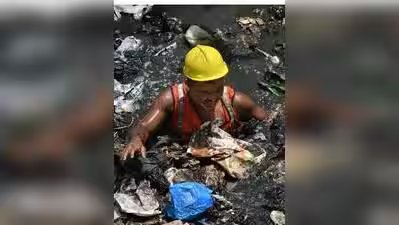
Mumbai: The meetings are few and far between. The minutes, meanwhile, read like a rehash of earlier meetings. Vigilance committees formed to prevent manual scavenging in Mumbai City, Mumbai Suburban and Thane have repeatedly failed to meet at the legally prescribed interval of every three months, while their minutes record almost same discussions, with little evidence of any action.Documents reviewed by TOI show Mumbai City’s committee went 10 months and 25 days without meeting between 2025 and 2026. Its latest meeting was in Sept, preceded by meetings in May and June 2025. Mumbai Suburban’s longest recent gap was six months, between Dec 2025 and June 2026. Thane’s committee met in July and Nov 2025 and June 2026.Section 24(4) of Prohibition of Employment as Manual Scavengers and their Rehabilitation Act, 2013, mandates that the panels meet at least once every three months. Committees must monitor implementation of the Act, oversee rehabilitation and address grievances. A source said Mumbai City did not meet given the “low caseload”, while the one for Mumbai Suburban blamed March year-end account-closing period.In the meanwhile, between Jan and Oct 2026, two people died while cleaning manholes and septic tanks in Mumbai. Shamim Razak Gazi (26) died while cleaning a 25-ft-deep Goregaon drain on Feb 4. He was a contract worker engaged in “BMC sewerage operations”, according to Dalit Adivasi Shakti Adhikar Manch. Santosh Kashte (47) died after entering a manhole at a Santacruz building on Sept 28.Vikramkumar Chandeliya, a non-govt member of Mumbai Suburban’s committee representing Akhil Bharatiya Safai Mazdoor Congress, said he has repeatedly been raising concerns about workers clearing clogged drains, and that too without gloves or gumboots in Kurla, but civic officials deny manual scavenging was occurring. “I live in Kurla and often see workers manually clean drains without safety gear,” he said, adding that some workers had told him they were hired through BMC contracts. BMC, meanwhile, reported zero manual scavenging deaths between 2021 and 2024, saying no municipal employee or worker directly hired by a contractor had died in such incidents. It treats cases on private premises or involving informal hires as outside its scope.The suburban committee’s minutes record repeated requests to Central and Western Railways for information on manual scavenging at stations, tracks, depots and offices, discussed in Dec 2025 and June 2026, with no response. Requests to BEST similarly yielded no documented reply. Chandeliya said railway officials had failed to provide information over three years and sent new representatives every time. “They just say, ‘Sir, I wasn’t at the earlier meeting, I don’t know what records or documents I was supposed to bring’,” he said.Sitaram Shelar of Centre for Promoting Democracy called the lack of accountability a deliberate way of shifting responsibility. “It’s a planned strategy. You keep pointing fingers and making people run from one place to another, while refusing to acknowledge the existence manual scavengers,” he said. Jagdish Kharalia of Shramik Janta Sangh, a Thane committee member, said meetings often produced little action. “The committee is meant to visit sites, verify incidents, submit reports and recommend action wherever necessary. But none of this happens properly. We have repeatedly demanded action-taken reports on decisions made at meetings,” he claimed. Kharalia also said committee members lacked the authority to intervene in cases of manual scavenging and needed official powers, along with transport or travel allowances, to conduct inspections.Representation is another concern. Section 24(2)(f) allows up to four social workers or community representatives on district committees, including at least two women. Mumbai Suburban has only one non-govt member after another died. The social welfare department said it would advertise for applicants with relevant field experience.