









Gujarat’s industries are grappling with rising production costs ahead of the Diwali festive season, as higher coal, crude oil and natural gas prices push up energy, transportation and raw material expenses. The pressure comes as manufacturers prepare to ramp up production to meet festive demand before business activity slows during the holidays.“With the festive season approaching, industries in Gujarat are looking to accelerate production before operations slow down. Electricity could become more expensive, while the variable component of power bills will change with fuel costs,” said Pathik Patwari, chairperson of Indian Chamber of Commerce-Gujarat.Textile processors face margin squeezeTextile processors in Surat have received relief from power cuts of up to eight hours a week but remain concerned about the stability of electricity supply on regular working days. Industry representatives warn that rising coal prices and power supply uncertainties are straining cash flows and could affect timely wage payments.Prices of 4,500-calorific-value grade coal have doubled from around Rs 5,000 to more than Rs 10,000 a tonne in a few months, according to industry representatives. The increase has pushed processing costs up by more than 20%, with processors struggling to pass on the entire burden to buyers amid intense competition.“Textile processors are already impacted by doubled coal prices. If prices do not come down quickly, the situation will become more challenging as textile products become costlier. High prices of dyes and chemicals, directly linked to global factors, are also a concern,” said Jitendra Vakhariya, president of the South Gujarat Textile Processors Association (SGTPA).Industry sources said processors have passed on around 10% of the additional costs to customers, with further price increases likely if fuel and power constraints persist.Yarn, dyes get costlierThe pressure extends across the textiles value chain. Higher prices of yarn, dye and chemicals have compounded the burden, while electricity tariffs have risen by 50 paise per unit since Aug, said Rahul Shah, co-chair of the textiles committee at the Gujarat Chamber of Commerce and Industry (GCCI). He estimated that overall input costs had increased by around 40%, with the cost of steam rising by 35%.“Textile weaving has been impacted by higher yarn prices, while increased coal prices have added to the cost of finished products,” said Ashok Jirawala, president, Southern Gujarat Chamber of Commerce and Industry (SGCCI).Industrialists have approached govt seeking relief on yarn prices and coal supply. They fear that sustained cost increases could force mills to cut production and affect employment across the labour-intensive sector.Geopolitical tensions have compounded the problem through disrupted coal availability, higher freight rates and shipping-route disruptions.“We hope coal supplies will normalise and prices will come down soon so that we can continue producing affordable textile products for the Indian market. Mills that were making profits are now barely breaking even, while those managing to cover costs are slipping into losses,” said Kamalvijay Tulsian, president of the Pandesara Industrial Association (PIA), Surat.Spinning units in Kadi and Saurashtra are facing financial and operational stress due to restrictions on captive solar generation. The curbs have forced them to depend more heavily on costlier grid power. Industry sources said the curtailment prevents mills from fully utilising renewable energy capacity in which they have already invested.Members of the Spinners’ Association Gujarat (SAG) argue that their solar and other renewable energy projects were established after obtaining statutory approvals and grid connectivity. They have questioned why sanctioned capacity was subsequently backed down, particularly when renewable integration limits are supposed to be determined through system studies.Chemical industry fears losing competitive edgeGujarat’s chemical manufacturers are also facing uncertainty over fuel availability and prices as coal supplies tighten. Companies dependent on thermal energy must balance the availability and cost of coal, gas and electricity against production requirements.Bhupendra Patel, chairperson of Chemexcil Gujarat, said imported Indonesian coal is not available in quantities required by thermal power stations and industries, pushing energy costs sharply higher.Gas offers an alternative for some industrial applications, but its higher cost limits the scope for switching fuels, Patel said. Continued uncertainty over fuel availability and prices could disrupt production and weaken the competitiveness of chemical manufacturers.Morbi units forced to reduce plant utilisation, raise prices domesticallyMorbi’s ceramic tiles industry is facing a triple squeeze from rising gas, electricity and coal costs. The combined burden has eroded margins, disrupted export shipments and forced manufacturers to reduce plant utilisation while raising prices in the domestic market.Propane suppliers have increased prices by Rs 7,600 per tonne, adding around Rs 7 per cubic metre to manufacturing costs.This is the fifth price increase since supplies resumed during July-Aug after disruptions linked to geopolitical tensions in West Asia.Propane is currently priced at around Rs 97 per cubic metre, but manufacturers fear further increases as instability in the region constrains supplies. Despite the higher cost, many units prefer propane to piped natural gas (PNG) because it has a 20% higher calorific value.The cluster consumes around 55 lakh cubic metres of propane daily, compared with 8 lakh cubic metres of PNG supplied by Gujarat Gas. Thermal fuel accounts for nearly 30% of total tile manufacturing costs. Electricity expenses have also risen, with a recent surcharge of 3.99% adding to the burden. Ceramic kilns require uninterrupted operation at temperatures of around 1,200°C, making reliable and affordable energy essential.Coal shortages and higher procurement costs have further increased expenses at spray-drying units, which use coal-fired systems to convert slurries of clay, feldspar and silica into fine powder for tile production.Higher production costs, coupled with elevated ocean freight rates, have made Indian ceramic products less competitive in overseas markets, prompting buyers to defer orders.“Production costs have increased significantly. We are unable to export because high production and freight costs have eaten into our profits. We are being forced to reduce production and increase prices in the domestic market,” said a leading Morbi manufacturer.With textiles, chemicals and ceramic manufacturers all facing mounting energy bills, industrialists warn that prolonged cost pressures could undermine production, squeeze margins and weaken Gujarat’s export competitiveness at a crucial point in the festive manufacturing cycle.
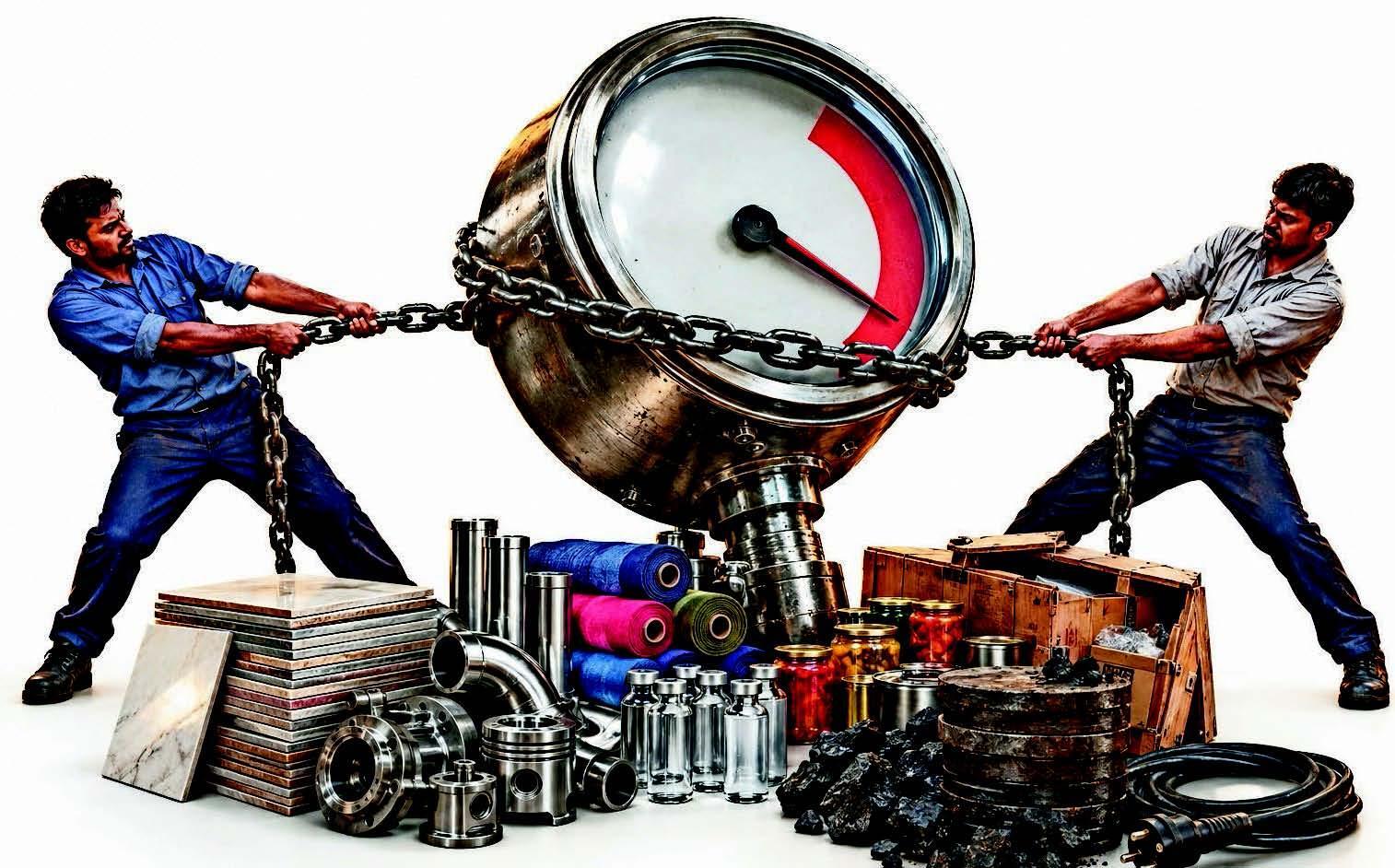
It’s a struggle between keeping production going and avoiding losses
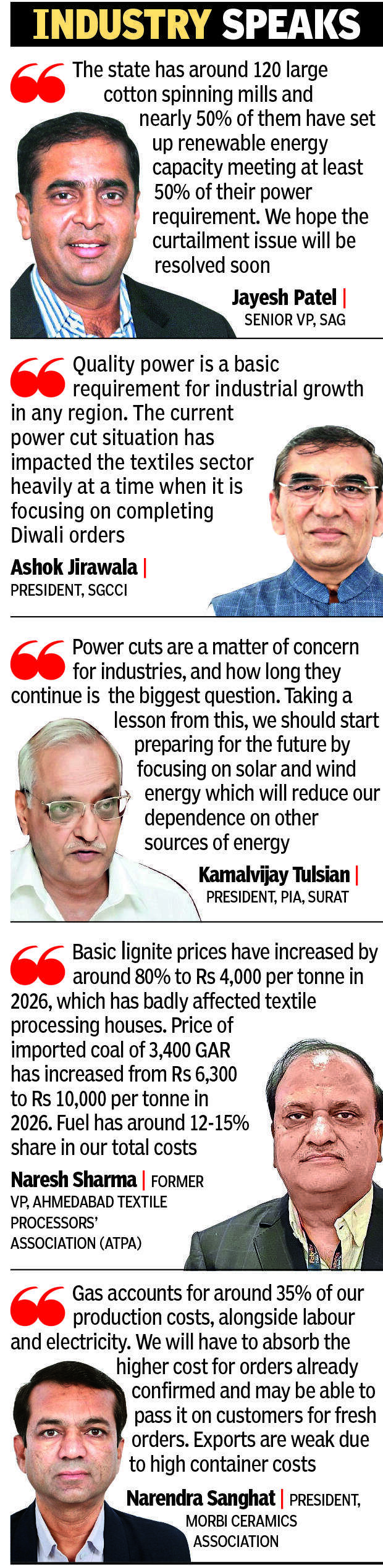
What sector experts say about challenges with power supply and rising cost of energy and fuel