






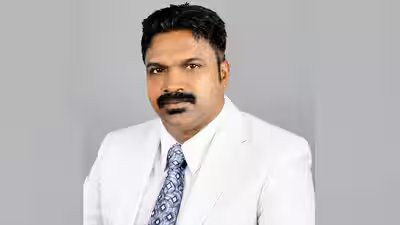
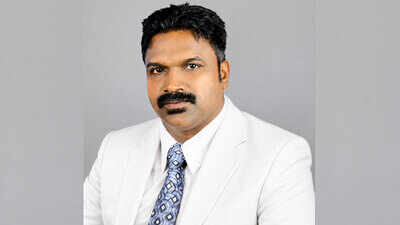
Dr Ashokkumar Veeramuthu, who studied in government schools in Tamil Nadu’s Nilgiris district, has featured in the Stanford–Elsevier global scientist rankings for four consecutive years. His research focuses on waste management, plastic pollution and technologies that convert discarded materials into useful products and clean energy.COIMBATORE: Growing up in Uppatty village near Gudalur in the Nilgiris, Dr Ashokkumar Veeramuthu followed a path from government-school classrooms to international research collaborations. Today, his work focuses on a challenge that affects communities across the world: how to manage waste while finding more sustainable ways to produce energy and valuable materials.Veeramuthu has featured in the scientist rankings published by Stanford University researchers in collaboration with Elsevier for four consecutive years, from 2023 to 2026, according to media reports. He has also been recognised in the career-long impact category, which assesses researchers’ cumulative citation-based impact.The son of P Veeramuthu and P Ramayi, both tea plantation workers, he completed his schooling in government institutions before pursuing higher education in science and biotechnology.
How a government-school education led to research abroad
Veeramuthu completed his BSc in Botany at Bharathiar University, an MSc in Plant Biotechnology at Bharathidasan University and an MPhil in Biotechnology at Periyar University. He earned his PhD from the University of Madras in 2013.During his doctoral studies, he received an Indo-Australian fellowship and visited the University of Adelaide as a visiting scientist. His subsequent research experience included work in Malaysia and Taiwan, along with visits to European universities under the Marie Sklodowska-Curie Actions fellowship scheme.His academic profile at Saveetha Dental College also records experience in industrial research, including work with Reliance Industries in Mumbai on biorefinery technologies for biofuels and bioproducts.
Turning waste into useful products
Veeramuthu’s research interests include waste-to-value technologies, biomass conversion, biochar production, biofuels, microalgae-based wastewater treatment and carbon dioxide sequestration.The objective is to explore ways of recovering useful materials and energy from biological resources and waste streams. Such technologies could contribute to more efficient resource use, although their environmental benefits depend on factors such as energy consumption, processing methods and the materials being treated.Plastic pollution and waste management are among the key areas highlighted in reports on his research. His work also examines the potential of microalgae and biomass-based processes to support renewable energy and the development of value-added products.“My research focuses on developing practical solutions to environmental challenges and converting waste into valuable resources. My mission is to protect the environment, promote clean energy, convert waste into useful resources and build a sustainable future for generations to come,” he said.
Research with an international reach
Veeramuthu has worked with institutions in countries including Australia, Malaysia, Taiwan, Singapore and Thailand. His research interests span environmental science, energy technologies and biorefinery applications, bringing together academic research and industrial experience.His institutional biography also lists editorial and peer-review responsibilities for scientific journals, alongside professional recognition including a bronze medal at Malaysia’s 2015 Industrial Art and Technology Exhibition and a Best Presenter Award at an international sustainable process integration conference held in the Czech Republic in 2021.
What the scientist rankings measure
The Stanford–Elsevier rankings use citation-based indicators to assess researchers’ scientific impact. These include measures related to citations, the h-index and co-authorship-adjusted research output. The database distinguishes between single-year impact and career-long impact.Inclusion therefore reflects bibliometric measures of research influence rather than a direct assessment of the real-world effectiveness of every project.For Veeramuthu, the research agenda centres on finding practical uses for waste and biological resources. His journey from a government-school education in the Nilgiris to international scientific recognition offers a glimpse into the range of work involved in developing technologies for waste management, resource recovery and cleaner energy.Disclaimer: This article is based on information available in media reports and institutional profiles; details have been presented for educational and informational purposes.