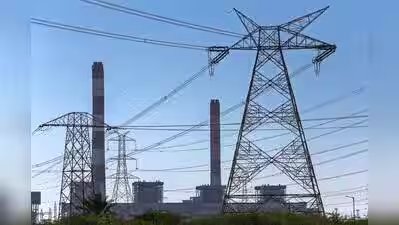







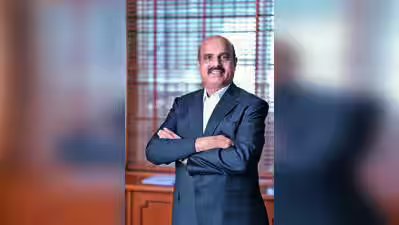
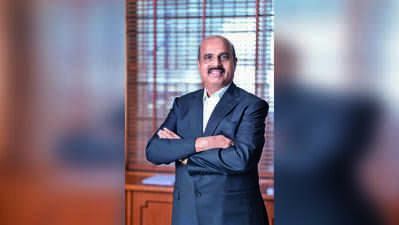
WhenE Madhavan began trading imported components for tractor and equipment makers in 2000, he saw an opportunity in wet-braking systems, widely used overseas but resisted by Indian buyers because of their higher cost, despite offering long-term savings through greater durability and easier maintenance.A first-generation entrepreneur from Tuticorin, Madhavan believed customers would eventually recognise these benefits. Swaraj became his first customer despite initial resistance. What began as an import business has since grown into a specialised engineering and manufacturing enterprise that serves almost all leading players across the tractor, construction equipment, mining and material-handling segments — a ‘Make in India’ success story.Established as a joint venture (51:49) with South Korea’s Jinmyung Frictech Co (JFC) in 2008, JM Frictech India generates more than `500 crore in annual revenue and employs around 2,000 people. Its products include braking systems, wet clutches, hydrostatic transmissions, friction materials, castings and machined components.Madhavan, the MD of the company, began his career in Bengaluru in the bearings industry. Business visits to Japan and other markets exposed him to wet-braking tech. Conventional dry brakes generate heat through friction, accelerating wear under demanding conditions. For farmers, frequent brake-lining replacement adds costs and causes downtime during agri operations. Wet brakes use oil to dissipate heat, extending friction-material life and reducing maintenance.“The challenge was cost. Indian customers were reluctant to adopt wet-braking systems, but I believed their durability, reliability and lower maintenance requirements would offer long-term benefits. I took the risk despite the initial hesitation,” he says.With initial volumes of just 1,500 units, imported assemblies were expensive. Madhavan gradually shifted from trading to manufacturing, localising castings and machined parts used in braking systems while continuing to import critical parts.Japanese and European suppliers offered sophisticated technology, but at a higher cost. A Korean tech partnership helped JM Frictech develop more affordable products, expanding from wet-brake assemblies into wet clutches, power take-off (PTO) hydraulic controls and hydrostatic transmissions. Madhavan subsequently shifted operations from Bengaluru to TN to expand manufacturing and access technically qualified workers.Dependence on external foundries exposed the company to supply disruptions, inconsistent quality and limited cost control. “Power shortage in TN compounded the problem. So we set up our own foundry at Manapparai, followed by another at Pillaipakkam, near Chennai,” he says. It operates two foundries with a combined capacity of around 2,000 tonnes a month. Integrating casting, machining, friction-material production and assembly gives it greater control over quality, supplies and costs.Tractors account for roughly 70% of revenue, construction equipment for 20%, and mining machinery and trucks for the remainder. The company produces about 10 lakh friction-material components and one lakh brake units a month. Madhavan is also expanding into wet clutches and hydrostatic transmissions. Used in compact tractors and potentially electric tractors, hydrostatic transmissions remain an emerging business, with production of about 500 units a month. At around `30,000 apiece, they command a higher price than brake assemblies, which cost roughly `7,000.Wet-clutch adoption remains limited in India due to additional cost, although wet brakes have gained wider acceptance. For specialised suppliers, the challenge is to translate technical advantages into commercial value. Madhavan is targeting annual revenue of around `800 crore over the next few years, driven by exports, new OEM programmes and higher-value products JM Frictech spends around 4-5% of revenue on R&D and employs more than 50 people in R&D and testing. Its R&D centre at Vallam supports product development and validation, while early engagement with OEMs helps it tailor components to new vehicle platforms.It is investing about `80 crore in a new factory in Sonipat, near Chandigarh, with completion targeted for early 2027. The location will bring it closer to major tractor manufacturers, including Swaraj and Sonalika, and strengthen its participation in new platforms, including higher-horsepower and electric tractors. The facility is set to add capacity for 50,000 brake units a month, taking total monthly capacity to 1.5 lakh units.Madhavan’s daughter, Harsha Madhavan, has joined the company as a director and oversees foundry operations. Her role covers a critical part of the integrated manufacturing model, where process control, quality, safety and cost efficiency directly affect the performance of finished products. Her role comes as the company prepares to expand and builds its next generation of leadership.India remains JM Frictech’s principal market, but Madhavan wants exports to rise from around 8% of revenue to 30%, with a longer-term target of 50%.A first-generation entrepreneur from Tuticorin, Madhavan believed customers would eventually recognise these benefits. Swaraj became his first customer despite initial resistance. What began as an import business has since grown into a specialised engineering and manufacturing enterprise that serves almost all leading players across the tractor, construction equipment, mining and material-handling segments — a ‘Make in India’ success story.Established as a joint venture (51:49) with South Korea’s Jinmyung Frictech Co (JFC) in 2008, JM Frictech India generates more than Rs 500 crore in annual revenue and employs around 2,000 people. Its products include braking systems, wet clutches, hydrostatic transmissions, friction materials, castings and machined components.Madhavan began his career in Bengaluru in the bearings industry. Frequent business visits to Japan and other overseas markets exposed him to wet-braking tech. Conventional dry brakes generate heat through friction, accelerating wear under demanding conditions. For farmers, frequent brake-lining replacement adds costs and causes downtime during critical agri operations. Wet brakes use oil to dissipate heat, extending friction-material life and reducing maintenance.“The challenge was cost. Indian customers were reluctant to adopt wet-braking systems, but I believed their durability, reliability and lower maintenance requirements would offer long-term benefits. I took the risk despite the initial hesitation,” he says.With initial volumes of just 1,500 units, imported assemblies were expensive. Madhavan gradually shifted from trading to manufacturing, localising castings and machined parts used in braking systems while continuing to import critical parts.Japanese and European suppliers offered sophisticated technology, but at a higher cost. A Korean tech partnership helped JM Frictech develop more affordable products, expanding from wet-brake assemblies into wet clutches, power take-off (PTO) hydraulic controls and hydrostatic transmissions. Madhavan subsequently shifted operations from Bengaluru to TN to expand manufacturing and access technically qualified workers.Dependence on external foundries exposed the company to supply disruptions, inconsistent quality and limited cost control. “Power shortage in TN compounded the problem. So we set up our own foundry at Manapparai, followed by another at Pillaipakkam, near Chennai,” he says. It operates two foundries with a combined capacity of around 2,000 tonnes a month. Integrating casting, machining, friction-material production and assembly gives it greater control over quality, supplies and costs.Tractors account for roughly 70% of revenue, construction equipment for 20%, and mining machinery and trucks for the remainder. The company produces about 10 lakh friction-material components and one lakh brake units a month. Madhavan is also expanding into wet clutches and hydrostatic transmissions. Used in compact tractors and potentially electric tractors, hydrostatic transmissions remain an emerging business, with production of about 500 units a month. At around `30,000 apiece, they command a higher price than brake assemblies, which cost roughly `7,000.Wet-clutch adoption remains limited in India due to additional cost, although wet brakes have gained wider acceptance. For specialised suppliers, the challenge is to translate technical advantages into commercial value. Madhavan is targeting annual revenue of around `800 crore over the next few years, driven by exports, new OEM programmes and higher-value products JM Frictech spends around 4-5% of revenue on R&D and employs more than 50 people in R&D and testing. Its R&D centre at Vallam supports product development and validation, while early engagement with OEMs helps it tailor components to new vehicle platforms.It is investing about Rs 80 crore in a new factory in Sonipat, near Chandigarh, with completion targeted for early 2027. The location will bring it closer to major tractor manufacturers, including Swaraj and Sonalika, and strengthen its participation in new platforms, including higher-horsepower and electric tractors. The facility is set to add capacity for 50,000 brake units a month, taking total monthly capacity to 1.5 lakh units.Madhavan’s daughter, Harsha Madhavan, has joined the company as a director and oversees foundry operations. Her role covers a critical part of the integrated manufacturing model, where process control, quality, safety and cost efficiency directly affect the performance of finished products. Her role comes as the company prepares to expand and builds its next generation of leadership.India remains JM Frictech’s principal market, but Madhavan wants exports to rise from around 8% of revenue to 30%, with a longer-term target of 50%.