









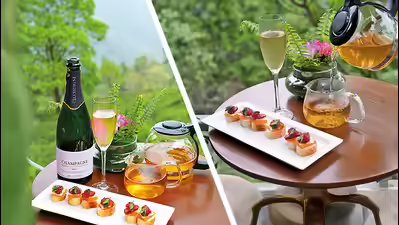

When custodians of the Comité Interprofessionnel du vin de Champagne (CIVC) arrived in India for the first time, it marked a strategic convergence between two of the most well-known origin stories. On the misty slopes of Darjeeling, where India’s first GI-tagged product is grown in around 87 estates, the French delegation, with representatives of the Darjeeling Tea Association, explored the emerald bushes, tasted the freshest teas and compared the fruity, floral and muscatel notes with the finest and rarest Champagnes. What followed was a historic declaration aimed at sharing knowledge between two of the world’s most storied luxury products. “Champagne and Darjeeling embody excellence and share the same standard – that of an inseparable link between a product, territory and craftsmanship… Their shared identity as prestigious products with a geographical indication makes them natural ambassadors for a trade agreement that promotes quality and authenticity,” said the CIVC in a statement released later.Lovingly anointed the ‘Champagne’ of teas, Darjeeling is keen to reposition itself as a connoisseur’s choice, steeped in slow, sustainable luxury. This means sharpening its legacy narrative, creating awareness about artisanal practices followed by colonial-era plantations, and crafting immersive experiences around the famed two-leaves-and-a-bud. We travelled to ground zero to get a taste of what’s brewing.
The opportunity lies in thinking of Darjeeling not just as tea, but as a global luxury identity. Like Champagne, it must stand for something unmistakable
– A veteran planter from Chamong
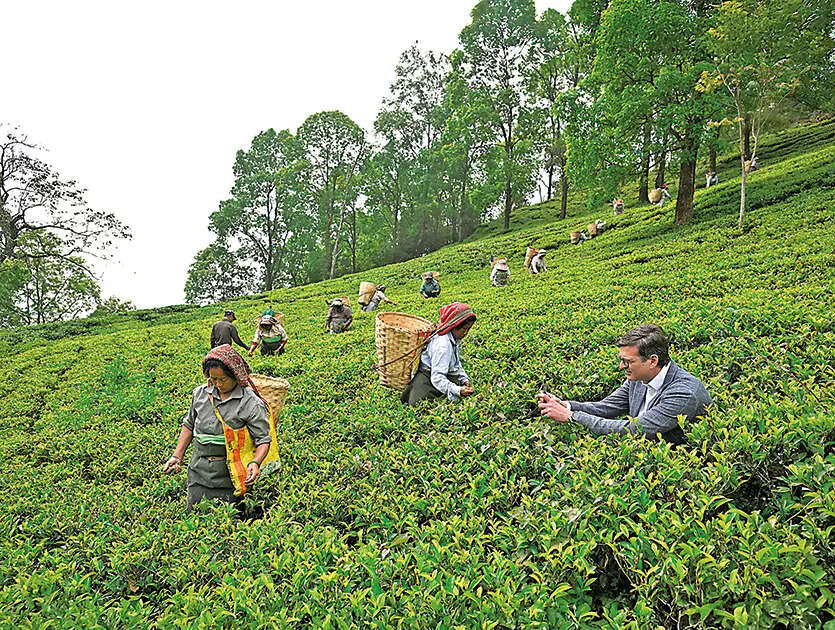
Charles Goemaere, Managing Director, Comité Interprofessionnel du vin de Champagne, explores the Makaibari plantation
NOT JUST TEA, BUT ORIGINFor an industry long undercut by imitation and blending, and challenged by climate pressures and labour issues, the stakes are high. Industry estimates suggest that far more ‘Darjeeling tea’ is sold globally than is actually produced in the region, making provenance the new battleground.“Anything is passed off as Darjeeling tea with only a small percentage of organic leaves mixed with lower grade tea leaves from Nepal or other Himalayan regions,” said a senior manager from a legacy tea estate. “Creating awareness among consumers is key.”The Champagne model offers a clear blueprint. It rests on three non-negotiables – strict legal enforcement of origin, tightly controlled production protocols, and unified global positioning that protects both identity and price. Every bottle is traceable, every misuse contested, every narrative controlled.Darjeeling, industry voices argue, now needs a similar approach. “It needs the same discipline as Champagne, strict control and consistent global positioning,” says Rudra Chatterjee, whose family acquired the iconic Makaibari estate in 2014, anchoring efforts to reposition Darjeeling tea for a more exacting global market. “Serious consumers want to know the source and process. Traceability gives that assurance,” he adds. Biodynamic farming, soil-to-cup storytelling and transparent sourcing are no longer niche values, but decisive differentiators. “Darjeeling should not be sold and consumed as tea,” echoed a senior stakeholder of one of the largest plantation networks in the region. “It has to be understood as an origin story.” The crucial shift is not just regulatory. It is perceptual.

Maxime Toubart, co-president, CIVC, at a tea factory
LUXURY BY ORIGIN: CHAMPAGNE & DARJEELINGAt first glance, one sparkles and the other steeps. But Champagne and Darjeeling tea share a remarkably similar DNATerroir-led identity: Both are shaped by geography. Champagne draws from chalky soils of northeastern France; Darjeeling from the Himalayan slopes in BengalStrict origin protection (GI): Only sparkling wine from Champagne can bear its name. Only tea from a defined set of registered estates in Darjeeling can be sold as DarjeelingRarity and limited yield: Climatic dependence and tightly defined growing regions limit production and sustain desirabilityArtisanal craft: From hand-harvested grapes to the ‘two-leaves-and-a-bud’ pluck, both rely on skilled human interventionVintage variation: Each year produces subtle differences, making every flush or vintage a snapshot of timeConnoisseur culture: Both are about appreciation, not just consumption.At their finest, both are best appreciated without dilution
Tea is one of the most consumed beverages after water. However, Darjeeling is unique.It is called the Champagne of teas, as it’s made in small quantities, at a high value and only from a specific terroir found on 87 tea estates, making it prized and expensive
– Husna-Tara Prakash
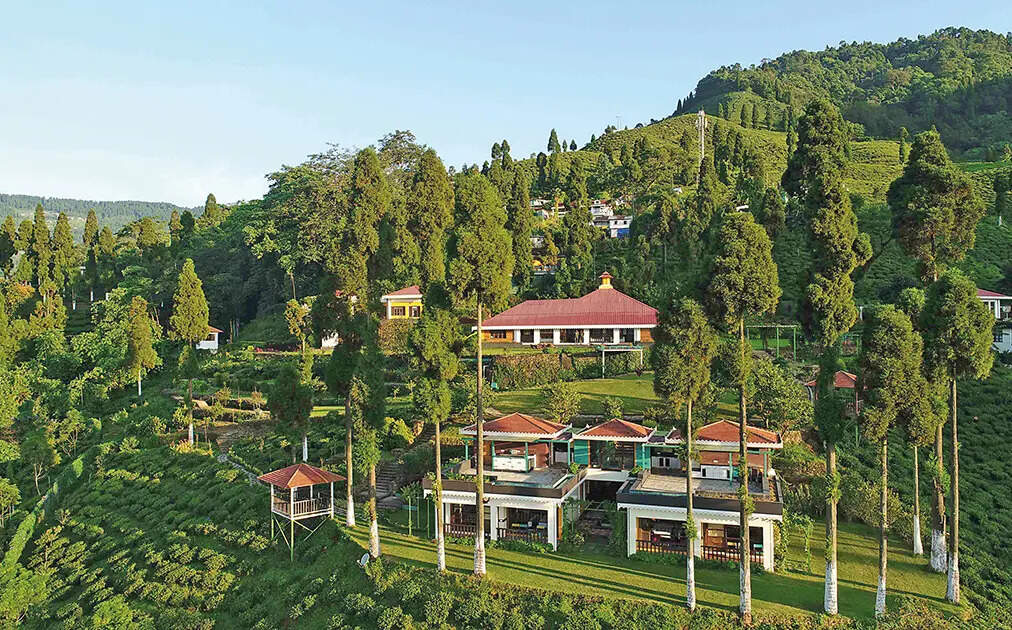
The sprawling Chamong Chiabari Mountain Retreat
TEA GARDENS AS LUXURY DESTINATIONSLegacy estate owners are reimagining Camellia sinensis as the centrepiece of a luxury narrative. In West Bengal, policy now permits tea estates to diversify a portion of their landholding for tourism and allied use, subject to caps and regulatory approvals. In many ways, this vineyard-style model was popularised at Glenburn in the early 2000s, with curated tea trails, heritage bungalow stays and factory walks. Husna-Tara Prakash, co-owner and Managing Director of the estate, explains: “The curiosity about Darjeeling was always there; we simply created the infrastructure for people to experience it.” Alongside her husband, fourth-generation planter Anshuman Prakash, she foregrounds the human element. “When guests see the community effort behind a cup, it changes how they value it,” she says. “The hospitality industry will play a defining role in positioning Darjeeling tea as a luxury, connoisseur-driven product,” says Rajiv Singhal, a luxury consultant and Champagne advocate. Beyond heritage retreats such as Tumsong Tea Retreat, Chamong Chiabari and Ging Tea House, the response to Taj Chia Kutir Resort & Spa signals newer possibilities in reframing tea gardens as luxury destinations.
The one thing I won’t change is the quality of tea we produce. In my opinion, nothing in the world compares to a good Darjeeling tea
– Rudra Chatterjee
KNOW YOUR DARJEELING FLUSHES (SEASONS)
- First Flush (Spring): Pale, floral, delicate
- Second Flush (Early Summer): Fuller, muscatel, complex
- Monsoon Flush: Stronger, darker
- Autumn Flush: Smooth, rounded
GI TAG – WHY IT MATTERS
- Darjeeling tea became India’s first GI-tagged product in 2004
- Only tea from 87 estates can carry the name
- Certified by
- the Tea Board of India
- Protects authenticity and livelihoods

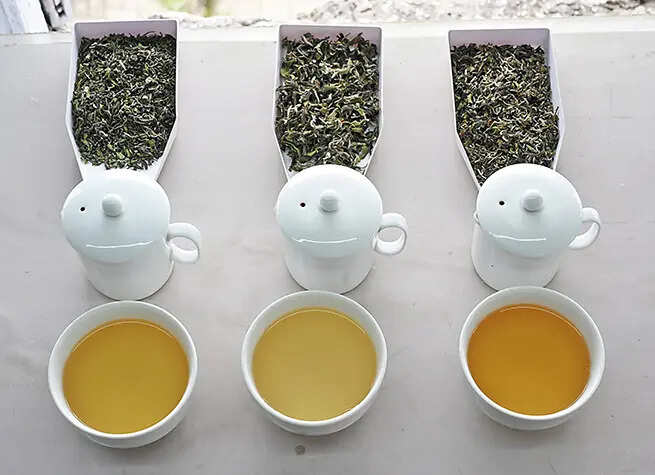
First-flush shots at a Makaibari tasting session
TEACHING PEOPLE HOW TO TASTEFrom tasting rooms modelled on plantation bungalows to curated tea rituals and experience centres, Darjeeling is being decoded for the urban coffee-loving consumer. The idea is simple but radical – teach people how to taste.As one tea sommelier observes, “Most people don’t dislike tea, they have just never tasted it correctly. Once you understand temperature, steeping and origin, it becomes a completely different beverage.”Tasting sessions, slow rituals at tea rooms and estates are designed to recreate the full journey of Darjeeling tea – from nurturing bushes and hand-plucking leaves, to withering, rolling, fermenting and drying. “When people taste a tea that is well made and properly steeped, they set a personal benchmark. Our role is to help them discover the tea that suits their palate, and once that happens, the relationship becomes long-term,” says Chatterjee.Agrees Neil Law, tea sommelier and founder of STG Tea, “Experiencing both knowledge and flavour transforms tea from a simple beverage into something rooted in effort, livelihood and tradition, helping people appreciate the worth of a good cup.”
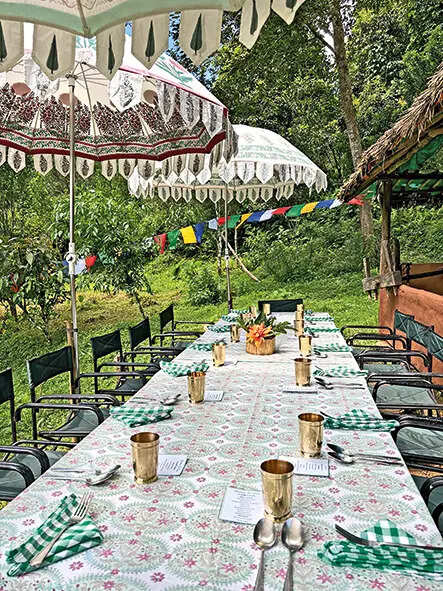
A sit-down lunch set up at Glenburn
THE STAR AT SOCIAL SETTINGSAt luxury venues and intimate supper clubs, zero-proof tea pairings are expanding the grammar of consumption, with tea-based blends designed for spaces once dominated by spirits. “It expands consumption occasions,” says Chatterjee. “Tea moves into premium social settings where we can celebrate exceptional artisanal drinks.”The culinary world is catching on. Chef Shaun Kenworthy recalls crafting an 11-course tasting menu around Darjeeling tea at Glenburn, mapping each flush to a course, while Argha Sen curated a Chefs Retreat that celebrated the best of local produce in a luxurious bungalow setting with the estate’s finest blends at its core.Arihant Lohia, seventh-generation planter and Director at Chamong Group, pushes the possibilities further: “We already celebrate origin in coffee and craft in chocolate. Why not Darjeeling? The complexity is there, the story is there. It’s time the experience caught up.”